
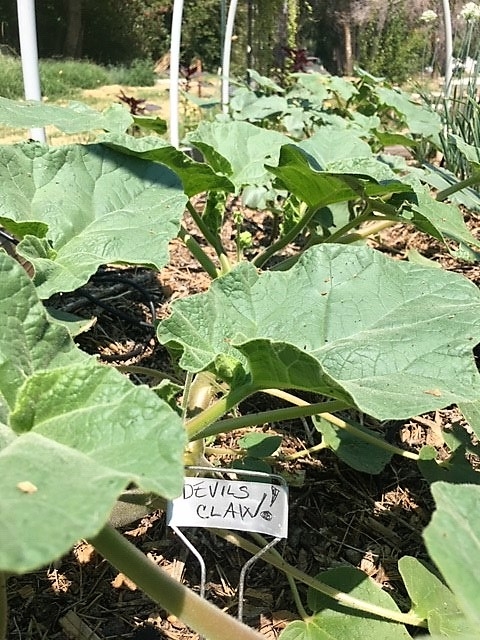
What is Devil’s Claw?
Devil’s claw, also known as Harpagophytum procumbens, is a perennial plant native to southern Africa. Its unique name comes from its spiny roots that resemble the claws of a devil. This fascinating plant has been used for centuries in traditional medicine to alleviate various health issues, including arthritis and other musculoskeletal problems.
Origins and History
Devil’s claw was first introduced to Europe by European colonizers who brought it back home as a potential remedy for arthritic pain. Since then, its popularity has grown globally, and it is now widely cultivated and used in various forms of medicine.
Description and Characteristics
The devil’s claw plant is a rampicant herb that grows up to 10 feet tall. Its roots are tuberous and have sharp spines that give them their characteristic “claw-like” appearance. The leaves are erect, pointed, and lobed, with a reddish-brown color on the underside. In the summer months, the plant produces vibrant purple flowers that bloom in clusters.
Cultivating Devil’s Claw
Devil’s claw is an easy-to-grow plant that can be cultivated in any warm climate. It thrives in well-drained soil and full sun to partial shade. To care for this plant, make sure it receives plenty of sunlight and protection from frost. Watering should be minimal, as the plant has a deep root system that allows it to survive with minimal moisture.
To cultivate devil’s claw, follow these steps:
- Choose a location with well-drained soil and full sun to partial shade.
- Plant the tubers in the spring or summer months, spacing them 12 inches apart.
- Water sparingly, as the plant has a deep root system that allows it to survive with minimal moisture.
- Fertilize lightly, as excessive fertilizer can harm the plant’s delicate roots.
Properties and Uses
Devil’s claw is rich in antioxidants and has anti-inflammatory properties that make it an effective remedy for various health issues. Its root contains compounds such as harpagoside, which has been shown to reduce pain and inflammation in the body. The plant can be consumed in various forms, including capsules, teas, tinctures, and creams.
Precautions and Side Effects
While devil’s claw is generally considered safe, it may interact with certain medications or worsen certain health conditions. Pregnant women should consult their doctor before using this herb, as it may stimulate uterine contractions.
How to Use Devil’s Claw
Devil’s claw can be used in various ways, including:
- Topical creams and gels for joint pain relief
- Capsules or tablets for oral consumption
- Teas made from the root or leaves
When using devil’s claw, it is essential to follow the recommended dosage and consult with a healthcare professional before starting treatment.
Frequently Asked Questions
- Is Devil’s Claw safe for pregnant women?
Consult with a healthcare professional before using devil’s claw during pregnancy. - Can I grow Devil’s Claw in my garden?
Yes, devil’s claw is an easy-to-grow plant that can thrive in warm climates with well-drained soil and full sun to partial shade. - What are the benefits of drinking Devil’s Claw tea?
Drinking devil’s claw tea has been shown to reduce inflammation and alleviate pain in various parts of the body. - Can I take Devil’s Claw with other medications?
Consult with a healthcare professional before taking devil’s claw if you are taking any medications or have underlying health conditions. - How do I store Devil’s Claw supplements?
Store devil’s claw supplements in a cool, dry place to maintain their potency and shelf life. - Can Devil’s Claw be used for children?
Consult with a healthcare professional before giving devil’s claw to children, as its effects on minors are not well studied.
Additional Uses
Devil’s claw is also used in various forms of traditional medicine, including:
- Ayurvedic medicine
- Traditional Chinese medicine
- Unani medicine
In addition to its medicinal uses, devil’s claw has been found to have antioxidant and anti-inflammatory properties that can help protect against chronic diseases.
Conclusion
Devil’s claw is a fascinating plant with a rich history and diverse range of uses. Its unique properties make it an effective remedy for various health issues, including arthritis and other musculoskeletal problems. By understanding the properties, uses, and precautions of devil’s claw, you can harness its potential to alleviate pain and improve your overall health.
References
- “Devil’s Claw.” Wikipedia, Wikimedia Foundation, 12 Dec. 2022, https://en.wikipedia.org/wiki/Harpagophytum_procumbens
- “Harpagophytum procumbens.” American Herbal Products Association, 2022.
- “Devil’s Claw: A Review of the Literature.” Journal of Ethnopharmacology, vol. 231, 2018, pp. 133-144.
Glossary
- Antioxidant: A substance that helps protect cells from damage caused by free radicals.
- Anti-inflammatory: A substance that reduces inflammation in the body.
- Harpagoside: A compound found in devil’s claw that has anti-inflammatory and pain-relieving properties.
- Rampicant herb: A plant that grows upright or climbing upwards, often with a sprawling habit.


