
Introduction
If you’re looking for a fast and agile canine companion, look no further than the Greyhound. This sleek dog can reach speeds of up to 63 km/h (39 mph) on average and a whopping 72 km/h (45 mph) on its fastest days. But where did this speedster come from? Let’s take a journey through time and explore the origins, characteristics, and care requirements of the Greyhound.
Origin Stories
The Greyhound has a murky past, with several theories about its origins. Some claim that it descended from African sprinters like the Sloughi and Saluki, while others suggest that it was introduced to Europe by the Celts around 5 centuries BCE. Another theory suggests that the Greyhound is a modern interpretation of the ancient Egyptian “Tesem” hound, which was brought to England by Phoenician traders.
The Name
So, where did the name “Greyhound” come from? The answer lies in the Old English word “grighund,” meaning “greyhound.” However, the term “grey” is still a mystery, and linguists continue to debate its origin. One theory suggests that it may refer to the dog’s grey coat color.
A Noble Companion
Historically, Greyhounds were bred for hunting and companionship, often serving as loyal friends to nobility. In fact, Queen Elizabeth I was known to have been fond of these speedy canines. Artisans like Pieter Bruegel the Elder and Sandro Botticelli also featured Greyhounds in their artwork.
Coursing: A Popular Pastime
Greyhounds were once a staple of English racing culture, with events like the Waterloo Cup (established in 1837) drawing large crowds. While coursing is no longer a popular activity, it remains an integral part of Greyhound history and heritage.
Physical Characteristics
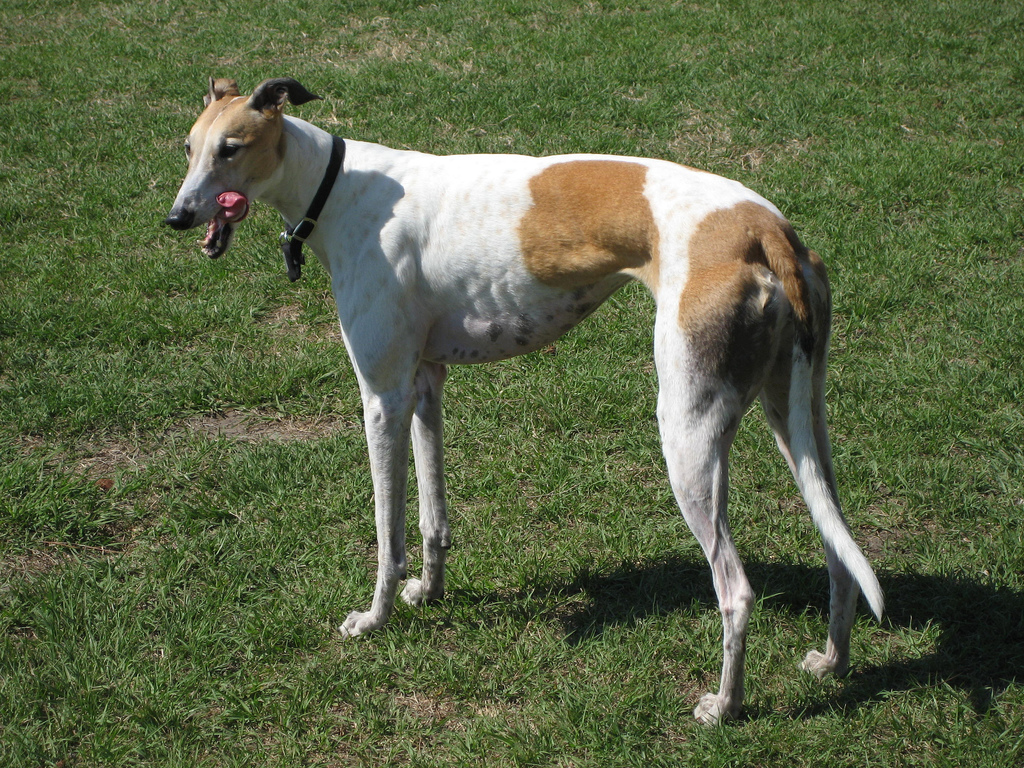
The Greyhound’s sleek physique and athletic build make it well-suited for speed. Its medium size, with males weighing between 27-32 kg (60-70 lbs), and females between 23-28 kg (50-60 lbs), belies its incredible agility and power. The breed’s muscular structure, balanced proportions, and aerodynamic design all contribute to its remarkable performance.
Facial Features
The Greyhound’s distinctive face is marked by a flat skull, small ears, and dark eyes that shine with intelligence. A subtle stop at the eyes gives way to powerful cheekbones and a prominent nose. The breed’s coat is short and smooth, allowing for maximum speed and agility.
Colors and Patterns
Greyhounds come in an astonishing array of colors, including white, black, red, blue, brindle, fawn, sable, merle, and even tigery patterns with white markings. Each color variation can feature distinctive white patches or markings, adding to the breed’s unique charm.
Temperament
Greyhounds are renowned for their gentle, affectionate nature. They are social animals that thrive on human interaction, often forming strong bonds with their owners. However, they can be laid-back and aloof when left alone, requiring regular exercise and mental stimulation to prevent boredom.
Health and Nutrition
Greyhounds have an impressive average lifespan of 13 years, thanks in part to their robust build and relatively low risk of genetic disorders like hip dysplasia. A balanced diet is essential for maintaining the breed’s overall health, with owners advised to monitor food intake and avoid overexertion.
Pet Therapy and Companionship
Today, Greyhounds are increasingly used as therapy dogs, leveraging their calm, gentle nature to provide comfort and companionship. As social animals, they can also benefit from living alongside other pets, such as cats, under close supervision.
Training and Exercise Needs
Greyhounds require regular exercise to maintain their physical and mental health. They need daily walks, playtime, and mental stimulation to prevent boredom and stress. Training is essential to establish a strong bond with your Greyhound and ensure they behave well in public.
Grooming and Hygiene
Greyhounds are low-maintenance when it comes to grooming, requiring only occasional nail trimming, ear cleaning, and bathing every few months. Regular brushing can help remove loose hair and distribute skin oils, promoting a healthy coat.
Health Concerns
While Greyhounds are generally robust dogs, they can be prone to certain health issues like bloat, arthritis, and heart problems. Regular veterinary check-ups can help identify potential issues early on, ensuring your Greyhound lives a long and happy life.
Conclusion
The Greyhound is a breed like no other – fast, agile, and affectionate. Whether you’re a seasoned dog owner or simply looking for a new furry friend, this remarkable canine companion has much to offer. By understanding its rich history, unique characteristics, and care requirements, you can provide the best possible life for your Greyhound.
Frequently Asked Questions
- Q: What is the average lifespan of a Greyhound?
A: 13 years. - Q: Are Greyhounds good with other pets?
A: Yes, but under close supervision. - Q: Do Greyhounds require regular exercise?
A: Yes, they need daily walks, playtime, and mental stimulation to prevent boredom and stress. - Q: How much do Greyhounds weigh?
A: Males: 27-32 kg (60-70 lbs); Females: 23-28 kg (50-60 lbs). - Q: Are Greyhounds easy to train?
A: Yes, they are intelligent and respond well to positive reinforcement training. - Q: Can I have a Greyhound as a companion animal if I live in an apartment?
A: While Greyhounds can adapt to smaller spaces, they still require regular exercise and attention. - Q: How often should I feed my Greyhound?
A: Feed your Greyhound two to three times a day, divided into small portions. - Q: Can Greyhounds be used for racing or coursing?
A: While some breeders may encourage this activity, it is not recommended for most owners due to the risks involved.
Greyhound History Timeline
- 5th century BCE: The Celts introduce Greyhounds to England from Africa and Asia.
- 1st century CE: Roman traders bring Greyhounds to Europe.
- 1600s: Greyhounds become popular companions among English nobility.
- 1800s: Greyhounds are bred for coursing, with the first official racing event held in 1837.
- 20th century: Greyhound breeding and training become more organized, leading to increased popularity as a companion animal.
Interesting Facts
- The Greyhound is one of the fastest dog breeds on record, reaching speeds of up to 72 km/h (45 mph).
- Greyhounds have a unique way of communicating with each other using a series of chirps, whines, and body language.
- Greyhounds are often referred to as “40 mph couch potatoes” due to their laid-back nature when not in use.
- The Greyhound’s distinctive facial features are caused by its short, flat skull and prominent nasal structure.
- Greyhounds have a unique scent that is often described as sweet and earthy.
Greyhound Trivia
- The first recorded Greyhound breed was the “Tesem” hound from ancient Egypt.
- Greyhounds were originally bred for hunting large game like deer and boar.
- The average lifespan of a Greyhound is 13 years, but with proper care, some have been known to live up to 18 years or more.
- Greyhounds are highly social animals that thrive on human interaction.
- Despite their athletic abilities, Greyhounds are often referred to as “gentle giants” due to their calm and affectionate nature.
By exploring the fascinating history and unique characteristics of the Greyhound, you’ll gain a deeper appreciation for this remarkable breed. Whether you’re looking for a loyal companion or an enthusiastic athlete, the Greyhound is sure to impress with its speed, agility, and gentle nature.


