
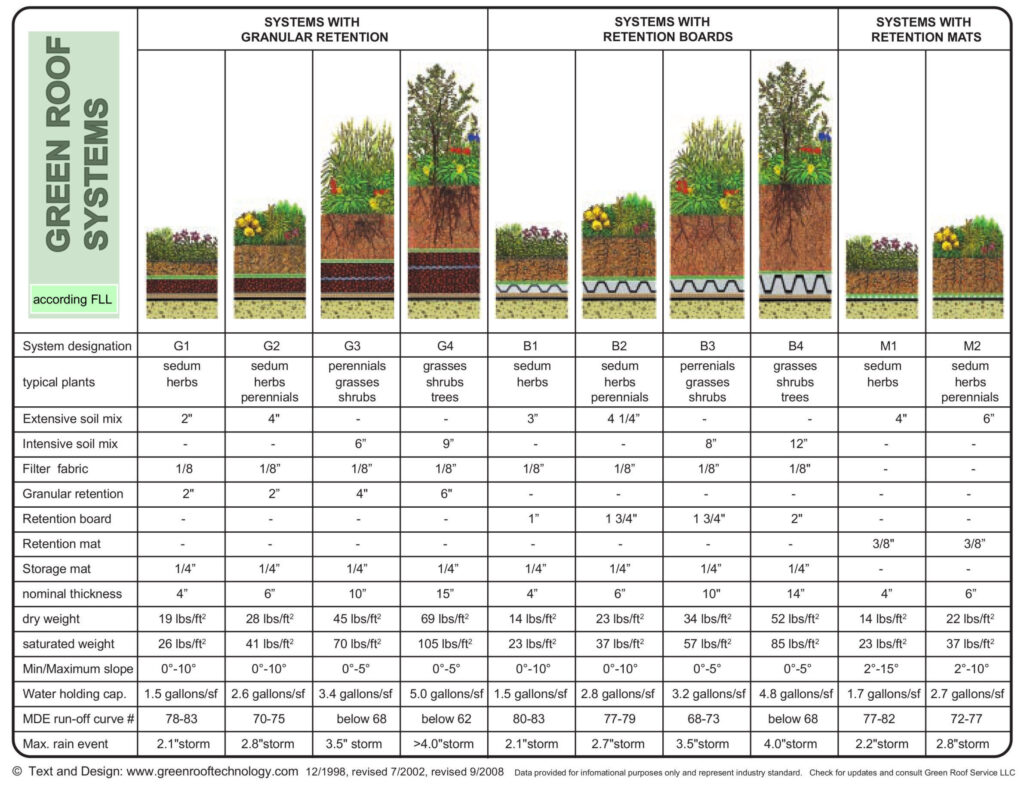
Understanding Green Roofs: Thickness, Weight, and Technical Data
As the world becomes increasingly aware of the importance of sustainability and environmental conservation, green roofs have emerged as a popular solution. But before we dive into the benefits of green roofs, it’s essential to understand their technical aspects, particularly thickness, weight, and constituent layers.
The Difference Between Extensive and Intensive Green Roofs
Before we explore the specifics of green roofs, let’s clarify the differences between intensive and extensive green roofs right away. An intensive or semi-intensive green roof has a thicker layer, which allows for strong root development and aerial growth – not just grassy carpet, but also shrubs and small trees. This type of green roof requires moderate maintenance and regular watering, making it suitable for small and medium-sized surfaces.
On the other hand, an extensive green roof has a contained thickness and weight, using vegetation with limited root development and aerial growth. Its characteristics make it suitable for sloping roofs and require minimal maintenance.
Extensive Green Roofs: Characteristics and Technical Data
Let’s take a closer look at extensive green roofs:
- Thickness: 3-15 cm (approximately)
- Height of plants: never exceeding 25 cm
- Weight: 30-100 kg/m² (maximum capacity in water)
- Maintenance: minimal/absent
- Irrigation: necessary only in case of prolonged drought
- Type of vegetation: colonizing and resilient (mosses and sedges, grasses, succulents)
- Walkability: no, and cannot be cultivated
- Suitable for inclined roofs, existing buildings, and large roofs
Extensive green roofs are ideal for areas with low rainfall or where the roof receives limited sunlight. They are also suitable for flat surfaces with a slight slope. These types of green roofs are relatively easy to install and require minimal maintenance.
Intensive Green Roofs or Semi-Intensive: Characteristics and Technical Data
Now, let’s explore intensive green roofs or semi-intensive:
- Thickness: 15-30 cm (approximately)
- Weight: 120-350 kg/m² (maximum capacity in water)
- Maintenance: moderate
- Irrigation: regular
- Type of vegetation: with strong root development and aerial growth, even including orchard or shrub-like species. The height of the plants is highly variable.
- Walkability: yes, can be cultivated. Comparable to traditional gardens as it can be seeded or cultivated any type of vegetable.
- Suitable for small and medium-sized surfaces but given its weight, a suitable construction must exist. In the case of existing buildings, professionals should be consulted to verify the load-bearing capacity of the roof.
Intensive green roofs are ideal for areas with moderate rainfall and sufficient sunlight. They are also suitable for small and medium-sized surfaces where a strong root system is required. These types of green roofs require more maintenance than extensive green roofs but provide a lush, vibrant landscape.
The Constituent Layers of Green Roofs
Regardless of whether it’s an extensive or intensive green roof, it consists of four essential layers:
- Waterproofing Layer: A waterproofing layer is crucial to prevent water damage and ensure the longevity of the green roof.
- Drainage and Filtering Layer: This layer helps to filter rainwater and prevent erosion, ensuring that the growth substrate remains healthy.
- Growth Substrate: The growth substrate provides a suitable environment for plant roots to grow and absorb nutrients.
- Plant Layer: The plant layer is where the magic happens – it’s where you’ll find lush greenery, flowers, or even edible plants.
The waterproofing layer is typically made of materials such as EPDM rubber, PVC, or TPO, which are designed to prevent water infiltration into the roof structure. The drainage and filtering layer consists of materials such as geotextiles, root barriers, and aggregate materials like gravel or sand. These materials help to filter rainwater and prevent erosion, ensuring that the growth substrate remains healthy.
The growth substrate is made up of materials such as soil, compost, and mulch, which provide a suitable environment for plant roots to grow and absorb nutrients. The growth substrate must be designed to accommodate the specific needs of the plants being used, taking into account factors such as drainage, pH levels, and nutrient availability.
The plant layer is where the most creative freedom exists, allowing you to choose from a wide range of plants that are well-suited to the conditions of your green roof. From succulents to orchard or shrub-like species, there’s something for everyone.
Conclusion
Green roofs are an excellent way to reduce energy consumption, manage stormwater runoff, and improve urban biodiversity. By understanding their technical aspects, including thickness, weight, and constituent layers, we can design and install effective green roof systems that meet our sustainability goals.
Green roofs also offer numerous benefits, including reduced air pollution, improved mental health, and increased property values. In addition to these benefits, green roofs provide a range of economic incentives, such as tax credits and rebates, which make them an attractive option for building owners and developers.
Frequently Asked Questions (FAQs)
- What is the ideal thickness for a green roof?
The ideal thickness for a green roof depends on its intended use – extensive or intensive. Extensive green roofs typically have a thinner layer, while intensive green roofs have a thicker layer. - How often do I need to maintain an intensive green roof?
Intensive green roofs require moderate maintenance, including regular watering and pruning. They also require more frequent inspections to ensure that the growth substrate is healthy and the plant layer is thriving. - Can I walk on an extensive green roof?
No, extensive green roofs are not suitable for walking due to their weight and potential instability. - What types of plants can be used in a green roof?
Green roofs can accommodate various types of plants, from succulents to orchard or shrub-like species. The type of vegetation used will depend on the conditions of the roof, including rainfall, sunlight, and temperature. - How do I determine the load-bearing capacity of my existing building’s roof?
Consult with professionals to verify the load-bearing capacity of your roof before installing a green roof. - Can I install a green roof on an existing building without consulting experts?
No, it’s recommended to consult with experts to ensure that your roof can support the weight of the green roof system. - What are the benefits of using intensive green roofs?
Intensive green roofs provide strong root development and aerial growth, making them suitable for small and medium-sized surfaces. - Can I use traditional gardening methods on an intensive green roof?
Yes, intensive green roofs can be cultivated using traditional gardening methods, including seeding or cultivating any type of vegetable.
Common Mistakes to Avoid When Installing a Green Roof
- Insufficient waterproofing: Make sure that the waterproofing layer is designed to prevent water infiltration into the roof structure.
- Inadequate drainage and filtering: Ensure that the drainage and filtering layer is in place to filter rainwater and prevent erosion.
- Poor soil quality: Use a high-quality growth substrate that is well-suited to the needs of the plants being used.
- Overwatering: Avoid overwatering, as this can lead to root rot and other problems.
- Inadequate maintenance: Regularly inspect and maintain your green roof to ensure its health and longevity.
Conclusion
Green roofs are a fantastic way to reduce energy consumption, manage stormwater runoff, and improve urban biodiversity. By understanding their technical aspects, including thickness, weight, and constituent layers, we can design and install effective green roof systems that meet our sustainability goals.
Remember to avoid common mistakes when installing a green roof, such as insufficient waterproofing, inadequate drainage and filtering, poor soil quality, overwatering, and inadequate maintenance. With proper planning and installation, your green roof will thrive for years to come.
Future Developments in Green Roof Technology
As the demand for sustainable building solutions continues to grow, researchers are continually developing new technologies and materials that can help us create more effective green roofs.
Some of the future developments in green roof technology include:
- Improved waterproofing systems: New materials and designs are being developed to improve waterproofing systems and reduce the risk of water infiltration.
- Enhanced drainage and filtering systems: Researchers are working on developing more efficient drainage and filtering systems that can filter rainwater and prevent erosion.
- Advanced growth substrates: Scientists are exploring new types of growth substrates that can provide improved soil quality, increased root depth, and enhanced plant performance.
- Increased use of recycled materials: The green roof industry is increasingly turning to recycled materials for its waterproofing and drainage systems, which not only reduce waste but also help to mitigate climate change.
- Better maintenance technologies: New technologies are being developed that can make it easier to inspect and maintain your green roof, reducing the risk of damage or failure.
These developments hold great promise for improving the performance and sustainability of our green roofs, enabling us to create even more effective systems that support biodiversity and mitigate climate change.


