
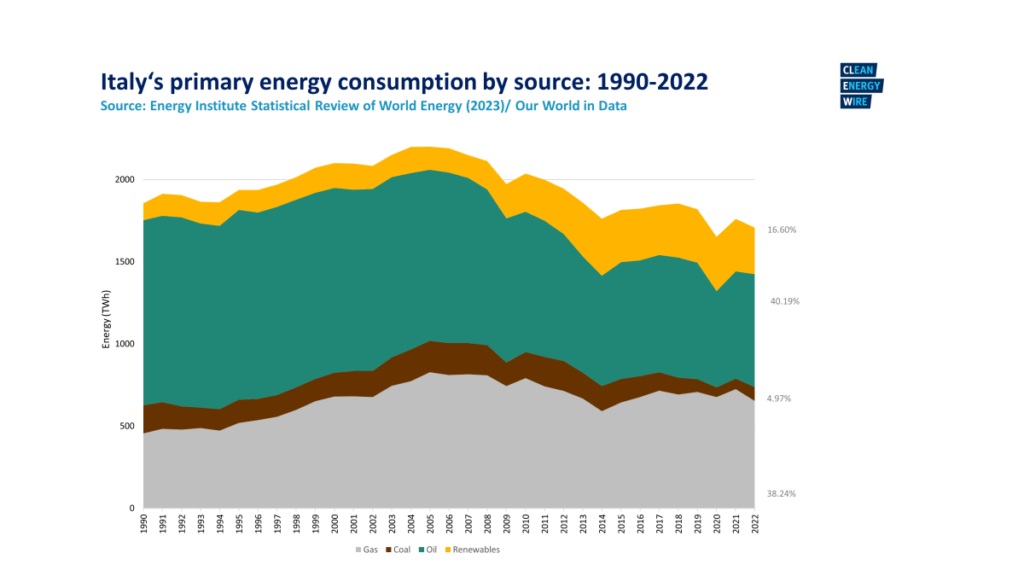
Italy’s priorities are set on Oil, not a Greener Future
In 2011, Italy extracted 5.3 million tons of oil, with 640 thousand tons coming from offshore drilling operations. These numbers are expected to increase with new concessions, and Italy’s political situation doesn’t give us much hope for change. The lack of a concrete plan to promote electric mobility means that the interests of economic elites remain firmly rooted in the fossil fuel market, not the transportation sector.
Italy is struggling to find its place in the green economy movement. A green economy aims to reduce environmental degradation while promoting sustainable development and social equity. However, Italy’s approach to energy policy has been slow to adapt, with a focus on extracting hydrocarbons rather than investing in renewable energy sources. This approach not only contradicts the principles of sustainability but also puts the country at risk of becoming increasingly dependent on fossil fuels.
A Green Economy is Still Elusive
The green economy has yet to fully incorporate Italy into its fold; what we need is a clean and fossil-fuel-free energy strategy. The absence of such a strategy opens the door for further offshore drilling and exploitation of Italian hydrocarbons, regardless of their location or potential environmental impact.
In order to move towards a greener future, Italy needs to adopt a comprehensive energy policy that prioritizes renewable sources over fossil fuels. This would not only reduce carbon emissions but also create jobs and stimulate economic growth in the sustainable energy sector. Moreover, investing in green infrastructure such as solar panels, wind turbines, and bioenergy plants can help increase energy efficiency and independence.
Offshore Drilling: A Threat to Italy’s Environment
In 2012, four offshore platforms were active along Sicily’s coastlines. Energy companies are particularly interested in areas off the Egadi Islands and between Marsala and Mazara del Vallo, near the Avventura Bank. Similarly, the southern coast between Sciacca and Gela is at risk. Not only do the seafloor reserves of these areas pose a threat to Italy’s coastline, but also its interior.
The potential environmental impact of offshore drilling cannot be overstated. Seabed ecosystems are delicate and easily damaged by oil spills or other forms of pollution. Moreover, the risks associated with offshore drilling operations far outweigh any potential economic benefits.
Italy’s Energy Strategy: A Recipe for Disaster
The National Energy Strategy (Sen) has identified five regions with high potential for hydrocarbon extraction: Valle Padana, Alto Adriatico, Abruzzo, Basilicata, and the Sicilian Channel. Italy aims to increase offshore drilling by 7-14% of its energy needs. In fact, plans call for a 46% increase in gas production and an astonishing 148% boost in oil production! This decision is absolutely misguided: both sectors will soon become depleted, and the global trend towards renewable energy makes it clear that this path cannot be sustained.
The Sen also proposes to increase the use of coal, which poses significant environmental risks. Coal burning contributes to climate change, air pollution, and water contamination. In contrast, investing in renewable energy sources like solar and wind power can significantly reduce carbon emissions and improve public health.
Drilling and Extraction: Devastating Italy’s Environment
Massive drilling operations further strain already fragile ecosystems. Once again, economic interests are prioritized over public health, demonstrating a lack of consideration for the well-being of all citizens. In times of economic crisis, a solution is at hand: investing in green energy can create jobs and stimulate growth.
The impact of offshore drilling on Italy’s environment cannot be ignored. The country’s coastline and interior ecosystems are under threat from oil spills, pollution, and habitat destruction. Moreover, the long-term effects of oil extraction on marine life are still unknown, but it is clear that they will have devastating consequences for Italian biodiversity.
The Numbers Don’t Lie
A study by the Political Economy Research Institute found that investing $1 million in energy production creates more jobs in renewable energy sources like solar, biomass, and wind power than it does in fossil fuels. For every 5 jobs created with fossil fuels, 14 are generated by the solar industry, while biomasses produce 17 times as many jobs per dollar invested.
The data speaks for itself: investing in sustainable energy is a sound decision that benefits society as a whole. By prioritizing renewable sources over fossil fuels, Italy can reduce its carbon footprint, improve public health, and stimulate economic growth.
Frequently Asked Questions
Q: What can be done to address Italy’s energy crisis?
A: Investing in renewable energy sources like solar and biomass, promoting electric mobility, and adopting a cleaner energy strategy are crucial steps towards creating jobs and reducing our carbon footprint.
Q: Can offshore drilling still pose an environmental threat?
A: Absolutely. Offshore drilling operations can damage marine ecosystems and contaminate water supplies, regardless of the location or potential for hydrocarbon extraction.
Q: What is Italy’s National Energy Strategy (Sen)?
A: The Sen aims to increase offshore drilling by 7-14% of its energy needs, as well as boost gas production by 46% and oil production by an astonishing 148%.
Q: How can we balance economic growth with environmental sustainability?
A: Investing in green energy creates jobs and stimulates growth while reducing our reliance on fossil fuels. By prioritizing sustainable practices, we can build a brighter future for all.
Q: What role should Italy play in the global fight against climate change?
A: As a key player in Europe, Italy must adopt a leadership role in promoting renewable energy sources, reducing emissions, and protecting its environment.
Q: How can individuals contribute to creating a greener economy?
A: By making conscious choices about our daily habits, supporting local businesses that prioritize sustainability, and advocating for policies that promote clean energy, we all play a crucial role in shaping Italy’s energy future.
The Future of Energy: A Shift Towards Sustainability
The future of energy is uncertain, but one thing is clear: the world needs to transition towards sustainable sources of energy. The impact of climate change on our planet cannot be overstated, and it is up to us to take action. By investing in renewable energy sources like solar and wind power, we can significantly reduce carbon emissions and improve public health.
Italy’s energy policy has been slow to adapt to the changing needs of society. However, there are signs that things may change soon. The Italian government has announced plans to increase the use of renewable energy sources by 2025. While this is a step in the right direction, it must be accompanied by concrete policies and investments in sustainable infrastructure.
Conclusion
Italy’s priorities should be set on sustainability, not oil extraction. A green economy aims to reduce environmental degradation while promoting sustainable development and social equity. Italy needs to adopt a comprehensive energy policy that prioritizes renewable sources over fossil fuels.
The data speaks for itself: investing in sustainable energy is a sound decision that benefits society as a whole. By prioritizing renewable sources, we can build a brighter future for all. The time for action is now; let us work together to create a greener economy and a better future for Italy.


