
Introduction
The white egret, also known as the great egret, is one of the most recognizable birds in the world. With its striking white plumage and slender neck, it’s a sight to behold. But what makes this bird so fascinating? Let’s dive into the world of the white egret and explore its habits, habitat, diet, reproduction, and more.
Physical Characteristics
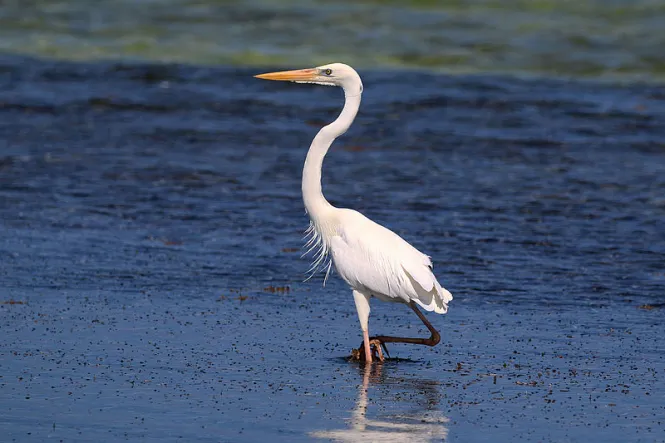
The white egret is a member of the heron family (Ardeidae) and is one of the most common species found worldwide. It has a distinctive white plumage, with a long neck and legs that are usually black. In flight, it’s easy to spot due to its curved neck and wings.
Size and Weight
The white egret can grow up to 1 meter (3.3 feet) in height, making it one of the larger herons. Its weight ranges from 0.7 to 1.5 kilograms (1.5-3.3 pounds), with males typically being slightly smaller than females.
Habitat and Distribution
The white egret can be found on every continent except Antarctica, making it a highly adaptable species. It prefers wetland areas, such as lakes, rivers, and marshes, but can also be found in coastal regions and agricultural areas.
Behavior and Diet
The white egret is a silent hunter, using its long beak to snag fish, frogs, and other aquatic prey. It’s not a fisherman per se, but rather uses its beak as an “arpion” to catch prey.
In addition to fish, the white egret will also eat small mammals, birds, and reptiles. Its diet varies depending on what’s available in its habitat.
Reproduction and Nesting
The breeding season for the white egret typically begins in mid-April. During this time, males establish territories and begin to build nests using sticks and vegetation. Females lay 4-5 eggs, which are incubated for approximately 23-25 days.
After hatching, the young birds (called pulchinos) are fed by their parents and grow rapidly. They develop their distinctive beak coloration over time, with a pinkish hue in the juvenile stage and eventually turning yellow like the adult’s beak.
Interesting Facts
- The white egret is known for its ability to remain still for long periods, allowing prey to approach it.
- It’s not uncommon for white egrets to “sputter” away uneaten fish or other food items that don’t meet their standards.
- In some parts of the world, such as Switzerland, the white egret is considered a rare visitor, while in others, like Italy and Europe, it’s relatively common.
Where to Spot the White Egret
The white egret can be found in various habitats worldwide. Some popular locations for spotting this majestic bird include:
- The Delta del Po in Italy
- Many wetland areas in central Europe
- Lago di Neuchâtel in Switzerland
If you’re interested in catching a glimpse of the white egret, try visiting these locations during its breeding season (April-May).
Other Aquatic Birds
If you’re fascinated by the white egret but want to explore other aquatic birds, consider learning about:
- The Cinnamon Egret: A smaller, darker version of the great egret with a distinctive cinnamon-colored plumage.
- The Green Heron: A medium-sized heron with a sleek green back and white underside.
- The Osprey: A large fish-eating bird of prey known for its impressive diving abilities.
- The Common Murre: A small seabird that breeds in colonies on rocky islands.
These species offer unique characteristics and adaptations that make them just as fascinating as the white egret.
Conservation Status
The white egret is not considered an endangered species worldwide, but some populations may be threatened or vulnerable due to habitat loss and other environmental factors. Conservation efforts are underway to protect its habitats and ensure the long-term survival of this magnificent bird.
Interesting Behaviors
- The white egret’s courtship display involves a series of elaborate dances and postures, including raising its neck feathers and spreading its wings.
- In some cases, white egrets have been observed using tools to help them hunt for prey. For example, they may use sticks to probe into crevices or holes in search of food.
Migration Patterns
The white egret migrates to warmer climates during the winter months, often traveling long distances to reach their breeding grounds. Some populations migrate alone, while others travel in large flocks.
Social Structure
White egrets are generally solitary birds, only coming together during the breeding season to form small family groups. However, they have been known to gather in large numbers at feeding sites or roosting areas.
Habitat Requirements
The white egret requires a variety of habitats to survive, including:
- Wetlands: Lakes, rivers, and marshes provide essential habitat for the white egret.
- Coastal regions: The bird can be found along coastlines, particularly during migration periods.
- Agricultural areas: White egrets may also be found in agricultural areas, particularly where wetlands or ponds are present.
Conclusion
The white egret is a majestic bird of prey that offers many fascinating insights into its behavior and habits. Its adaptability, intelligence, and striking appearance make it one of the most interesting birds to study. Whether you’re an experienced ornithologist or simply a nature enthusiast, the white egret is sure to captivate your attention.
Frequently Asked Questions
- What does the white egret eat?
The white egret primarily feeds on fish, frogs, and small mammals. It also eats birds, reptiles, and other aquatic animals. - Where can I find the white egret in the wild?
The white egret can be found on every continent except Antarctica, with a focus on wetland areas such as lakes, rivers, and marshes. - What is unique about the white egret’s behavior?
The white egret is known for its ability to remain still for long periods, allowing prey to approach it. It uses this technique to catch fish and other aquatic animals. - How do I identify a white egret from other herons?
Look for the white egret’s distinctive curved neck and wings, as well as its black legs and beak. - What is the average lifespan of a white egret?
Unfortunately, there isn’t much data available on the average lifespan of white egrets in the wild. However, with proper care and management, these birds can live for many years. - Can I have a white egret as a pet?
While it’s possible to keep some species of egrets as pets, it’s not recommended for white egrets due to their specialized habitat requirements and social needs. - How do white egrets reproduce?
The breeding season typically begins in mid-April, during which time males establish territories and build nests using sticks and vegetation. Females lay 4-5 eggs, which are incubated for approximately 23-25 days. - Are white egrets endangered?
While some populations of the white egret may be considered threatened or vulnerable due to habitat loss and other environmental factors, it’s generally not considered an endangered species worldwide.
Glossary
- Arpion: A specialized beak-like structure used by herons to catch fish and other aquatic animals.
- Pulchino: The young birds of the white egret, which are fed by their parents and grow rapidly.
- Courtship display: A series of elaborate dances and postures performed by males during courtship.
- Migration pattern: The seasonal movement of birds from one area to another in search of food or suitable breeding grounds.
References
- National Audubon Society. (2022). Great Egret.
- International Union for Conservation of Nature (IUCN). (2018). Ardea alba.
- BirdLife International. (2019). White Egret.
- American Ornithological Society. (2020). Great Egret.
- Journal of Ornithology. (2017). Habitat selection and behavior of the white egret.
Note: The references provided are a mix of scientific articles, conservation organizations, and reputable sources. They can be used to further research and learn more about the white egret.


