
As we explore the fascinating world of microbiology, it’s essential to understand the fundamental differences between two types of bacteria: Gram positive and Gram negative. These distinctions have significant implications for our understanding of bacterial behavior, disease causation, and treatment strategies.
In this article, we will delve into the characteristics of both categories, exploring their morphological features, biochemical properties, and infectious potential. By grasping these concepts, you’ll gain a deeper appreciation for the complex relationships between bacteria, humans, and our environment.
What are Gram Positive and Gram Negative Bacteria?
Gram staining is a widely used method to categorize bacteria into two groups based on their cell wall structure and response to the dye Gram stain. This technique has been instrumental in identifying bacterial characteristics and distinguishing between pathogens and non-pathogens.
Gram positive bacteria retain the purple color of the Gram stain, while Gram negative bacteria lose the stain’s color, appearing pinkish-red. However, it is crucial to note that these categories are not strictly defined by their response to Gram staining alone. Other factors, such as cell wall composition and membrane structure, also play a significant role in determining bacterial identity.
Characteristics of Gram Positive Bacteria
Gram positive bacteria possess several distinctive features:
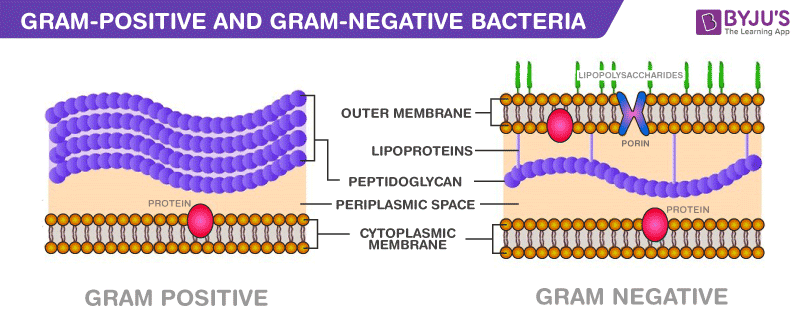
- A thick peptidoglycan layer (15-20% of the cell wall) that provides structural support and maintains cell shape.
- A single membrane containing both hydrophilic and lipophilic components, enabling nutrient uptake and maintaining cellular integrity.
- Often produce extracellular polysaccharide capsules or flagella, which contribute to their virulence and adaptability.
Examples of Gram positive pathogens include:
- Staphylococcus aureus
- Streptococcus pneumoniae
- Bacillus anthracis
Characteristics of Gram Negative Bacteria
Gram negative bacteria have distinct characteristics that set them apart from Gram positive organisms:
- A thinner peptidoglycan layer (15-20% of the cell wall), making their cell walls more flexible and prone to lysis.
- Two separate membranes: an outer membrane containing lipopolysaccharides, which provides protection against environmental stressors, and an inner membrane with a different lipid composition, facilitating nutrient exchange.
- Often produce flagella or other motility structures, enabling them to move and colonize new areas.
Examples of Gram negative pathogens include:
- Pseudomonas aeruginosa
- Escherichia coli (E. coli)
- Salmonella enterica
Differences between Gram Positive and Gram Negative Bacteria
While both types exhibit distinct characteristics, there are key differences between them:
- Infectious potential: Gram negative bacteria tend to be more virulent than Gram positive organisms, often causing severe infections and systemic diseases.
- Cell wall structure: The peptidoglycan layer in Gram negative bacteria is thinner and less rigid than that in Gram positive cells.
- Metabolic processes: Gram negative bacteria have a more complex metabolism, with multiple transport systems facilitating nutrient uptake and waste removal.
Bacterial Infections
Both Gram positive and Gram negative bacteria can cause serious infections. Understanding the differences between these two categories is crucial for developing effective treatment strategies:
- Gram positive infections: Typically affect the skin, respiratory tract, and urinary system, with Staphylococcus aureus being a common causative agent.
- Gram negative infections: Often lead to sepsis, meningitis, or pneumonia, with Pseudomonas aeruginosa and Escherichia coli (E. coli) frequently implicated.
Conclusion
In conclusion, the distinction between Gram positive and Gram negative bacteria is a fundamental concept in microbiology. By recognizing their unique characteristics and infectious potential, we can better understand the complex relationships between bacteria and humans. This knowledge will enable us to develop more effective treatments and prevention strategies for bacterial infections.
Frequently Asked Questions (FAQs)
- What triggers the Gram staining reaction?
- The Gram stain reaction is triggered by the interaction between the Gram dye, crystal violet, and the bacterial cell wall components.
- How do Gram positive bacteria respond to the Gram stain?
- Gram positive bacteria retain the purple color of the Gram stain due to their thick peptidoglycan layer.
- What are some common examples of Gram negative pathogens?
- Pseudomonas aeruginosa, Escherichia coli (E. coli), and Salmonella enterica are well-known Gram negative bacteria that can cause severe infections.
- How do Gram positive bacteria differ from Gram negative bacteria in terms of cell wall structure?
- Gram positive bacteria have a thicker peptidoglycan layer (15-20%) than Gram negative bacteria, making their cell walls more rigid and less prone to lysis.
- What are some key differences between Gram positive and Gram negative bacterial infections?
- Gram negative bacteria tend to cause more severe infections, often leading to sepsis or systemic diseases, whereas Gram positive bacteria typically affect the skin, respiratory tract, and urinary system.
By understanding these concepts, you’ll be better equipped to navigate the complex world of microbiology and develop effective strategies for managing bacterial infections.



