
As a gardener or horticulturist, you know that grafting is an essential technique for propagating plants. However, the success of your grafting operations depends on the tools you use. In this article, we’ll explore the different types of grafting tools, their characteristics, and how to choose the right one for your needs.
The Importance of Grafting Tools
Grafting tools are essential for successful grafting operations. The delicate part of the process is cutting, where a poor cut or excessive sap can hinder rooting and success. Good quality grafting tools should provide clean, precise cuts that heal quickly and facilitate rooting.
To achieve optimal results, it’s crucial to select the right tool for the job. A well-sharpened and disinfected grafting tool will ensure that your plants are healthy and thriving.
Grafting Knives: The Workhorse of Grafting Tools
Grafting knives are widely used in the process. The knife design varies depending on the type of grafting being performed.
- Crown Grafting: For crown grafting, a fixed-blade knife or “Ronchetto” knife is recommended. This type of knife features a curved blade with a sharp point, ideal for making precise cuts.
- Spore Grafting: For spore grafting, a square-forked knife is suggested. This design allows for easy access to the scion and promotes healthy growth.
- Double-Spore Grafting: German-style knives can be used for double-spore grafting. These knives feature a sharp point and fixed angles, ensuring perfect cuts.
- Peel Grafting: For peel grafting, a double-edged knife is recommended. This design allows for clean cuts and minimizes sap flow.
Pruning Shears: A Game-Changer for Grafting
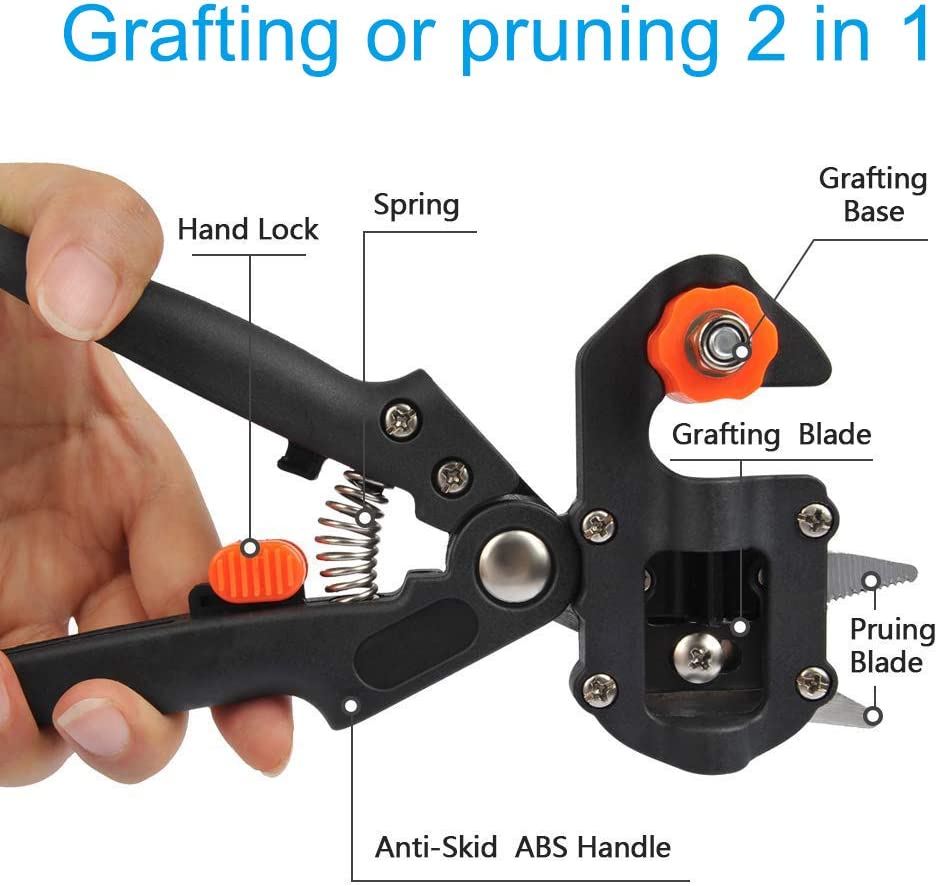
Pruning shears are more expensive than knives but offer greater ease of use, allowing anyone to perform the graft without requiring special manual dexterity.
- Tink-sky Professional Grafting Pruners: Price 29.99 euros
- Minidiva Garden Professional Grafting Pruners: Price: 26.65 euros
These shears can perform cuts with omega, spore, and incised patterns (U-shaped, V-shaped, and omega). They come with two spare blades and the standard pruning blades for cutting back plants.
Manual Grafting Clippers: The Specialized Tool
If you need to graft marces and portainstems with diameters of up to 2 cm, a true manual grafting clipper is required.
- Stocker Manual Grafting Clipper: Available on Amazon for approximately 37.80 euros (includes shipping). This clipper can cut branches up to 2 cm in diameter by practicing only V-shaped cuts with fixed blades that can be replaced only when worn out.
Choosing the Right Grafting Tool
With so many options available, it’s essential to consider your specific needs before selecting a grafting tool. Think about the type of plants you’re working with, the complexity of the graft, and the desired outcome.
Here are some key factors to consider:
- Material: Look for high-quality materials that can withstand regular use.
- Sharpness: A sharp tool will make the cutting process easier and reduce the risk of damage.
- Ease of use: Choose a tool that is comfortable to hold and easy to maneuver.
Grafting Techniques
Grafting techniques are just as important as the tools used. Understanding how to properly graft your plants can ensure success and minimize failures.
Here are some common grafting techniques:
- Wedge grafting: This method involves cutting a wedge-shaped piece of scion from the parent tree, which is then inserted into the root system of the receiver plant.
- Splice grafting: In this technique, two pieces of stem (the scion and the receiver) are joined together at their bases to form a single piece of stem.
- Peel grafting: This method involves making a small incision in the bark of the parent tree, just deep enough to expose the cambium layer.
Common Mistakes to Avoid
While grafting can be a successful process, there are common mistakes that can lead to failure.
Here are some things to watch out for:
- Poor cuts: Make sure your cuts are clean and precise, as poor cuts can hinder rooting and success.
- Excessive sap: Excessive sap flow can prevent the scion from establishing a strong connection with the root system of the receiver plant.
- Insufficient disinfection: Failing to properly disinfect your tools and workspace can lead to infection and failure.
Conclusion
Grafting tools are a crucial part of any gardening or horticultural project. By selecting the right tool for your needs, you’ll be well on your way to achieving success with grafting operations. Remember to consider factors such as material, sharpness, and ease of use when making your selection.
With practice and patience, you can master the art of grafting and enjoy the benefits it has to offer. Whether you’re a seasoned gardener or just starting out, this guide will provide you with the knowledge and skills needed to succeed.
Frequently Asked Questions
- What is the best type of grafting tool for crown grafting?
- A fixed-blade knife or “Ronchetto” knife is recommended for crown grafting.
- How do I choose the right pruning shears for my needs?
- Consider factors such as material, sharpness, and ease of use when selecting pruning shears.
- What is the purpose of manual grafting clippers?
- Manual grafting clippers are designed for grafting marces and portainstems with diameters up to 2 cm.
I hope this guide has provided you with a comprehensive overview of grafting tools and techniques. Happy grafting!


