
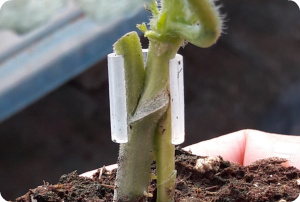
Grafting is a horticultural technique used to join two plants together, creating a new single plant with desirable traits. This process involves joining the stem or branch of one plant (called the scion) onto another plant (called the rootstock). The goal of grafting is to improve the characteristics of the plant, such as its growth rate, disease resistance, or fruit production.
Types of Grafting
There are several types of grafting techniques, but one of the most common and simple methods is called “in-stem grafting.” This type of grafting involves joining two plants together using a stem or branch that connects them. There are three main types of in-stem grafting:
- Simple Grafting
- English Grafting
- Intarsio Grafting
Simple Grafting
Simple Grafting Technique
In simple grafting, the scion and rootstock are joined together using a small incision on each plant. The scion is cut at an angle to create a smooth surface for joining with the rootstock.
- Prepare the plants: Choose two healthy plants with similar growth habits and desired traits.
- Cut the scion: Cut a section of stem from the scion, about 1-2 inches long, using a sharp knife or grafting tool.
- Make incisions: Make a small incision on both the scion and rootstock, just deep enough to expose the cambium layer (the layer of cells responsible for growth).
- Join the plants: Place the cut scion onto the rootstock, ensuring it is properly aligned and seated.
- Secure with twine or tape: Wrap twine or tape around the joined plant to hold it in place while healing.
English Grafting
English Grafting Technique
In English grafting, the scion and rootstock are joined together using a V-shaped incision on each plant. This technique is used to join two plants with similar growth habits but different characteristics.
- Prepare the plants: Choose two healthy plants with similar growth habits and desired traits.
- Cut the scion: Cut a section of stem from the scion, about 1-2 inches long, using a sharp knife or grafting tool.
- Make incisions: Make a V-shaped incision on both the scion and rootstock, just deep enough to expose the cambium layer (the layer of cells responsible for growth).
- Join the plants: Place the cut scion onto the rootstock, ensuring it is properly aligned and seated.
- Secure with twine or tape: Wrap twine or tape around the joined plant to hold it in place while healing.
Intarsio Grafting
Intarsio Grafting Technique
Intarsio grafting is a more complex technique that involves joining two plants together using an intricate incision pattern. This method is used for joining two plants with very different growth habits or characteristics.
- Prepare the plants: Choose two healthy plants with similar growth habits and desired traits.
- Cut the scion: Cut a section of stem from the scion, about 1-2 inches long, using a sharp knife or grafting tool.
- Make incisions: Make an intricate incision pattern on both the scion and rootstock, just deep enough to expose the cambium layer (the layer of cells responsible for growth).
- Join the plants: Place the cut scion onto the rootstock, ensuring it is properly aligned and seated.
- Secure with twine or tape: Wrap twine or tape around the joined plant to hold it in place while healing.
Choosing the Right Grafting Technique
When selecting a grafting technique, consider factors such as the desired characteristics of the resulting plant, the compatibility between the scion and rootstock, and the complexity of the incision pattern. The English grafting technique is generally considered to be more effective than simple grafting due to its ability to create a stronger bond between the two plants.
Benefits of Grafting
Grafting offers several benefits for gardeners and farmers, including:
- Improved disease resistance
- Increased fruit production
- Enhanced growth rate
- Greater hardiness
How to Choose the Right Plant for Grafting
When selecting a plant for grafting, consider factors such as its compatibility with other plants, its growth habits, and its desired traits. Research the specific needs of the plant you want to graft and choose a compatible scion and rootstock.
Common Mistakes in Grafting
Grafting can be a complex process, and common mistakes can lead to failure or reduced success rates. Some common mistakes include:
- Incorrect incision technique
- Inadequate preparation of the scion and rootstock
- Insufficient sealing of the incision area
Tips for Successful Grafting
To increase your chances of successful grafting, follow these tips:
- Use high-quality grafting tools and materials
- Prepare the scion and rootstock carefully before grafting
- Make clean and precise incisions
- Seal the incision area effectively to prevent disease and promote healing.
Common Grafting Tools
Grafting tools are specialized instruments used for joining plants together. Some common types of grafting tools include:
- Grafting knives: Used for cutting the scion and rootstock.
- Grafting saws: Used for making incisions in the scion and rootstock.
- Tape: Used to secure the joined plant while it heals.
Creating a Grafting Environment
A grafting environment is crucial for promoting healthy healing and growth of the joined plants. Some tips for creating an ideal grafting environment include:
- Temperature control: Keep the grafting area at a consistent temperature between 65°F to 75°F (18°C to 24°C).
- Humidity control: Maintain high humidity levels in the grafting area, ideally above 80%.
- Light control: Provide filtered or indirect light for the joined plants.
Grafting Troubleshooting
Despite proper care and technique, grafting can be prone to failure. Some common problems that may occur during the grafting process include:
- Rejection of the scion: The scion may not integrate with the rootstock or may die off.
- Root rejection: The rootstock may reject the scion or fail to produce new roots.
- Infection: Bacterial, fungal, or viral infections can occur in the grafting area.
Conclusion
Grafting is a valuable technique for gardeners and farmers, offering numerous benefits for improving plant growth and productivity. By understanding the different types of grafting techniques and choosing the right scion and rootstock, you can achieve successful results and enhance your gardening or farming endeavors.
Some final tips to keep in mind:
- Be patient with the grafting process, as it may take time for the plants to adjust.
- Monitor the grafting area regularly for signs of infection or rejection.
- Keep detailed records of your grafting experiments to refine future techniques.


