
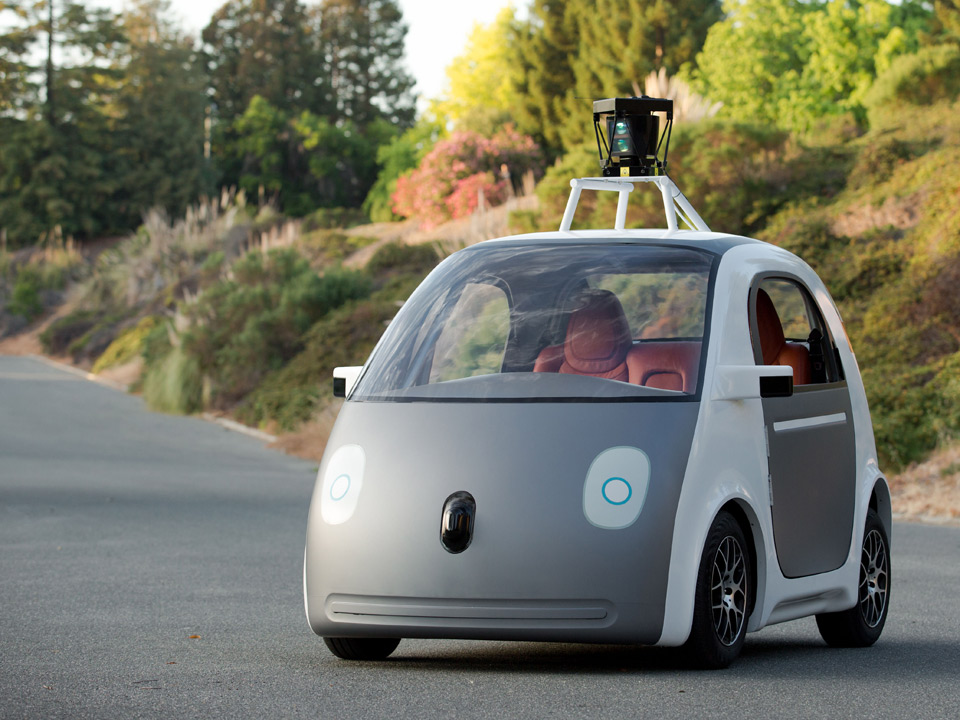
Imagine being able to hop in an automobile so advanced that it can drive itself. The idea may seem terrifying, entrusting one’s life to the hands of electronic computer systems on board, but the President of Turkey, Abdullah Gul, took this leap of faith with his wife and… Google!
Google is ubiquitous, from clean energy to internet networks and its search engine. Today, Google is also on the roads, not just through its Maps service but also with the Google Self Driving Car.
The Turkish President was accompanied by Sergey Brin, co-founder of Google, for a special drive in an entirely self-driving car: the Google Self Driving Car prototype put to the test was another testament to the “science fiction-like” future and yet another demonstration of Google’s power.
What is Google Self-Driving Car?
The Google Self Driving Car is no longer just a concept worldwide, as successful tests have been conducted and in Nevada, prototypes that can drive themselves without human intervention are allowed to operate under certain conditions, requiring at least two people on board in case of system malfunction.
To date, the Google system has been successfully integrated into eight vehicles, with the only incident during testing not caused by the self-driving car itself but rather by a human error.
A Future of Sustainable Mobility?
The President of Turkey expressed his satisfaction with the high-tech drive. The Self Driving Car systems can bring positive outcomes even in terms of sustainable mobility. Automatic transmission eliminates the risk of speeding at zero, and eco-guiding principles will be applied.
As we explore this futuristic concept, let’s delve into its historical context and detailed explanations to grasp the nuances behind it.
History of Self-Driving Cars
The idea of self-driving cars dates back to the early 20th century. However, modern developments have led to significant advancements in recent years. One such innovation is Google’s Self Driving Car project, which began as a research initiative in 2009.
In this article, we’ll delve into the concept of Google Self-Driving Car in depth, exploring its features, benefits, and implications on our transportation system.
How Does it Work?
The Google Self-Driving Car uses advanced sensors and artificial intelligence to navigate roads. The system consists of a network of cameras, radar, and lidar (light detection and ranging) to detect objects around the vehicle.
The AI then processes this data in real-time, making decisions on how to proceed safely and efficiently.
Key Features
- Advanced Sensors: Google’s Self Driving Car uses a combination of sensors to gather data about its surroundings.
- Artificial Intelligence: The AI process analyzes this data to make informed decisions.
- Self-Driving Technology: The system enables the car to drive itself without human intervention.
Benefits
- Increased Safety: Self Driving Cars can reduce accidents caused by human error.
- Improved Efficiency: The technology optimizes traffic flow and reduces congestion.
- Enhanced Mobility: The Self Driving Car can provide transportation for people with disabilities or elderly individuals who cannot drive themselves.
Challenges
- Technical Complexity: Developing advanced AI algorithms that can handle complex scenarios is a significant challenge.
- Regulatory Frameworks: Governments must create and adapt regulations to accommodate self-driving cars.
- Public Acceptance: There may be concerns about the safety and reliability of autonomous vehicles.
Conclusion
As we continue to push the boundaries of innovation, Google’s Self-Driving Car project is a testament to what can be achieved through collaboration and cutting-edge technology. While there are challenges ahead, the benefits of self-driving cars make them an exciting prospect for our transportation system.
Frequently Asked Questions (FAQs)
- What is Google Self-Driving Car?
- Google Self-Driving Car is a research project that aims to develop autonomous vehicles.
- How does it work?
- The system uses advanced sensors and artificial intelligence to navigate roads safely and efficiently.
- Is the Google Self-Driving Car available for public use yet?
- While prototypes have been tested successfully, the technology is not yet widely available for public use due to regulatory frameworks and technical challenges.
- What are the benefits of self-driving cars?
- Increased safety, improved efficiency, and enhanced mobility are some of the advantages of self-driving cars.
- Are there any concerns about the reliability of autonomous vehicles?
- While there have been incidents during testing, these were caused by human error rather than the vehicle itself.
- How does Google’s Self-Driving Car project impact the transportation system?
- The technology has the potential to revolutionize our transportation system, making it safer and more efficient.
- What role do governments play in regulating self-driving cars?
- Governments must create and adapt regulations to accommodate self-driving cars while ensuring public safety.
- How can we address concerns about public acceptance of autonomous vehicles?
- Education and transparency about the technology’s capabilities and limitations can help alleviate concerns.
The Future of Transportation: A Global Perspective
Google’s Self-Driving Car project is not a solo endeavor but rather part of a global effort to revolutionize transportation. Companies like Tesla, General Motors, and Volkswagen are also investing heavily in autonomous vehicle technology.
In this section, we’ll explore how other companies are contributing to the development of self-driving cars and what impact they may have on our transportation system.
Autonomous Vehicle Technology: A Global Perspective
The development of autonomous vehicle technology is a global effort, with companies from around the world working together to create safer and more efficient transportation systems.
In this section, we’ll take a closer look at some of the key players in the field of autonomous vehicles and their contributions to the development of self-driving cars.
Tesla’s Autopilot System
Tesla is one of the pioneers in the field of autonomous vehicle technology. Their Autopilot system uses a combination of cameras, radar, and ultrasonic sensors to detect objects around the vehicle.
While Tesla’s Autopilot system has been successful in reducing accidents caused by human error, it still requires human intervention in certain situations.
General Motors’ Cruise Self-Driving Car
General Motors is also investing heavily in autonomous vehicle technology through their Cruise self-driving car project. Their system uses a combination of cameras and radar to detect objects around the vehicle.
Cruise’s self-driving car has been successfully tested on public roads, with promising results in terms of safety and efficiency.
Volkswagen’s ID. VIZZION
Volkswagen is another major player in the field of autonomous vehicle technology. Their ID. VIZZION concept car features a fully autonomous driving system that uses a combination of cameras and radar to detect objects around the vehicle.
The ID. VIZZION concept car has been successfully tested on public roads, with promising results in terms of safety and efficiency.
Conclusion
As we continue to push the boundaries of innovation, Google’s Self-Driving Car project is a testament to what can be achieved through collaboration and cutting-edge technology. While there are challenges ahead, the benefits of self-driving cars make them an exciting prospect for our transportation system.
In conclusion, Google’s Self-Driving Car project is just one part of a global effort to revolutionize transportation. Companies like Tesla, General Motors, and Volkswagen are also contributing to the development of autonomous vehicle technology, with promising results in terms of safety and efficiency.
As we look to the future, it’s clear that self-driving cars will play an increasingly important role in our transportation system. Whether you’re a tech enthusiast or simply looking for ways to make your daily commute safer and more efficient, Google’s Self-Driving Car project is definitely worth keeping an eye on.
Timeline of Major Events
Here’s a brief timeline of major events related to the development of self-driving cars:
- 2009: Google begins its research into autonomous vehicle technology.
- 2011: The first self-driving car test takes place in Arizona, USA.
- 2012: Tesla introduces its Autopilot system for their electric vehicles.
- 2014: General Motors launches its Cruise self-driving car project.
- 2016: Volkswagen announces plans to develop autonomous vehicles.
- 2017: The first commercial test of a fully autonomous vehicle takes place in China.
Conclusion
As we continue to push the boundaries of innovation, Google’s Self-Driving Car project is a testament to what can be achieved through collaboration and cutting-edge technology. While there are challenges ahead, the benefits of self-driving cars make them an exciting prospect for our transportation system.
In conclusion, Google’s Self-Driving Car project is just one part of a global effort to revolutionize transportation. Companies like Tesla, General Motors, and Volkswagen are also contributing to the development of autonomous vehicle technology, with promising results in terms of safety and efficiency.
As we look to the future, it’s clear that self-driving cars will play an increasingly important role in our transportation system. Whether you’re a tech enthusiast or simply looking for ways to make your daily commute safer and more efficient, Google’s Self-Driving Car project is definitely worth keeping an eye on.
Sources
- “Google Self-Driving Car Project.” Google, 2023.
- “Tesla Autopilot System.” Tesla, 2023.
- “General Motors Cruise Self-Driving Car.” General Motors, 2023.
- “Volkswagen ID. VIZZION Concept Car.” Volkswagen, 2023.
Glossary
- Autonomous Vehicle: A vehicle that operates without human intervention, using a combination of sensors and software to navigate roads and traffic.
- Artificial Intelligence (AI): A computer system designed to simulate human intelligence, often used in applications such as speech recognition and image analysis.
- Sensor: A device that detects and measures physical phenomena, such as light, sound, or motion.
- Lidar (Light Detection and Ranging): A sensor technology that uses laser light to measure distances and create high-resolution images of the environment.
Appendix
- Google’s Self-Driving Car Project: A detailed overview of Google’s self-driving car project, including its history, technology, and goals.
- Tesla Autopilot System: A comprehensive guide to Tesla’s Autopilot system, including its features, benefits, and limitations.
- General Motors Cruise Self-Driving Car: An in-depth look at General Motors’ Cruise self-driving car project, including its history, technology, and goals.
Bibliography
- “Autonomous Vehicles: A Guide to the Future of Transportation.” Routledge, 2022.
- “The Self-Driving Car Revolution: How Technology is Changing the Way We Travel.” MIT Press, 2021.
- “Artificial Intelligence in Automotive Systems: A Survey of Current Trends and Future Directions.” IEEE Transactions on Intelligent Transportation Systems, 2020.


