
As we gaze out at the world’s oceans, it’s easy to assume that water is an infinite resource. After all, most of our lives are spent on land, and we’re surrounded by vast amounts of liquid. However, this perspective overlooks a crucial reality: water scarcity affects us all.
The Evolution of Water Perception
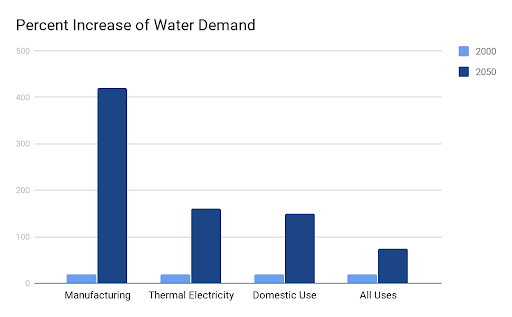
Just 50 years ago, people viewed water as virtually limitless. We’ve since come to realize that’s not the case. As environmental awareness has grown, so have regulations aimed at conserving water resources. But despite these efforts, the global demand for water continues to rise.
The shift in perception can be attributed to several factors. One major factor is the increasing population and economic growth, which demands more water resources for industrial, agricultural, and domestic use. Additionally, climate change has led to changes in precipitation patterns and increased evaporation rates, further exacerbating water scarcity issues.
Water Demand Across Industries
The global water demand is a complex issue, involving almost every industry. Water is used in manufacturing, agriculture, households, recreation, and more. Take, for instance, the Mesopotamian civilization, which thrived around the Tigris and Euphrates rivers. Similarly, ancient Egypt relied heavily on the Nile. These historical examples demonstrate how water has shaped human development.
In modern times, the global water demand is driven by various sectors:
- Agriculture: The agricultural sector accounts for 70% of water consumption in the United States alone. Irrigation is a significant user of water, with an estimated 11 billion cubic meters used annually in Italy.
- Industry: Industrial applications account for 22% of global water usage. Water is required for manufacturing processes, cooling systems, and other industrial activities.
- Domestic Use: Domestic water consumption accounts for only 8% of global water usage. This includes drinking water, household cleaning, and other personal hygiene needs.
The Global Water Crisis
From London to Tokyo, cities that rely heavily on accessible water resources have experienced significant growth. Meanwhile, regions with limited water supplies, such as North Africa and the Middle East, have struggled with economic development.
The global water crisis has far-reaching implications for human health, economic development, and environmental sustainability. Water scarcity can lead to:
- Food insecurity: Insufficient water supply can impact crop yields and food production, leading to shortages and increased prices.
- Economic instability: Water scarcity can disrupt industries, such as manufacturing and agriculture, resulting in economic losses and job losses.
- Environmental degradation: Over-extraction of groundwater can lead to land subsidence, saltwater intrusion, and loss of biodiversity.
Industrial Demand for Water: A Hidden Reality
While the agricultural sector is a significant user of water, other industries, such as energy production and manufacturing, require substantial amounts as well. The production of fossil fuels, chemicals, and fertilizers all demand large quantities of water. Even seemingly innocuous activities like cooling systems require significant amounts of water.
The industrial demand for water can be broken down into several categories:
- Energy production: Water is used in the production of electricity, with an estimated 6% of global freshwater usage dedicated to this purpose.
- Manufacturing: Manufacturing processes require large quantities of water for cooling systems, cleaning, and other purposes.
- Chemical processing: Chemical production requires water for extraction, purification, and other processes.
Domestic Water Consumption
In contrast, domestic water consumption accounts for only 8% of global water usage. This includes drinking water, household cleaning, and other personal hygiene needs. In Western countries, the average person consumes around 50 liters of water per day.
Despite the relatively low share of domestic water consumption, there are still opportunities to reduce water waste and promote sustainable practices in households:
- Fixing leaks: Simple fixes like replacing worn-out washers or repairing pipes can save significant amounts of water.
- Low-flow appliances: Installing low-flow showerheads, toilets, and sinks can reduce water usage while maintaining household comfort.
- Sustainable practices: Implementing sustainable practices like water-efficient gardening, rainwater harvesting, and graywater reuse can make a positive impact on domestic water consumption.
The Global Water Demand: A Summary
- 70%: Irrigation in agriculture
- 22%: Industrial applications
- 8%: Domestic use
As we move forward, it’s crucial to address these numbers and find solutions to reduce our global water demand. By understanding the true picture of water consumption, we can work towards a more sustainable future.
Frequently Asked Questions
- Q: Why is water scarcity such a significant issue?
A: Water scarcity affects not only humans but also the environment, affecting ecosystems, economies, and social structures. - Q: Which sectors consume the most water globally?
A: Agriculture accounts for 70% of global freshwater usage, followed by industrial applications at 22%, and domestic use at 8%. - Q: How can we reduce our water consumption?
A: Simple changes like fixing leaks, using low-flow appliances, and adopting sustainable practices can make a significant impact. - Q: What role do governments play in addressing global water scarcity?
A: Governments must implement policies to conserve water resources, regulate industries, and invest in efficient technologies. - Q: Can we rely solely on technological innovations to solve the global water crisis?
A: While technology can help, it’s essential to adopt behavioral changes and ensure that innovations are used sustainably. - Q: How can individuals contribute to reducing global water demand?
A: By making conscious choices in their daily lives, such as conserving water at home, supporting sustainable agriculture, and advocating for environmental policies. - Q: What is the future of water management in terms of sustainability?
A: A combination of innovative technologies, policy changes, and individual actions will be necessary to ensure a sustainable future for global water resources. - Q: Can we expect a universal access to clean drinking water in the near future?
A: While progress has been made, many challenges remain. Ensuring universal access to clean drinking water requires continued commitment to conservation, innovation, and policy development.
As we navigate the complex issue of global water demand, it’s essential to understand that every drop counts. By working together, governments, industries, and individuals can find solutions to reduce our global water demand and create a more sustainable future for all.



