
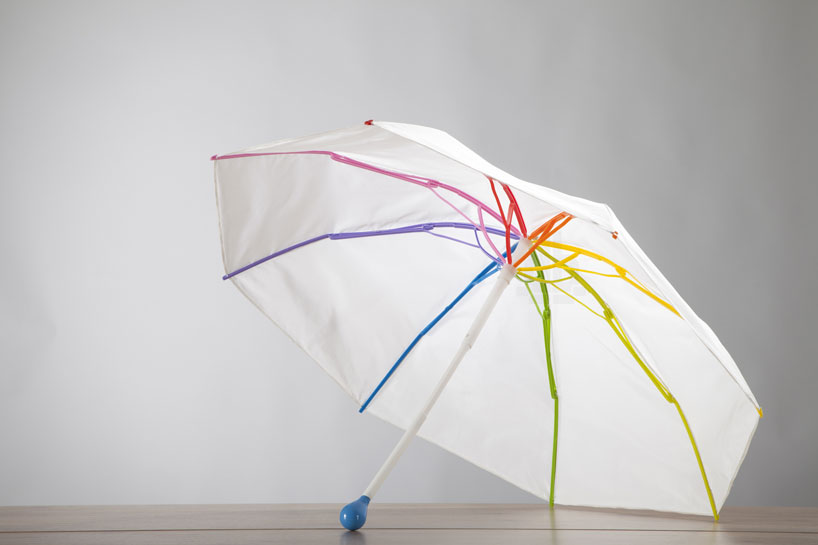
As we navigate through the challenges of climate change and waste management, innovative solutions are emerging to make a positive impact on our planet. One such solution is Ginkgo, an umbrella made entirely from recyclable polypropylene that is both robust and eco-friendly.
What is Ginkgo?
Ginkgo is a compact, fully recyclable umbrella made from a single piece of polypropylene plastic. This material has numerous benefits over traditional metal umbrellas, including reduced component count (from 120 to 20) and simplified assembly through snap-fit joints that require no tools.
A Genius Idea?
Ginkgo’s unique design has earned it recognition in various competitions. In 2011, the idea won the I2P Competition organized by the Politecnico di Milano Accelerator of Business, and in 2012, it received the prestigious James Dyson Award Italia for innovation.
How Did Ginkgo Come to Be?
The idea was born out of a chance encounter. A girl’s broken umbrella had Federico Venturi, one of the project partners, thinking, “Someone should invent an umbrella made from rubber.” This sparked the creation of the first prototype. Then, engineer Gianluca Savalli joined forces with Federico to refine the design and make it functional.
Why Polypropylene?
The choice of polypropylene was deliberate. This material is widely used and highly recyclable. Its properties include elasticity and resistance, making it suitable for various applications. When combined with other materials like talc and glass fibers, its durability increases while maintaining recyclability.
Is Ginkgo 100% Recyclable?
Unlike traditional umbrellas, which often contain metal and plastic components that cannot be easily recycled, Ginkgo is fully recyclable due to its polypropylene construction. The entire umbrella can be sent for recycling without disassembly.
How Does Ginkgo Compare to Traditional Umbrellas?
Traditional umbrellas are mostly made of metal (80%) with the remaining 20% consisting of plastic and polyester. While these materials can be recycled, they often require separation before being recycled. In contrast, poliesters have a recyclable lifespan of over 1,000 years.
Why Is Ginkgo More Robust?
The main weakness in traditional umbrellas is the joints where the bristles meet the umbrella’s body. These points are prone to breaking or bending. To address this, Ginkgo features a single piece of flexible polypropylene for the entire bristle structure, ensuring that it can deform under wind pressure or impact without breaking.
The Role of the Politecnico Foundation
The Fondazione Politecnico di Milano played a crucial role in transitioning from concept to production. With the support of the Accelerator of Business and funding from various sources, they helped develop the project into an industrial-scale endeavor.
Designing for Sustainability
Ginkgo’s design embodies sustainable principles by reducing material usage and increasing recyclability. Its compact size minimizes the amount of packaging required during distribution, further reducing waste. The umbrella’s robust construction ensures that it can withstand harsh weather conditions without degrading.
Impact on Waste Management
The adoption of Ginkgo could significantly impact waste management strategies worldwide. By promoting recycling and reducing electronic waste, we can create a more circular economy. This approach encourages companies to prioritize sustainability in their product development processes.
The Future of Sustainable Design
Ginkgo’s success serves as an example for innovative design thinking that considers environmental implications. Its production could inspire similar eco-friendly products across various industries, leading to widespread adoption and transformation in the way we produce, consume, and dispose of materials.
Will Ginkgo Be Available for Purchase?
Ginkgo is currently in development with plans to launch in May and distribute through a crowdfunding campaign. The website allows users to personalize their umbrellas using a widget.
Frequently Asked Questions
Q1: What makes Ginkgo so unique?
A1: Ginkgo’s uniqueness lies in its fully recyclable design, made entirely from polypropylene.
Q2: How is Ginkgo different from traditional umbrellas?
A2: Unlike traditional umbrellas, which often contain metal and non-recyclable components, Ginkgo is constructed solely from polypropylene for optimal recyclability.
Q3: Why did you choose to use polypropylene?
A3: Polypropylene was selected due to its widespread usage, high recyclability, and versatility in various applications.
Q4: Is Ginkgo more expensive than traditional umbrellas?
A4: No; we expect to offer competitive pricing while maintaining a premium for our eco-friendly design.
Q5: What is the plan for distribution?
A5: We aim to launch through crowdfunding with plans for online sales and partnerships with eco-conscious retailers.
Q6: How does one recycle Ginkgo umbrellas?
A6: As per the manufacturer’s guidelines, simply deposit Ginkgo into your local recycling bin or drop-off location for proper processing.
Q7: Can I customize my Ginkgo umbrella?
A7: Yes; visit our website to personalize your umbrella using a widget and choose from various colors.
Q8: What is the timeline for mass production?
A8: Production will begin in May, with distribution starting from settembre (September).
In conclusion, Ginkgo represents a significant step towards sustainability in product design. Its innovative construction and fully recyclable materials demonstrate that technology can support eco-friendly solutions while maintaining functionality and aesthetics.


