
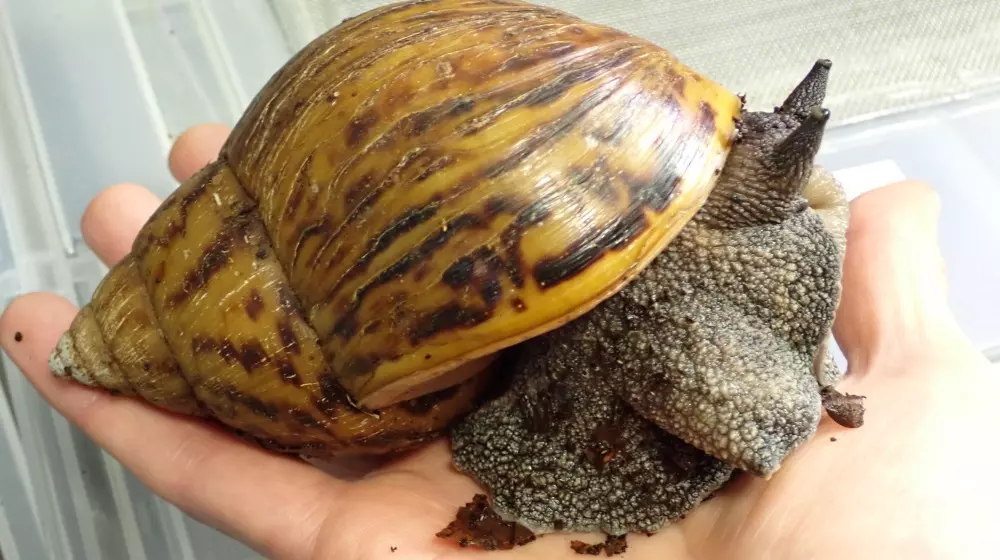
As one of the most invasive species in the world, the giant African snail (Achatina achatina) has been causing significant damage to crops and ecosystems. In this article, we’ll delve into the characteristics, care, nutrition, reproduction, and other interesting facts about these fascinating creatures.
Characteristics of the Giant African Snail
The giant African snail is the largest species of snail in the world, with some individuals reaching a length of 39 cm (15.4 inches) and weighing up to 1 kg (2.2 lbs). Its shell has a distinctive yellow and black striped pattern, which makes it easy to distinguish from other snail species.
The shell’s shape is also unique, with a pointed tip that sets it apart from other snails. The snail’s body is generally dark brown or reddish-brown in color, with some individuals displaying pink or red hues.
In addition to their striking appearance, giant African snails are also known for their impressive size and strength. They can move slowly but steadily, using their muscular foot to glide over surfaces and their radula (tongue-like structure) to scrape up food particles.
Care and Housing of the Giant African Snail
Keeping giant African snails as pets can be a rewarding experience, but it requires careful consideration and attention to detail. Here are some tips for housing these fascinating creatures:
- Temperature: Maintain a temperature range of 26-28°C (79-82°F) for optimal growth and development.
- Humidity: Keep the terrarium humid by misting with water daily and ensuring good air circulation.
- Diet: Provide a balanced diet that includes leafy greens, fruits, vegetables, and commercial snail food. Avoid acidic or spicy foods.
- Substrate: Use a deep substrate that allows your snail to burrow and interrers properly.
It’s essential to provide a suitable environment for your giant African snail to thrive. A well-ventilated terrarium with adequate humidity and temperature control is crucial for their health and longevity.
Housing Options
There are several housing options available for keeping giant African snails, including:
- Terrariums: These are the most common type of enclosure used for snails. They provide a secure and humid environment that mimics the snail’s natural habitat.
- Aquariums: These can be used to create a larger, more elaborate enclosure that includes multiple levels and hiding places.
- Tunnels and tents: These can be used to create a more naturalistic environment and provide your snail with plenty of opportunities for exploration.
Nutrition of the Giant African Snail
Giant African snails are omnivores, which means they feed on both plants and animals. In the wild, they consume a wide variety of foods, including leaves, stems, roots, and even small insects.
In captivity, you can provide your snail with a diet that includes:
- Leafy greens (such as kale, spinach, and collard greens)
- Fresh fruits (like apples, bananas, and berries)
- Vegetables (like carrots, cucumbers, and squash)
- Commercial snail food
Remember to avoid feeding your snail acidic or spicy foods, as they can cause harm.
Feeding Tips
Here are some additional tips for feeding your giant African snail:
- Feed your snail a varied diet to ensure they receive all the nutrients they need.
- Avoid overfeeding, as this can lead to obesity and other health problems.
- Provide fresh water daily to keep your snail hydrated and healthy.
Reproduction of the Giant African Snail
Giant African snails are hermaphrodites, which means they possess both male and female reproductive organs. However, they still require a mate to reproduce successfully.
After mating, the female snail will deposit an egg mass in a burrow or crevice. The number of eggs can vary from 50 to over 100, depending on the individual snail.
The eggs take around 20-30 days to hatch, and the newly hatched snails will begin eating their eggshells immediately. It’s essential to provide a suitable environment for your snails to thrive after they’ve hatched.
Breeding in Captivity
If you’re interested in breeding giant African snails in captivity, here are some additional tips:
- Use a separate enclosure or terrarium for the female snail during breeding.
- Provide a heat source and adequate humidity to ensure successful fertilization.
- Monitor the eggs closely after they’ve hatched, as it can take several weeks for them to grow and develop.
Interesting Facts about the Giant African Snail
- The giant African snail is one of the most invasive species in the world, causing significant damage to crops and ecosystems.
- These snails can live up to 20-30 years in captivity with proper care.
- They are known for their unique shell shape and color pattern.
- Giant African snails are skilled escape artists and can fit through tiny openings.
- They have a remarkable ability to survive in extreme temperatures, from as low as 10°C (50°F) to as high as 30°C (86°F).
Frequently Asked Questions
- Q: How long does it take for the giant African snail to mature?
A: It can take up to 6-8 months for a snail to reach maturity, depending on factors like temperature and humidity. - Q: What is the ideal diet for a giant African snail?
A: A balanced diet that includes leafy greens, fruits, vegetables, and commercial snail food is essential for their health and longevity. - Q: Can I keep multiple giant African snails together in the same terrarium?
A: No, it’s not recommended to keep multiple snails together as they can fight and compete for resources. - Q: How often should I mist my snail’s terrarium with water?
A: Mist your snail’s terrarium daily to maintain humidity levels between 50-70%. - Q: Can giant African snails be kept outdoors in a garden or greenhouse?
A: Yes, but it’s essential to provide a suitable enclosure and protection from extreme temperatures and predators. - Q: How can I identify a healthy giant African snail?
A: Look for a shell that is sturdy, free of cracks, and has no signs of mold or fungal growth. - Q: Can I handle my giant African snail safely?
A: Yes, but make sure to wash your hands thoroughly before and after handling the snail to avoid transferring bacteria. - Q: Are giant African snails endangered?
A: No, they are not currently considered an endangered species.
By following these tips and guidelines, you can provide a happy and healthy home for your giant African snail. Remember to do plenty of research and consult with experts before bringing these fascinating creatures into your life.


