
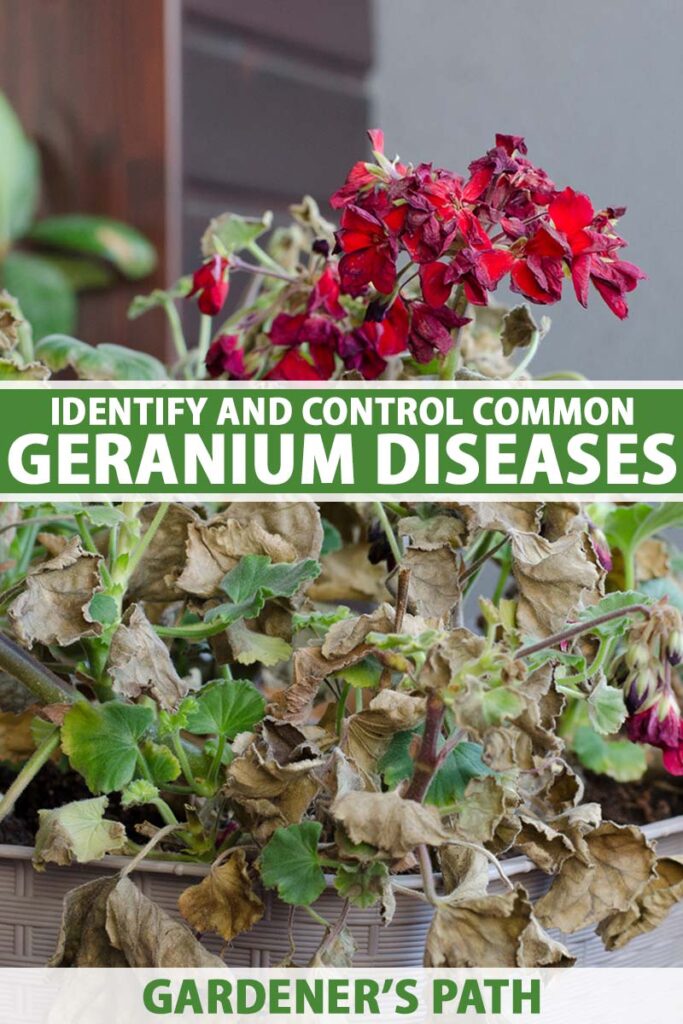
As an avid gardener in the southern part of Italy, you may be familiar with cultivating geraniums outdoors in their natural habitat. However, if you live in a region with harsh winters or cannot provide your geraniums with outdoor conditions suitable for year-round growth, consider growing them in containers that can be moved to the outdoors starting from April when temperatures have begun to rise and the risk of late frosts has passed.
In this article, we’ll explore how to prevent and treat common geranium diseases, including ruggine, nutrient deficiencies, root rot, pests like aphids, whiteflies, and spider mites, and farfallina del geranio (Cacyreus marshalli).
Preventing Geranium Diseases
To minimize the risk of developing geranium diseases, follow these steps:
- Change the potting soil annually: Replace it with a well-draining, specifically designed potting mix for flowering plants. Avoid using general-purpose soil, as it may not provide enough nutrients.
- Remove old root material and expand the root zone: Cut away dead or damaged roots to prevent the spread of disease.
- Provide sufficient space between individual geranium plants: This will help prevent overcrowding, which can lead to increased susceptibility to disease.
- Use containers with good drainage holes: Prevent waterlogged soil by ensuring that excess water can drain out of the container.
Common Geranium Diseases
Geraniums are susceptible to several diseases, including:
1. Ruggine (Frostbite)
Ruggine is a common disease affecting geraniums, characterized by brown or yellow spots on the leaves and stems. To treat frostbite, use copper-based fungicides in early spring before new growth appears.
2. Nutrient Deficiencies
Geraniums require adequate nutrients to stay healthy. A lack of essential micronutrients can cause yellowing leaves, stunted growth, and reduced flowering. Fertilize your geraniums regularly during the growing season with a balanced fertilizer.
3. Root Rot
Root rot occurs when the roots of the plant become waterlogged or infected with pathogens. To prevent root rot, ensure good drainage in the potting soil and avoid overwatering.
4. Pests (Aphids, Whiteflies, Spider Mites)
Pests like aphids, whiteflies, and spider mites can weaken geranium plants by sucking their sap. Control pests by practicing good air circulation and using insecticidal soap or neem oil.
5. Farfallina del Geranio (Cacyreus marshalli)
Farfallina del geranio is a serious pest that affects geraniums, causing damage to the plant’s foliage and flowers. To control farfallina del geranio, use insecticides like Bt or pyrethroids.
Pruning Geraniums
Pruning your geraniums regularly helps maintain their health and promote new growth. Prune your geraniums in the following ways:
- Cut back the entire plant: This is suitable for zonal geraniums, leaving about 10 cm of stem intact.
- Prune back individual stems: For climbing geraniums like edera, cut back nearly two-thirds of the stem.
Pest Control Methods
In addition to preventing pests, consider using the following methods to control infestations:
- Hand-picking: Regularly inspect your plants and remove any visible pests.
- Insecticidal soap or neem oil: Use these products as a last resort, following the manufacturer’s instructions carefully.
Integrated Pest Management (IPM) Strategies
To effectively manage pests on your geraniums, consider implementing an IPM strategy:
- Encourage beneficial insects: Attract natural predators, such as ladybugs or lacewings, which feed on pests.
- Use physical barriers: Cover plants with fine-mesh screens to prevent pests from reaching them.
Conclusion
Geraniums are beautiful and popular flowering plants that require proper care to thrive. By following these tips for preventing diseases and pruning your geraniums regularly, you can help maintain their health and promote vibrant blooms.
FAQs
1. What is the best way to prevent ruggine on geraniums?
To prevent frostbite, treat your geraniums with copper-based fungicides in early spring before new growth appears.
2. How often should I fertilize my geraniums?
Fertilize your geraniums regularly during the growing season with a balanced fertilizer.
3. What is root rot and how can I prevent it?
Root rot occurs when the roots of the plant become waterlogged or infected with pathogens. To prevent root rot, ensure good drainage in the potting soil and avoid overwatering.
4. How do I control pests on my geraniums?
Practice good air circulation and use insecticidal soap or neem oil to control pests like aphids, whiteflies, and spider mites.
5. What is farfallina del geranio and how can I control it?
Farfallina del geranio is a serious pest that affects geraniums. Use insecticides like Bt or pyrethroids to control this pest.
6. How do I choose the right potting mix for my geraniums?
Choose a well-draining, specifically designed potting mix for flowering plants to provide your geraniums with adequate nutrients and prevent waterlogged soil.
7. What is the best way to propagate geraniums?
Propagate geraniums by dividing established plants in the spring or autumn, using stem cuttings, or through seed.
8. How often should I repot my geraniums?
Repot your geraniums every year to replace old potting soil with fresh, well-draining mix and provide enough space for new growth.
By following these tips and maintaining a healthy environment, you can enjoy thriving geraniums that produce beautiful blooms throughout the growing season.


