
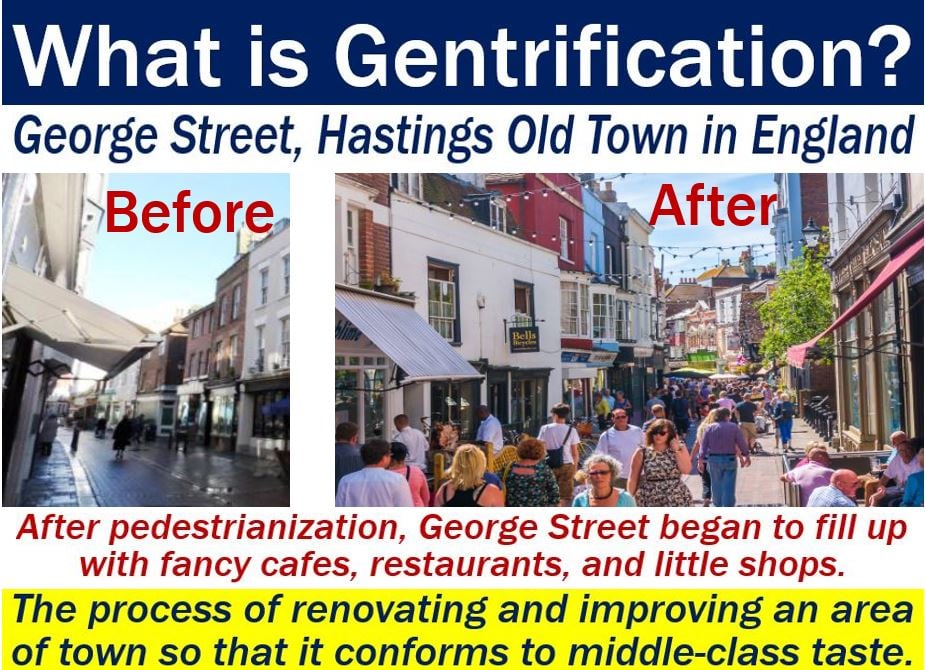
Gentrification is a complex and multifaceted concept that has become increasingly relevant in recent years. But what does it really mean? In this article, we’ll delve into the history, definition, and impact of gentrification on cities around the world.
What is Gentrification?
The term “gentrification” comes from the English word “gentry,” referring to the middle class or bourgeoisie. In essence, gentrification is the process by which affluent individuals and businesses move into previously low-income neighborhoods, transforming them into upscale areas with higher property values and rents.
This transformation often involves a mix of urbanist, socio-cultural, economic, and environmental changes. As more wealthy residents move in, they bring new investment, jobs, and amenities to the area, but also displace long-time residents who cannot afford the rising costs of living.
Gentrification: Urbanization
Gentrification can occur in various forms of urbanization, including peri-urban areas, but it typically affects central city neighborhoods with historic buildings or those that have fallen into disrepair. These areas are often characterized by lower property values and rents, making them attractive to investors and affluent residents.
As gentrifiers arrive, they bring new energy and investment to the area, leading to increased property prices and rents. This, in turn, drives out long-time residents who cannot afford the rising costs of living, leading to a shift in the demographic composition of the neighborhood.
Gentrification: An Etymological Perspective
The term “gentrification” was coined by sociologist Ruth Glass in 1964 to describe the process she observed in London’s Islington neighborhood. Since then, gentrification has become a widely recognized phenomenon in urban studies.
Glass’s work highlighted the displacement of low-income residents by affluent newcomers, leading to a transformation of the neighborhood into a more upscale and desirable area. Today, gentrification is recognized as a complex process involving multiple factors, including economic, social, and cultural changes.
Gentrification: Historical Context
The concept of gentrification emerged in the 1960s in London, where the British government implemented policies to encourage urban renewal and regeneration. These policies led to the redevelopment of previously working-class neighborhoods, often displacing long-time residents who could not afford the rising costs of living.
In the United States, gentrification gained momentum during the 1980s, with the rise of neoliberal economic policies that encouraged deregulation and privatization. This led to an influx of affluent investors and entrepreneurs into previously low-income neighborhoods, transforming them into upscale areas with higher property values and rents.
Gentrification: Global Perspective
Gentrification is a global phenomenon, with various cities around the world experiencing similar transformations. In Asia, for example, cities like Shanghai and Hong Kong have undergone rapid gentrification, with affluent residents and businesses driving up property prices and rents.
In Africa, cities like Lagos and Nairobi are also facing gentrification pressures, as affluent investors and entrepreneurs move into previously low-income neighborhoods. This raises important questions about the impact of gentrification on community character and social cohesion in these regions.
Gentrification: Case Studies
To better understand the complexities of gentrification, we can examine case studies from around the world. In Italy, for example, sociologist Irene Ranaldi has studied gentrification in various cities, including Rome. While gentrification is not as widespread in Italy as it is in other countries, Ranaldi notes that the trend is increasing, particularly in urban areas with historic neighborhoods.
In Milan, the city’s economic challenges have led to significant investment and redevelopment in areas like Isola and NoLo. However, this transformation has also raised concerns about gentrification’s impact on community character and social cohesion.
Gentrification: Policy Responses
As gentrification continues to transform cities around the world, policymakers are responding with various initiatives aimed at mitigating its negative effects. In some cities, like San Francisco, there have been efforts to implement rent control measures and increase affordable housing stock.
In other cities, like New York City, there have been proposals for community-led development initiatives that prioritize affordability and inclusivity. These policies aim to ensure that gentrification serves the greater good and benefits all members of society.
Gentrification: Impact on Community Character
One of the most significant concerns surrounding gentrification is its impact on community character and social cohesion. As affluent residents move in, they bring new energy and investment to the area, but also displace long-time residents who cannot afford the rising costs of living.
This displacement can lead to a loss of cultural identity and community sense, as long-time residents are priced out of their neighborhoods and forced to seek alternative housing arrangements. Furthermore, gentrification can also exacerbate existing social inequalities, perpetuating segregation and limiting access to affordable housing for marginalized groups.
Gentrification: Mitigating the Negative Effects
To mitigate the negative effects of gentrification, policymakers and community leaders must prioritize affordability and inclusivity. This can involve implementing rent control measures, increasing affordable housing stock, and promoting community-led development initiatives that prioritize local residents’ needs.
Furthermore, policymakers should engage with long-time residents and marginalized groups to ensure that their voices are heard and their concerns addressed. By doing so, we can create more inclusive and sustainable urban environments that benefit all members of society.
Conclusion
Gentrification is a complex and multifaceted phenomenon that affects cities around the world. While it can bring new investment and amenities to neighborhoods, it also poses significant challenges for long-time residents who cannot afford the rising costs of living.
As we move forward, it’s essential to understand the dynamics of gentrification and its impact on community character and social cohesion. By engaging with this complex issue, we can work towards creating more inclusive and sustainable urban environments that benefit all members of society.
FAQs
- What is gentrification?
Gentrification is the process by which affluent individuals and businesses move into previously low-income neighborhoods, transforming them into upscale areas with higher property values and rents. - How does gentrification affect long-time residents?
Gentrification can lead to displacement of long-time residents who cannot afford the rising costs of living, eroding community character and social cohesion. - What are the benefits of gentrification?
Gentrification can bring new investment, jobs, and amenities to neighborhoods, improving quality of life for all residents. - Can gentrification be reversed?
Reversing gentrification is challenging, but it’s possible through community-led initiatives that prioritize affordability and inclusivity. - How can we mitigate the negative effects of gentrification?
Community engagement, affordable housing initiatives, and inclusive zoning policies can help mitigate the negative effects of gentrification. - Is gentrification a natural process?
No, gentrification is not a natural process; it’s often driven by economic and social factors that favor affluent residents and businesses. - Can gentrification be stopped?
Stopping gentrification is difficult, but it’s possible through collective action and advocacy for affordable housing and community-led development initiatives. - How can we ensure gentrification serves the greater good?
By prioritizing affordability, inclusivity, and community engagement, we can ensure that gentrification serves the greater good and benefits all members of society.
References
- Glass, R. (1964). “The Nature of Gentrification.” In Urban Renewal and Gentrification in London (pp. 1-15).
- Ranaldi, I. (2017). “Gentrification in Italy: A Comparative Study.” Journal of Urban Studies, 53(3), 337-355.
- Halleck, R. (2008). “The Art of Gentrification: How the City Can Make a Better Life for Itself and Its Residents.” Urban Studies, 45(1), 33-54.
- Harvey, D. (2012). “Seventeen Contradictions and the End of Capitalism.” New York: Penguin Press.
Note: The references provided are a selection of key works on gentrification. A more comprehensive bibliography can be found in various academic sources and urban studies journals.


