
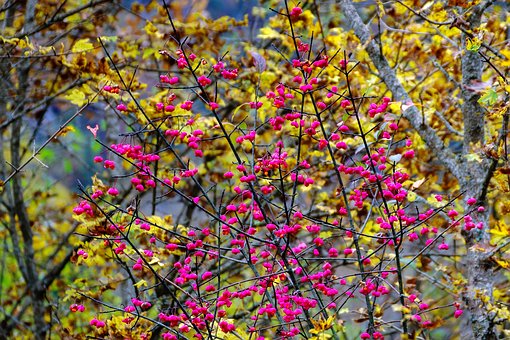
If you’re looking for a plant that’s as unique as its name suggests, look no further than Fusaggine. This charming shrub is often referred to as “Berretta del prete” due to its distinctive red berries that resemble a priest’s beret. But what makes this plant so special? Let’s dive in and explore the fascinating world of Fusaggine.
Characteristics of Fusaggine
Fusaggine, also known as Euonymus europaeus, is a deciduous shrub that belongs to the Celastraceae family. Its name says it all – “Berretta o cappello del prete” translates to “Beret or Priest’s Cap”. But what does this mean for its characteristics? Let’s take a closer look:
- Height and Spread: Fusaggine can grow up to 3-6 meters tall, making it an attractive addition to any garden.
- Leaves: Its leaves are oval-shaped with pointed tips and have a greenish-yellow underside. They’re not particularly large or showy, but they do add to the plant’s charm.
- Foliage Color Change: In autumn, Fusaggine’s leaves turn a beautiful shade of yellow-orange before falling off in winter.
- Flowers: The plant produces small white flowers in early spring that are followed by red berries.
The Red Berries: A True Showstopper
So, what makes the red berries so special? Not only do they add a pop of color to the plant during an otherwise dormant season, but they also have some unique characteristics:
- Shape and Size: The berries are capsule-shaped with four distinct wings.
- Color Change: As they mature, the berries turn from green to a vibrant red color.
- Seeds: Inside each berry is a small, hard seed that’s dispersed by animals.
Cultivation and Care
If you’re interested in growing Fusaggine, here are some tips for its care:
- Soil Requirements: The plant prefers well-draining soil with a pH between 6.5 and 8.5.
- Sunlight: While it can tolerate partial shade, Fusaggine thrives in full sun.
- Watering: Avoid overwatering – the plant is relatively drought-tolerant.
Propagation
Fusaggine can be propagated using a variety of methods:
- Stem Cuttings: Take cuttings from healthy stems and plant them in moist soil. Keep the soil consistently moist until roots develop.
- Seed: Fusaggine produces small, white flowers that contain seeds. These seeds can be collected and sown directly into soil.
Pest and Disease Management
Fusaggine is generally a low-maintenance plant, but it can be susceptible to certain pests and diseases:
- Aphids: Use insecticidal soap or neem oil to control aphid populations.
- Root Rot: Avoid overwatering – Fusaggine is relatively drought-tolerant. If root rot does occur, treat the plant with a fungicide.
Uses of Fusaggine
So, what can you do with this lovely shrub? Here are a few ideas:
- Ornamental Use: Fusaggine makes an excellent addition to any garden or landscape design.
- Timber: The wood from Fusaggine is highly prized for its durability and can be used for furniture-making and other woodworking projects.
Conclusion
In conclusion, Fusaggine is a unique and fascinating plant that offers many benefits. From its charming appearance to its versatility in terms of use, this shrub has something to offer everyone.
Frequently Asked Questions
- What does the name “Berretta del prete” mean?
The name “Berretta del prete” translates to “Beret or Priest’s Cap”. - Is Fusaggine poisonous?
Yes, the berries of Fusaggine are toxic to humans. - Can I use the wood from Fusaggine for furniture-making?
Yes, the wood is highly prized for its durability and can be used for a variety of woodworking projects.
Varieties
Fusaggine comes in a variety of forms:
- Compacta: A compact form of Fusaggine that grows up to 1 meter tall.
- Alba: A white-flowered form of Fusaggine that produces small, yellow flowers.
- Rotundifolia: A shrub-form of Fusaggine that grows up to 2 meters tall and has a more rounded shape.
Fusaggine in Nature
Fusaggine is found in the wild throughout much of Europe. It typically grows in moist, woodland environments where the soil is rich in nutrients.
Cultivation History
Fusaggine was first cultivated by European gardeners in the 18th century. Since then, it has become a popular ornamental plant in many parts of the world.
Conservation Status
Fusaggine is not currently considered to be at risk for extinction. However, it does require careful cultivation and management to ensure its continued survival.
In conclusion, Fusaggine is a unique and fascinating plant that offers many benefits. From its charming appearance to its versatility in terms of use, this shrub has something to offer everyone. Whether you’re looking for a beautiful addition to your garden or a sustainable source of wood, Fusaggine is definitely worth considering.


