
As we navigate the complexities of modern life, it’s easy to lose touch with the natural world and our place within it. However, by embracing foraging, we can reconnect with the earth and reap a multitude of benefits. In this article, we’ll delve into the world of wild food gathering, exploring its history, benefits, and practical applications.
What is Foraging?
Foraging refers to the practice of collecting and using wild, edible plants, fruits, and other organisms for food. This ancient tradition has been passed down through generations, with many cultures relying on it as a primary source of nutrition during times of scarcity. Today, foraging has experienced a resurgence in popularity, driven by growing concerns about sustainability, health, and the environment.
The Revival of Foraging
In recent years, there’s been a noticeable shift towards embracing wild foods as a sustainable alternative to industrial agriculture. This movement is often linked to the “cool” factor, with terms like “foraging” and “wild food gathering” gaining traction in mainstream media. While this trend may be driven by social media and celebrity chefs, it’s essential to recognize that foraging has been an integral part of human culture for centuries.
Benefits of Foraging
So, what are the benefits of foraging? Let’s explore some of the most significant advantages:
- Environmental Sustainability: By using wild plants, we reduce our reliance on industrial agriculture, which is a leading cause of deforestation, water pollution, and climate change.
- Improved Health: Wild foods tend to be rich in nutrients, antioxidants, and other beneficial compounds that are often lacking in modern diets.
- Cost-Effective: Foraging can save you money by providing a free source of fresh produce.
Foraging: Alberi e Fiori
You might be surprised to learn that many edible plants can be found on trees and flowers. Some examples include:
- Tiglio: The leaves, bark, and sap of the tiglio tree are all edible and offer a range of health benefits.
- Nasturzi: These colorful flowers can add a burst of flavor and color to salads, desserts, and other dishes.
Getting Started with Foraging
If you’re new to foraging, here are some practical tips to get you started:
- Learn to Identify: Familiarize yourself with common edible plants, including their shapes, colors, and habitats.
- Obtain Necessary Permissions: Make sure you have the necessary permissions before foraging in public spaces or on private land.
- Practice Sustainable Foraging: Only take what you need, and avoid over-harvesting to ensure the long-term health of the ecosystem.
Fruits and Berries
Foraging is not just about plants – it’s also an opportunity to discover wild fruits and berries. Some popular options include:
- Wild Strawberries: Sweet and juicy, wild strawberries are a delicious addition to salads, smoothies, and baked goods.
- Raspberries and Blackberries: These tart fruits can add a burst of flavor to desserts, yogurt parfaits, and savory dishes.
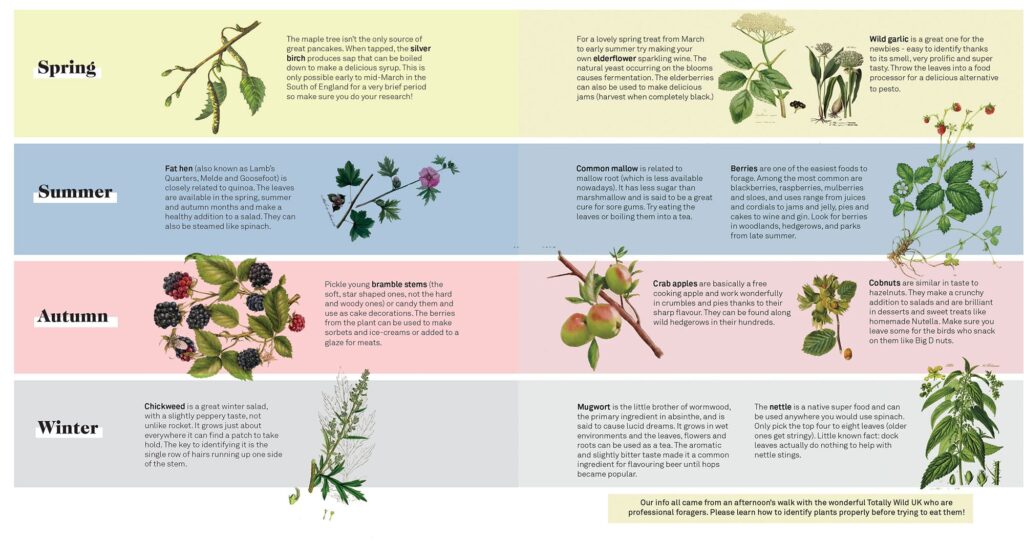
Foraging in Season
To maximize the benefits of foraging, it’s essential to understand the changing seasons. Different plants are available during different times of the year, so research specific foraging guidelines to ensure you’re picking the best options:
- Spring: Wild garlic, ramps, and wild strawberries are all available in the spring.
- Summer: Berries, melons, and herbs like mint and basil can be found in abundance during the summer months.
- Autumn: Mushrooms, acorns, and other fungi can be harvested in the autumn.
Conclusion
Foraging offers a unique opportunity to reconnect with nature, improve our health, and contribute to environmental sustainability. By embracing this ancient practice, we can break free from the constraints of industrial agriculture and cultivate a more sustainable food system. Whether you’re a seasoned forager or just starting out, there’s never been a better time to join the wild food revolution.
Frequently Asked Questions
- Q: Is it safe to eat wild plants?
A: While many wild plants are edible, some can be toxic or cause allergic reactions. Always research and identify plants before consumption. - Q: Can I forage in urban areas?
A: Yes, but make sure you obtain necessary permissions and follow local regulations. - Q: What’s the best way to store wild foods?
A: Store wild foods in a cool, dry place to preserve their nutritional value and flavor. - Q: Can I forage during peak seasons or only in off-seasons?
A: It depends on the plant. Some plants are available year-round, while others are seasonal. Research specific foraging guidelines for each plant. - Q: How can I learn more about foraging?
A: Join online forums, attend workshops, and read books to improve your knowledge and skills.
By embracing foraging, we can cultivate a healthier relationship with the natural world and create a more sustainable food system.


