
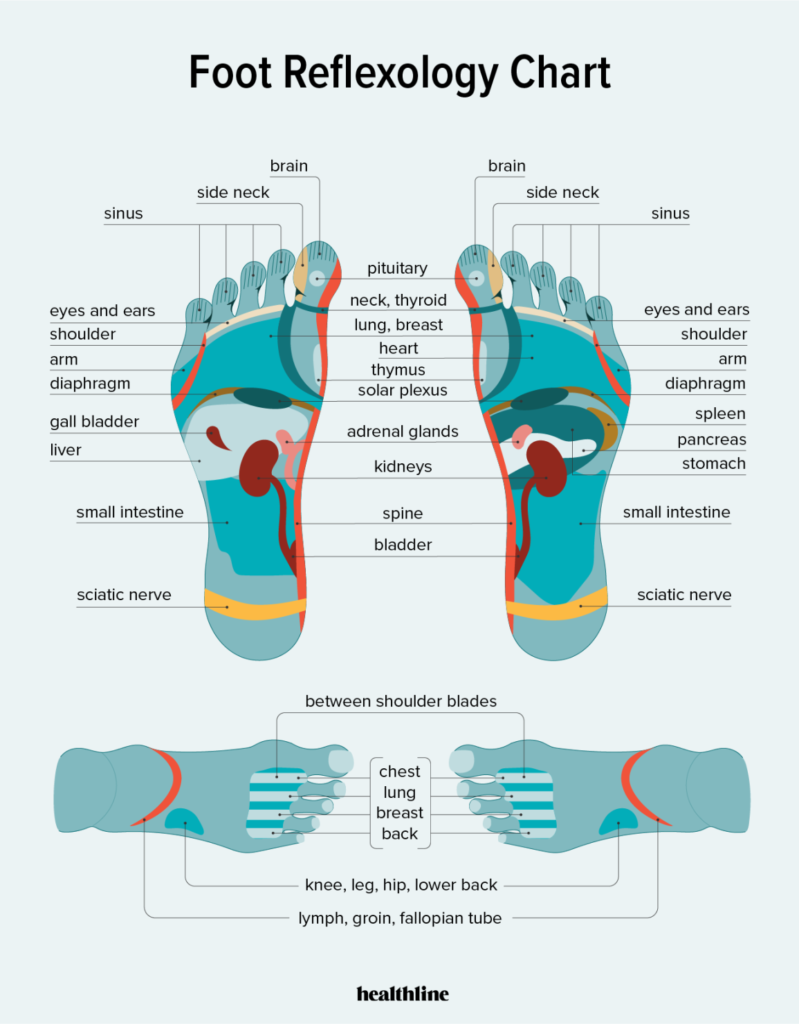
Have you heard of reflexology but aren’t sure what it is or how it works? Well, reflexology isn’t just a type of massage that involves applying specific pressure to your feet based on the belief that these body parts are connected to certain organs. In essence, reflexologists – those who practice this treatment – believe that applying a particular pressure to your feet can offer numerous health benefits.
But how does it work?
The Science Behind Reflexology
There are several theories about how reflexology works. For example, reflexology is based on the ancient Chinese belief in “qi” or “life energy.” According to this belief, qi flows through every person. When a person feels stressed, their body blocks qi, causing imbalances that can lead to illness. Reflexology aims to maintain qi flow through the body, keeping it balanced and free from diseases.
In traditional Chinese medicine, different parts of the body correspond to specific pressure points on the body. Ref reflexologists use maps of these points on the feet, hands, and ears to determine where to apply pressure, as they believe that their touch can send energy to the area that needs healing.
However, this isn’t the only philosophy behind reflexology. For instance, in 1890, British scientists discovered that nerves connect the skin and internal organs, and found out that the entire nervous system adapts to external factors, including touch.
In other words, a reflexologist’s touch can help calm the central nervous system, promote relaxation, and other benefits.
What Are the Potential Benefits of Reflexology?
Reflexology is linked to many potential benefits, but only some have been studied scientifically. Therefore, we need to proceed with caution. There are limited studies that prove reflexology can reduce stress and anxiety, alleviate pain, improve mood, and overall well-being.
Some people also report that reflexology has helped them:
- Boost their immune system
- Fight diseases
- Overcome colds and infections
- Contain sinus problems
- Recover from back issues
- Balance hormone levels
- Improve fertility
- Enhance digestion
- Alleviate arthritis pain
- Treat nervous disorders and medication side effects
However, it’s essential to note that while reflexology may have benefits, more extensive research is needed to confirm its effectiveness for these conditions.
What Does Research Say?
In reality, as we mentioned earlier, there are limited studies on reflexology. And many experts consider those that exist to be of low quality. Therefore, it’s best not to expect reflexology to solve a variety of health problems.
For instance, a 2011 study funded by the National Cancer Institute looked at how reflexology affected women with advanced breast cancer and found no improvement in pain relief. Another study published in 2014 examined the effects of reflexology on symptoms in women undergoing heart surgery and discovered that those who received reflexology had significantly lower anxiety levels.
Clearly, more extensive, detailed studies are needed to understand if reflexology truly helps reduce pain.
The History of Reflexology
Reflexology has its roots in ancient China, where it was known as “Zhen-Jiu.” The practice was used to balance the flow of qi and restore health. In 1890, two British scientists, William Moulton Marston and Frederick Mitchell, studied the connection between the feet and internal organs.
They discovered that different parts of the body corresponded to specific points on the feet, which could be stimulated to promote healing. This discovery led to the development of modern reflexology as we know it today.
The Process of Reflexology
A typical reflexology session involves a series of gentle manipulations, including pressing, massaging, and stroking, applied to specific areas of the foot based on the map provided by the reflexologist. The process is designed to be relaxing and calming, helping to reduce stress and promote overall well-being.
During the session, the reflexologist will typically start at the toes and work their way up the feet, applying gentle pressure to stimulate various organs and systems in the body. The pressure is often described as a deep, soothing pressure that can help release tension and promote relaxation.
What to Expect During a Reflexology Session
If you’re interested in trying reflexology, here’s what you can expect during a typical session:
- A thorough consultation with your reflexologist to discuss any health concerns or goals for the treatment
- A brief introduction to the principles of reflexology and how it works
- A series of gentle manipulations, including pressing, massaging, and stroking, applied to specific areas of the foot based on the map provided
- Relaxation techniques, such as deep breathing or guided imagery, to help you relax and release tension
- Regular breaks throughout the session to ensure your comfort and well-being
Common Reflexology Techniques
Reflexologists use a variety of techniques to stimulate the body’s energy centers. Some common techniques include:
- Pressure points: Gentle pressure is applied to specific areas of the foot to stimulate the corresponding organs and systems.
- Massage: The reflexologist will use their fingers or palms to massage specific areas of the foot to promote relaxation and release tension.
- Stroking: Gentle stroking motions are used to stimulate the body’s energy centers and promote healing.
- Acupressure: A technique that involves applying pressure to specific points on the feet to stimulate the flow of qi.
Is Reflexology Safe to Try?
In general, reflexology is very safe, even for people with serious health conditions. It’s not invasive, and it’s comfortable to receive. If you’re interested in trying it out, go for it!
However, our advice is always to talk to your doctor first, especially if you have issues like circulatory problems, blood clots, vein inflammation, gota, foot ulcers, fungal infections, thyroid problems, epilepsy, or low platelet count – conditions that can make bruising and bleeding more likely.
Finally, if you’re pregnant, inform your reflexologist before the session, as some pressure points on your feet may cause contractions. And remember, some people report minor side effects after reflexology sessions, such as dizziness and sensitivity, which tend to fade away soon after treatment.
Conclusion
In conclusion, while there is limited research on reflexology, many people report positive results from this ancient healing practice. As with any complementary therapy, it’s essential to approach reflexology with a critical and open-minded perspective.
By understanding the science behind reflexology, its potential benefits, and how it works, you can make an informed decision about whether or not it’s right for you. And if you do decide to try reflexology, remember to talk to your doctor first and inform them of any health concerns or conditions you may have.
Frequently Asked Questions (FAQs)
-
Q: What does the term “reflexology” mean?
A: Reflexology refers to a type of massage that involves applying specific pressure to your feet based on the belief that these body parts are connected to certain organs. -
Q: How does reflexology work?
A: Reflexology is believed to work by maintaining the flow of “qi” or “life energy” through the body, keeping it balanced and free from diseases. -
Q: What are some potential benefits of reflexology?
A: Reflexology is linked to many potential benefits, but only some have been studied scientifically. -
Q: Is reflexology safe to try?
A: In general, reflexology is very safe, even for people with serious health conditions. -
Q: Can I get reflexology if I’m pregnant or have a medical condition?
A: Yes, but it’s best to consult your doctor before trying reflexology if you have any health concerns. -
Q: What are the potential side effects of reflexology?
A: Some people report minor side effects like dizziness and sensitivity after reflexology sessions. -
Q: Can I use reflexology as a treatment for serious medical conditions?
A: While some studies suggest that reflexology may have benefits, it’s not a proven cure-all solution for serious health issues. -
Q: Is reflexology effective in reducing pain?
A: There is limited evidence to prove reflexology can reduce pain; more extensive research is needed. -
Q: Can I use reflexology if I’m taking medication or have certain medical conditions?
A: It’s best to consult your doctor before trying reflexology, especially if you’re on medication or have certain health concerns. -
Q: What should I expect during a reflexology session?
A: A typical reflexology session involves applying specific pressure to the feet based on the map provided, and can be very relaxing and comfortable.


