
What is Vitamin A?
Vitamin A is an essential nutrient that plays a crucial role in maintaining our overall health. It’s not just about keeping our eyesight sharp, but it also supports the growth of cells, the functioning of our immune system, and even helps to regulate inflammation.
The Benefits of Vitamin A
But what exactly does vitamin A do for us? Here are some of its key benefits:
- Boosts Immune System: Vitamin A helps keep our immune system in top shape by preventing infections and diseases.
- Supports Eye Health: It’s essential for maintaining healthy vision, especially in low light conditions. This is why people with vitamin A deficiencies often experience night blindness.
- Promotes Healthy Skin: Vitamin A helps maintain the integrity of our skin, reducing the risk of acne, eczema, and other skin problems.
- Supports Cell Growth: It plays a crucial role in cell growth and differentiation, which is essential for overall health and development.
Types of Vitamin A
There are two main forms of vitamin A: retinol and carotene. Retinol is found primarily in animal products like meat, fish, and dairy, while carotene is commonly found in plant-based foods such as fruits and vegetables.
- Retinol: This form of vitamin A is found in high concentrations in animal-derived foods, particularly:
- Meat (especially organ meats)
- Fish
- Dairy products
- Carotene: Carotenoids are a group of pigments that give fruits and vegetables their characteristic colors. They’re an excellent source of vitamin A and can be found in many foods, including:
- Sweet potatoes
- Pumpkin
- Squash
- Apricots
Food Sources of Vitamin A
Fortunately, there are plenty of delicious foods that are rich in vitamin A. Here are some examples:
- Fatty Fish: Fatty fish like salmon and sardines are excellent sources of retinol.
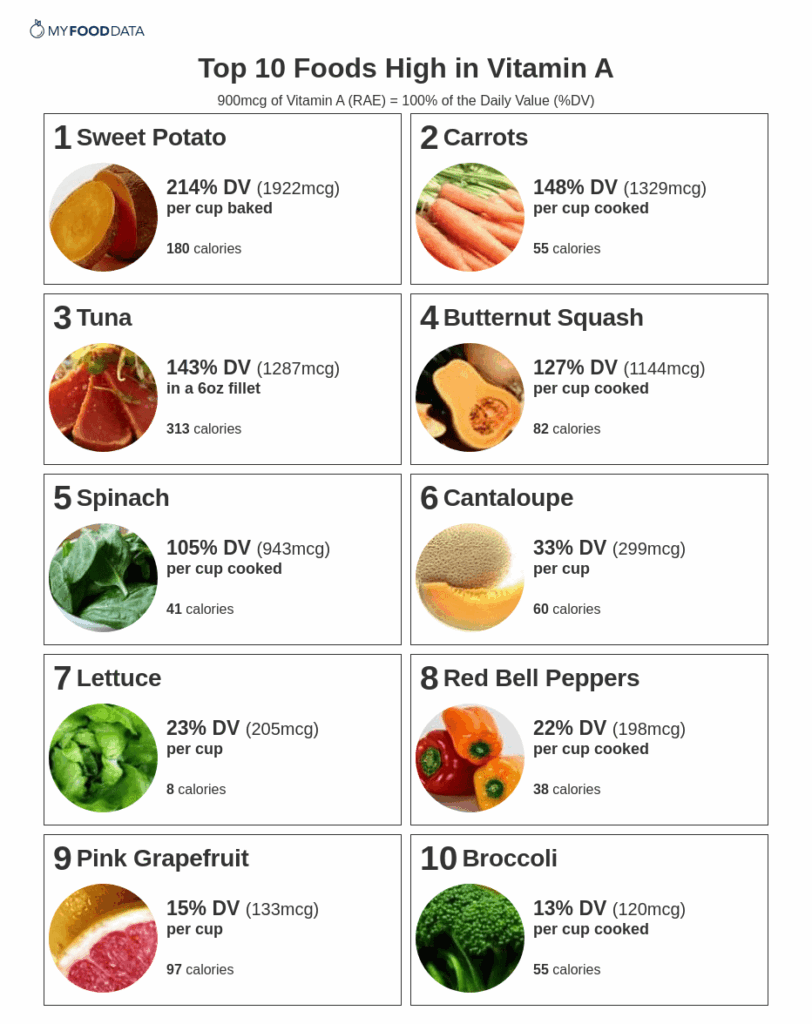
- Sweet Potatoes: These orange vegetables are an excellent source of beta-carotene, which converts to retinol in the body.
- Dark Leafy Greens: Spinach, kale, and collard greens are all rich in carotenoids and other forms of vitamin A.
- Carrots: While carrots themselves don’t contain much vitamin A, eating them with meals can help convert beta-carotene to retinol.
Preventing Deficiencies
While it’s unlikely that you’ll develop a severe vitamin A deficiency, there are some groups at higher risk:
- Pregnant Women: Pregnant women need more vitamin A than usual due to the demands of fetal development. Foods rich in retinol and carotene can help meet these needs.
- People with Liver Disease: Individuals with liver disease may require supplements or dietary changes to ensure adequate intake of vitamin A.
Conclusion
Vitamin A is a vital nutrient that plays a critical role in maintaining our overall health. By incorporating foods rich in retinol and carotene into your diet, you can support healthy vision, immune function, and even skin health. If you’re concerned about your vitamin A intake or have questions about specific dietary needs, consult with a healthcare professional for personalized guidance.
Frequently Asked Questions
Q: What is the recommended daily intake of vitamin A?
A: The recommended daily intake of vitamin A varies depending on age, sex, and other factors. Generally, adult men require 700-900 μg/day, while women need 500-800 μg/day.
Q: Can I get too much vitamin A from my diet?
A: While it’s unlikely to develop a deficiency, excessive consumption of high-retinol foods can lead to negative health effects like headaches and vision problems. Always consult with a healthcare professional or registered dietitian for personalized advice.
Q: Are there any specific dietary restrictions for pregnant women?
A: Yes, pregnant women should aim to consume a balanced diet rich in vitamin A from sources like sweet potatoes, carrots, and dark leafy greens. Avoid excessive consumption of high-retinol foods, especially if you have liver disease or other health concerns.
Q: Can I get enough vitamin A from supplements?
A: While supplements can help fill nutritional gaps, they shouldn’t replace a balanced diet. Consult with a healthcare professional before taking any supplements to ensure they’re safe and effective for your individual needs.
Q: Are there any foods that contain both retinol and carotene?
A: Yes, some animal-derived foods like liver and dairy products contain both retinol and carotene. Additionally, plant-based foods like sweet potatoes and carrots are rich in beta-carotene, which can be converted to retinol in the body.
Q: Can I consume too much vitamin A from supplements?
A: While supplements are generally safe when used as directed, excessive intake of high-retinol supplements can lead to negative health effects. Always consult with a healthcare professional or registered dietitian for personalized advice on supplement use.
Q: Are there any specific foods that contain beta-carotene?
A: Yes, some plant-based foods like:
- Sweet potatoes
- Pumpkin
- Squash
- Apricots
are rich in beta-carotene.


