
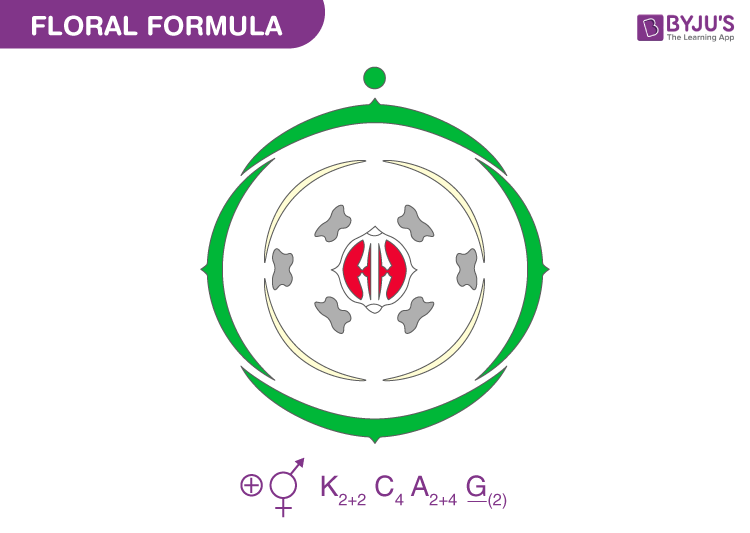
As you stroll through a lush garden or visit a vibrant market, it’s impossible not to be captivated by the beauty and diversity of flowers. But have you ever wondered what lies behind their intricate structure and unique characteristics? Enter the fascinating world of floral formulae, a secret code that reveals the intricacies of these delicate creatures.
What is Floral Formula?
A floral formula is a concise representation of a flower’s morphology, using a set of letters, numbers, and symbols to describe its various components. It’s like a recipe for creating a unique blend of flavors, where each ingredient plays a crucial role in the overall dish. In this article, we’ll delve into the world of floral formulae, exploring their history, significance, and how they help us understand these tiny wonders.
A Brief History
The concept of floral formulae dates back to the 18th century, when botanists began to develop a systematic way to describe the structure of flowers. The first comprehensive guide was published by Carl Linnaeus, considered the father of taxonomy. Over time, the language evolved, and new symbols were added to convey more information about each component.
The Language of Flowers: A Decoding Guide
So, what does this secret code look like? Let’s break it down:
- K: The calyx (sepals) can be either 2 or more, depending on the number of sepals.
- C: The corolla (petals) can have any number of petals, but in most cases, it’s an even number.
- A: The androecium (stamens) consists of a combination of stamens, usually 2 short and 4 long ones.
- G: The gynoecium (pistils) comprises 1 or more carpels.
Cruciferous Flowers: A Study Case
Take the Cruciferae family, commonly known as brassicas. These plants include broccoli, cauliflower, and kale. Their flowers display a unique characteristic:
- K 2+2 (two short sepals)
- C 4 (four petals)
- A 2+4 (two short stamens and four long ones)
- G 2 (one carpel)
Ciclamino: The Hidden Gem
The Primulaceae family, which includes the ciclamino, boasts a diverse range of flowers. This particular specimen:
- K 5 (five sepals)
- C 5 (five petals)
- A 5 (five stamens)
- G 5 (one carpel with multiple ovary lobes)
Camomilla: A Case Study
Belonging to the Asteraceae family, camomilla’s formula is:
- K 0 (no sepals)
- C 5 (five petals)
- A 5 (five stamens)
- G 2 (two carpels, with one being superior)
Rosa Canina: Unraveling the Mystery
The Rosa canina, a member of the Rosaceae family, presents an intriguing case study:
- K 5 (five sepals)
- C 5 (five petals)
- A 5-7 (five to seven stamens)
- G 1-5 (one or five carpels)
Understanding Floral Formulae
Floral formulae are not just a tool for classification, but also provide valuable insights into the evolution and development of flowers. By analyzing these codes, scientists can identify patterns and relationships that may have shaped the diversity of plant species.
For example, researchers have discovered that some plants with similar floral structures share common ancestry. This suggests that floral formulae can be used to reconstruct evolutionary histories and gain a deeper understanding of how different species have adapted to their environments.
The Language of Flowers: A Key to Unlocking Plant Diversity
The study of floral formulae has far-reaching implications for botany, ecology, and even agriculture. By deciphering the language of flowers, scientists can:
- Reconstruct evolutionary histories: Floral formulae provide a unique window into the past, allowing researchers to reconstruct the evolution of plant species.
- Identify key ecological adaptations: The structure and composition of flowers often reflect the specific environmental pressures faced by plants, providing insights into their ecological niches.
- Develop new agricultural strategies: Understanding how floral formulae relate to crop yields and disease resistance can inform breeding programs and sustainable farming practices.
Floral Formulae in Art and Culture
The language of flowers has also captivated artists, writers, and musicians throughout history. In the Victorian era, for example, the language of flowers was used as a coded message between lovers, hiding secret messages within bouquets and arrangements.
Today, floral formulae continue to inspire artistic expression, from botanical illustrations to surrealist sculptures. By exploring the intricate patterns and structures of flowers, artists can uncover new perspectives on beauty, symmetry, and creativity.
Floral Formulae in Science Education
The study of floral formulae offers a unique opportunity for science education, promoting critical thinking, observation, and analysis skills. By exploring the language of flowers, students can:
- Develop spatial reasoning: Analyzing floral structures requires visualizing complex patterns and relationships, improving spatial reasoning and problem-solving skills.
- Enhance scientific literacy: Understanding floral formulae provides a window into the natural world, fostering an appreciation for science and its role in shaping our understanding of the environment.
Conclusion
The world of floral formulae holds secrets and surprises, revealing the intricate beauty within each bloom. By deciphering this language, we can gain a deeper understanding of these tiny wonders and appreciate their unique characteristics. As we continue to explore the mysteries of floral formulae, we may uncover new insights into the evolution of plants, ecology, agriculture, art, and science education.
Frequently Asked Questions (FAQs)
- Q: Why do flowers need a formula?
A: The formula helps botanists and researchers understand the structure and composition of flowers, allowing for more accurate classification and identification. - Q: Can I use floral formulas to create new hybrid plants?
A: Yes, by manipulating the formula, you can create new combinations of traits and characteristics in your garden or greenhouse. - Q: How do I read a floral formula?
A: Start with the letter “K” for sepals, followed by the number of petals (C), stamens (A), and carpels (G). - Q: Can I use floral formulas to predict flower color or fragrance?
A: Not yet! While some researchers have explored this area, there is still much to be discovered about the relationships between formulae and these traits. - Q: Are all flowers described using a single formula?
A: No, each plant has its unique formula, reflecting its specific characteristics and evolutionary history. - Q: Can I create my own floral formula for a new species?
A: Absolutely! With careful observation and research, you can develop a personalized formula to describe your discovery.
In the world of flowers, every petal holds a secret story waiting to be uncovered. Join us on this fascinating journey as we explore the language of flowers and unravel its mysteries together.


