
As we strive to reduce our reliance on fossil fuels and mitigate the effects of climate change, wind energy has emerged as a leading player in the renewable energy sector. With its numerous benefits, including low operating costs and minimal environmental impact, wind energy is poised to revolutionize the way we generate power.
What are Floating Offshore Wind Turbines?
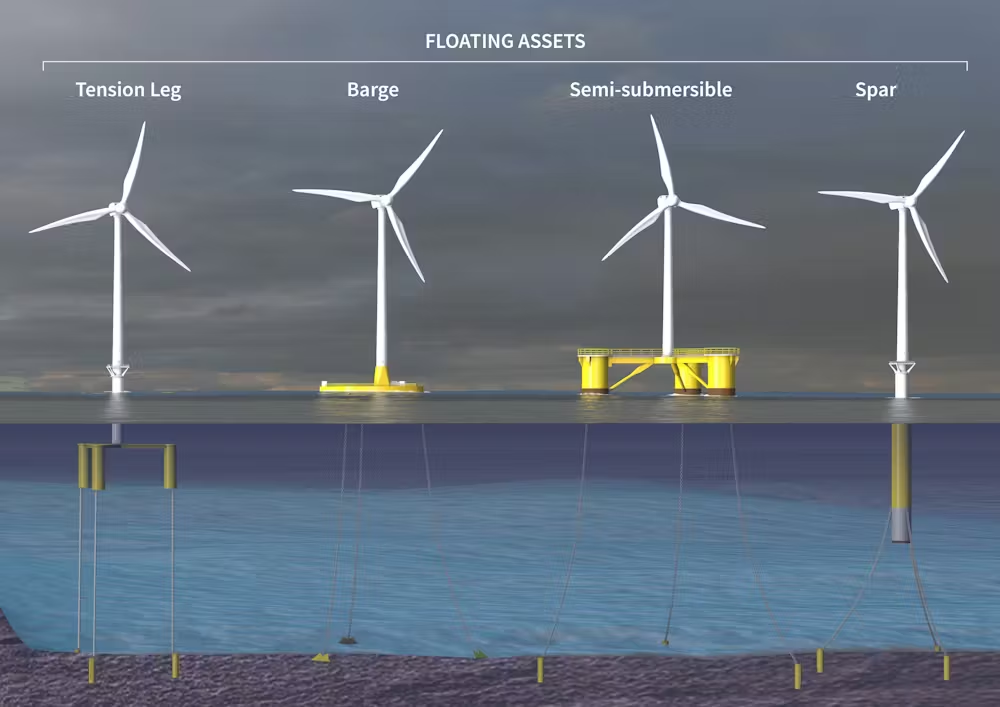
Floating offshore wind turbines (FOWT) are a game-changer in the world of renewable energy. These innovative turbines are designed to float on the surface of the water, eliminating the need for foundation structures that can be costly and environmentally damaging. Instead, FOWTs are anchored to the seafloor using cables, allowing them to harness the power of the wind from the ocean.
A New Era in Offshore Wind
The first floating offshore wind turbine was inaugurated in Portugal, a project known as WindFloat. Located 350 kilometers off the coast of Aguadoura, this pioneering project marks a significant milestone in the development of FOWT technology. With a capacity of 2 megawatts, WindFloat is equipped with a structure similar to that of oil platforms and is designed by Vestas, a leading wind turbine manufacturer.
A Partnership Born Out of Necessity
The collaboration between Vestas and Principle Power, a US-based company, has resulted in a truly innovative product. According to Alla Weinstein, President of Principle Power, “This technology allows us to make a leap comparable to that made by the oil industry in the 1970s, when floating platforms were introduced.” The reduced cost of assembly and ability to deploy turbines in areas with deep waters, where wind speeds are stronger, are major benefits of FOWT.
The Future of FOWT: A Global Perspective
While Vestas and Principle Power have been at the forefront of FOWT development, other companies, such as Siemens and Alstom, are also investing heavily in this technology. Mitsubishi has announced plans to install 80 FOWTs along the coast of Japan by 2020. In Italy, a similar project is underway, with Ipa Adriatic Powered, a community initiative involving the Region, State, and University of Maine.
Benefits of Floating Offshore Wind Turbines
So, what makes FOWT so special? Here are some benefits that make this technology an exciting prospect:
- Reduced costs: By eliminating the need for foundation structures, FOWTs can reduce costs by up to 50%.
- Increased capacity: FOWTs can be deployed in areas with stronger winds, increasing energy production.
- Environmental benefits: FOWTs have a lower visual impact and require less land compared to traditional offshore wind farms.
Challenges Ahead
While FOWT technology holds great promise, there are still challenges to overcome. These include:
- Weather conditions: Severe weather events can damage FOWTs.
- Maintenance access: Maintenance and repair of FOWTs can be difficult due to their location.
Addressing the Challenges
To address these challenges, researchers and developers are exploring new technologies and strategies. For example, some companies are developing floating structures that can withstand extreme weather conditions, while others are working on advanced maintenance systems that can access FOWTs remotely.
Conclusion
Floating offshore wind turbines have the potential to revolutionize the way we generate power. With their numerous benefits, including reduced costs and increased capacity, FOWT technology is poised to become a leading player in the renewable energy sector. As the world continues to transition towards cleaner energy sources, FOWT will play an increasingly important role.
The Global Impact of FOWT
FOWT has the potential to make a significant impact on the global energy landscape. By harnessing the power of the wind from the ocean, FOWTs can provide clean and renewable energy to millions of people around the world. In addition, FOWTs can help reduce greenhouse gas emissions and mitigate the effects of climate change.
Conclusion
Floating offshore wind turbines are a game-changer in the world of renewable energy. With their numerous benefits, including reduced costs and increased capacity, FOWT technology is poised to become a leading player in the renewable energy sector. As the world continues to transition towards cleaner energy sources, FOWT will play an increasingly important role.
The Future of Wind Energy: A Brighter Tomorrow
As we look to the future, it’s clear that wind energy will continue to play a major role in our transition towards a cleaner and more sustainable energy system. With innovations like floating offshore wind turbines leading the way, we can expect to see even greater advancements in the years to come.
Frequently Asked Questions
Q: What is floating offshore wind (FOW)?
A: FOW is a type of offshore wind turbine that floats on the surface of the water, eliminating the need for foundation structures.
Q: How do FOWTs work?
A: FOWTs use cables to anchor themselves to the seafloor, allowing them to harness the power of the wind from the ocean.
Q: What are the benefits of FOWT technology?
A: FOWTs can reduce costs by up to 50%, increase energy production, and have a lower visual impact compared to traditional offshore wind farms.
Q: Are there any challenges associated with FOWT technology?
A: Yes, FOWTs are vulnerable to severe weather events and maintenance access can be difficult due to their location.
Q: What is the current state of FOWT development?
A: Several companies, including Vestas and Principle Power, are actively developing and deploying FOWT technology worldwide.
Q: How can I learn more about FOWT technology?
A: Stay up-to-date with the latest developments in FOWT technology by following reputable sources and industry leaders.


