
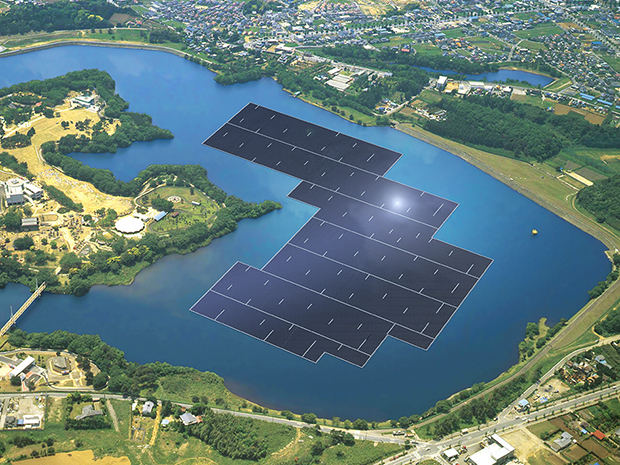
The Japanese government is betting big on renewable energy. From wind farms, offshore wind turbines, geothermal power plants, and solar panels… they’re not leaving any stone unturned. The latest massive project features 10 floating solar platforms totaling 20 MW of power generation capacity. West Holdings, a Japanese company, has partnered with a South Korean firm, LS Industrial System, to develop these innovative solar farms.
The First Floating Solar Farms: A New Era for Japan’s Energy Landscape
The first three floating solar farms will be installed in the Saitama Nature Reserve, while another site has been identified in Osaka’s wetlands. Both locations will provide 3 MW of electricity each. As Japan continues to transition away from nuclear energy and towards renewables, it seems like a winning strategy.
In recent years, Japan has made significant strides in its renewable energy sector. The country aims to increase its share of non-fossil fuel-based power generation to around 50% by 2030. To achieve this ambitious goal, the Japanese government is exploring various innovative solutions, including floating solar farms.
What Makes Floating Solar Farms So Innovative?
Floating solar panels have emerged as an excellent solution to address some of the limitations associated with traditional solar panel installations. For instance, land availability has been a significant issue in Japan, where densely populated cities and agricultural areas often compete for limited space. Traditional solar panels require large tracts of land, making them less viable for countries like Japan, which is home to over 127 million people.
Floating solar farms change this scenario by utilizing bodies of water, such as reservoirs or lakes, to generate electricity. This approach not only saves valuable agricultural land but also helps mitigate the environmental impacts associated with traditional solar panel installations.
The Benefits of Floating Solar Farms
One of the main advantages of floating solar farms is that they don’t occupy agricultural land, preserving fertile soil for farming. However, it’s essential to consider the feasibility of this technology in Japan’s unique geography, particularly with regards to seismic activity. The Japanese government must carefully assess the risks and rewards before proceeding with these projects.
Some potential benefits of floating solar farms include:
- Reduced environmental impact: By utilizing bodies of water, floating solar farms can reduce land use and preserve natural habitats.
- Increased energy production: Floating solar panels can generate more electricity than traditional solar panel installations due to the higher concentration of sunlight on the surface of the water.
- Improved aesthetics: The floating nature of these solar farms makes them less obtrusive, allowing for a more streamlined and visually appealing installation.
Will Floating Solar Farms Thrive in Japan?
Floating solar farms represent a groundbreaking innovation. Nonetheless, they may not be the most suitable solution for Japan due to its high frequency of earthquakes. The potential damage to solar panels from seismic activity is a concern. Moreover, it’s unclear how well these systems will perform under Japan’s challenging environmental conditions.
Key Challenges Faced by Floating Solar Farms in Japan
While floating solar farms hold promise, they also come with several challenges that need to be addressed:
- Seismic activity: The risk of damage from earthquakes and other seismic events can be a major concern for floating solar farms.
- Environmental impacts: The placement of these farms must carefully consider the surrounding ecosystem and avoid harm to aquatic life.
- Technical limitations: Floating solar panels require specialized design and engineering to ensure their stability and performance in water.
Conclusion: Japan Embarks on a Solar Revolution
The Japanese government’s decision to invest in floating solar farms reflects their commitment to renewable energy. While the technology holds promise, its suitability for Japan’s unique environment remains uncertain. It’s crucial to weigh the pros and cons before implementing such projects.
As Japan continues to transition away from nuclear energy and towards renewables, it’s essential to adopt innovative solutions like floating solar farms. With careful planning, advanced technology, and regular monitoring, these systems can help mitigate potential risks associated with seismic activity and ensure a sustainable energy future for the country.
Frequently Asked Questions (FAQs)
Q: What are floating solar panels?
A: Floating solar panels are installed on bodies of water, making them an ideal solution for areas with limited land availability.
Q: How do floating solar farms work?
A: They harness sunlight using photovoltaic cells and convert it into electricity, providing a renewable energy source.
Q: Will Japan’s unique geography hinder the adoption of floating solar farms?
A: The high frequency of earthquakes in Japan could potentially damage solar panels, raising concerns about their viability.
Q: What are agrivoltaics and how do they differ from floating solar farms?
A: Agrivoltaics involves integrating solar panels into agricultural systems using greenhouses. Floating solar farms, on the other hand, use bodies of water to generate electricity.
Q: Are there any potential environmental impacts associated with floating solar farms?
A: The placement of these farms must carefully consider the surrounding ecosystem and avoid harm to aquatic life.
Q: How can Japan balance its need for renewable energy with the challenges posed by seismic activity?
A: Careful planning, advanced technology, and regular monitoring will be essential in mitigating potential risks associated with floating solar farms.
Q: Will floating solar farms become a dominant force in Japan’s renewable energy landscape?
A: Only time will tell if these innovative solar farms can overcome the technical hurdles and environmental concerns to become a cornerstone of Japan’s energy future.


