
If you’re considering setting up your first marine aquarium, be prepared for a journey filled with endless wonders! In this article, I’ll give you just a glimpse into the infinite possibilities that await you. We’ll focus mainly on fish, but we’ll also touch on polyps and sea horses.
Marine Aquarium Fish: A Brief Introduction
If you love our ocean floors, you can create a stunning Mediterranean aquarium. However, the fish I’ll be discussing are not typical of our environment; they’re commonly found in the Pacific, Indian, or Atlantic Oceans. Let’s start with the most popular ones!
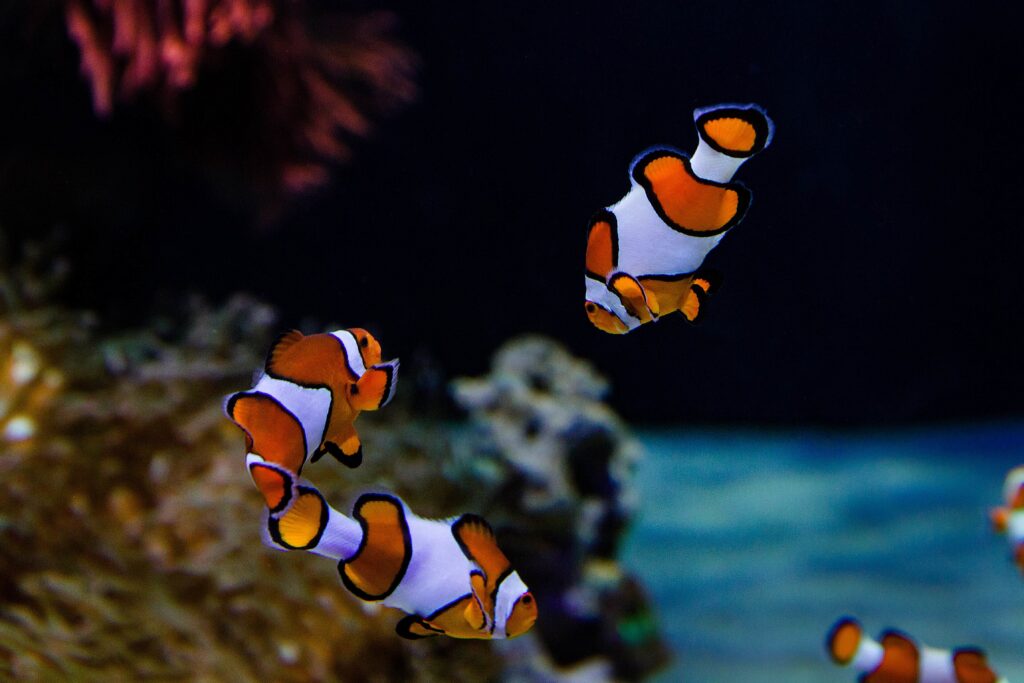
1. Clownfish (Anemone-dwelling Fish)
You might have seen them in the hit movie Finding Nemo and now know that clownfish love hiding in anemones. Not all species are created equal! Some clownfish, like the Sebae clownfish (Amphiprion sebae), have distinctive white and black stripes with only a yellow tail.
2. Surgeonfish (Wrasse-like Fish)
Surgeonfish are another popular choice for aquariums. The Yellowtail surgeonfish (Zebrasoma flavescens) is one of the most common, reaching lengths of up to 37 cm in the wild but typically not exceeding 20 cm in captivity.
The White-banded surgeonfish (Acanthurus leucosternon), on the other hand, can grow up to 38 cm long and has venomous spines that pose a risk even to humans. Keep in mind that some species are more aggressive than others, so choose wisely!
3. Octopus
The term “octopus” might be what you think it’s called, but it’s actually better known as “polyp.” The common octopus (Octopus vulgari) is an interesting creature, but it requires a massive tank all to itself due to its carnivorous nature and cannibalistic tendencies. Providing a separate tank for the octopus is a must.
4. Scorpionfish
The scorpionfish (Pterois volitans) is another challenging fish to keep in captivity with other species, as it’s a formidable predator that feeds on small fish, crabs, shrimp, and even cephalopods! This fish can grow up to 35 cm long and demands a spacious tank of at least 500 liters. Due to its venomous sting, handling the scorpionfish requires extreme care.
5. Butterflyfish
The Butterflyfish (Chaetodon xanthurus) is native to the Red Sea and Pacific Ocean. It can reach lengths of up to 15 cm and needs a spacious tank with plenty of hiding places.
6. Goby
The Goby (Amblyeleotris callopareia) is an attractive fish that thrives in coral-rich environments, typical of the Pacific Ocean. This peaceful species typically grows to around 8 cm long but can rarely reach the 5-6 cm mark in aquariums.
7. Velveteen Dragonet
The Velveteen Dragonet (Dascyllus velatus) is a striking fish that’s native to tropical waters. It reaches lengths of up to 10 cm and is known for its vibrant colors and energetic behavior, although it can be quite aggressive towards other fish.
8. Angelfish
The Angelfish (Pomacanthus asfur) is one of the most recognizable species in aquariums, thanks to their striking appearance. In their natural habitat, they can grow up to 40 cm long and require massive tanks with plenty of space for swimming and hiding.
9. Sea Horses
Sea Horses are perhaps the most magical creatures of all! However, keeping them in an aquarium is extremely challenging due to their specific needs and social behavior. A large tank with plenty of hiding places and gentle water currents is required for these unique animals.
10. Wrasse (Cavallucci Marini)
The Wrasse, also known as Sea Horses, are notoriously difficult to keep in aquariums due to their need for soft water movement. They can thrive in small groups within a tank that’s at least 150-200 liters in size, equipped with low-intensity lighting and gentle currents.
Marine Aquarium Fish: A Comprehensive Guide
If you’re new to marine aquariums, start by reading an excellent book on the subject. Don’t let its title fool you – this book offers valuable insights into keeping your first fish tank alive and thriving!
Recommended Book: “Marine Aquarium” ($21.85) with free shipping on Amazon.
Frequently Asked Questions
-
What kind of tank is best for a marine aquarium?
The size of the tank depends on the species you’re keeping, but generally, larger tanks are better equipped to provide the necessary space and water conditions for your fish. -
How do I keep my marine aquarium stable and healthy?
Regular maintenance, such as changing water, monitoring temperature, and ensuring proper lighting, is crucial for maintaining a stable and healthy environment in your aquarium. -
What should I feed my marine fish?
Research the specific dietary needs of each species to ensure they receive the correct nutrients for optimal health. -
How often should I change the water in my aquarium?
Regular water changes help maintain the stability and quality of your aquarium, but over-changing can be detrimental. Consult a reliable resource for guidance on changing water frequency. -
What are some common mistakes to avoid when setting up a marine aquarium?
6. What is the most challenging fish to keep in an aquarium?
The scorpionfish is known for its venomous sting and aggressive behavior, making it one of the most difficult species to care for in captivity.
-
Can I mix different species together in my aquarium?
It’s generally not recommended to mix aggressive or territorial species with peaceful ones, as this can lead to stress and even death. -
How do I choose the right fish for my aquarium?
Research the specific needs of each species, including size, diet, social behavior, and habitat requirements, before selecting which fish will thrive in your tank. -
What is the most important aspect of maintaining a marine aquarium?
-
Can I keep sea horses in an aquarium?
While it’s not impossible to keep sea horses in captivity, it’s extremely challenging due to their specific needs and social behavior.
Choosing the Right Fish for Your Marine Aquarium
When selecting fish for your tank, consider the following factors:
- Size: Research the growth rate of each species to ensure they’ll be compatible with other fish.
- Dietary requirements: Ensure you can provide a balanced diet that meets the nutritional needs of each species.
- Social behavior: Some fish are territorial and may require separate tanks. Research their social behavior before introducing them to your aquarium.
- Habitat requirements: Consider the specific water conditions, lighting, and swimming space needed by each species.
Setting Up Your Marine Aquarium
To create a thriving marine aquarium, follow these steps:
- Choose the right tank size based on the number of fish you want to keep.
- Select fish that are compatible with your tank’s conditions and each other’s behavior.
- Set up a reliable filtration system and monitor water quality regularly.
- Maintain proper lighting, including intense UVB lighting for coral polyps.
- Provide plenty of hiding places and visual barriers to reduce stress.
Marine Aquarium Fish: A Comprehensive Guide
This guide has provided an overview of the most popular marine aquarium fish, their specific needs, and common challenges when keeping them in captivity. Remember to research each species thoroughly before introducing them to your tank, and consult with a reliable resource for guidance on maintaining a healthy and thriving marine aquarium.
Recommended Resources:
- “Marine Aquarium” ($21.85) with free shipping on Amazon
- Marine aquarium enthusiast communities online
- Local pet stores specializing in marine aquariums
By following the guidelines outlined in this comprehensive guide, you’ll be well on your way to creating a vibrant and thriving marine aquarium that showcases the beauty of these incredible creatures.


