
Are you looking to create a peaceful and relaxing bedroom that promotes good sleep, intimacy, and overall well-being? Feng Shui is an ancient Chinese philosophy that can help you achieve this by balancing the energy in your home. In this article, we’ll explore the principles of Feng Shui and provide you with practical tips on how to apply them in your bedroom.
Understanding the Basics of Feng Shui
Feng Shui is based on the idea that our surroundings affect our lives and well-being. It involves arranging objects and structures in a way that promotes harmony, balance, and positive energy. In the context of your bedroom, Feng Shui aims to create a space that nurtures your mind, body, and spirit.
The Bagua Map: A Guide to Understanding Your Bedroom’s Energy
One of the most useful tools in Feng Shui is the Bagua map, which divides your home into nine areas corresponding to different aspects of life. In your bedroom, the Bagua map helps identify areas that need attention to balance the energy flow.
- The Bed Area: This area represents romance and relationships. Ensure it’s free from clutter, with a comfortable bed, and soft lighting.
- The Dresser Area: This area represents personal growth and self-awareness. Keep it organized, with clothes that make you feel good about yourself.
- The Nightstand Area: This area represents wealth and prosperity. Keep it clutter-free, with a small plant or a bowl of water to promote positive energy.
Tips for Creating a Feng Shui Bedroom
Tip #1: Minimize Distractions
Get rid of electronic devices such as TVs, computers, and phones that can disrupt your sleep and energy. News, movies, and constant notifications can be overwhelming and stressful.
Tip #2: Fresh Air is Essential
Open your windows regularly to let in fresh air and promote a healthy atmosphere. This is especially important in bedrooms, where stagnant air can lead to fatigue and discomfort.
Tip #3: Natural Materials are Key
Choose furniture and decor made from natural materials such as wood, bamboo, or wicker. Avoid items treated with chemicals, which can release toxins into the air.
Tip #4: Lighting Matters
Install a dimmer switch to control the amount of light in your bedroom. Soft, warm lighting can create a cozy atmosphere and promote relaxation.
Tip #5: Choose Calming Colors
Select colors that promote relaxation and calmness, such as whites, creams, pale blues, or soft greens. Avoid bright colors or bold patterns, which can stimulate anxiety.
Tip #6: Add Positive Imagery
Hang photos of happy memories, inspiring quotes, or calming landscapes to create a positive atmosphere. This can help you relax and unwind before sleep.
Tip #7: Position Your Bed for Optimal Energy Flow
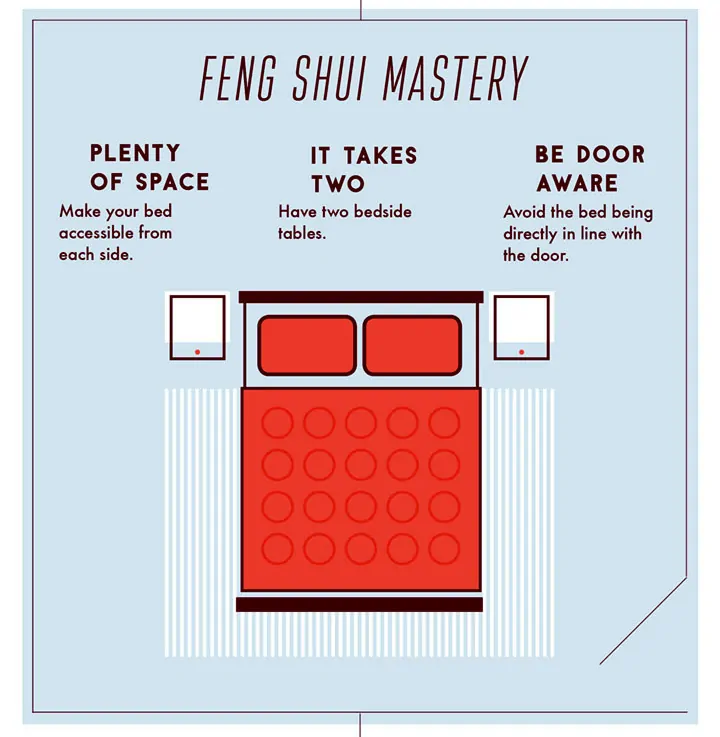
Place your bed in a commanding position, where you have a clear view of the door but not directly in line with it. Ensure both sides of your bed have a comfortable reading nook or dresser to promote relaxation.
Tip #8: Close Doors at Night
Close all doors, including closets and drawers, to create a sense of security and protection during sleep.
Feng Shui Colors: A Guide to Harmony
In Feng Shui, colors are believed to influence our emotions, energy, and well-being. By selecting colors that resonate with us, we can create a more harmonious living space. Here’s a brief overview of the meanings behind different colors:
- Blue: Associated with water and the north direction, blue is linked to career success and stability.
- Purple: Representing creativity and wisdom, purple is said to promote spiritual growth and self-expression.
- Green: Calming and balancing, green is believed to bring good luck and prosperity.
By incorporating these colors into your bedroom decor, you can create a space that supports your personal growth and well-being.
Conclusion
Creating a Feng Shui bedroom requires attention to detail and a willingness to experiment. By following the tips outlined in this article, you can transform your bedroom into a haven of relaxation and rejuvenation. Remember to balance energy flow, minimize distractions, and choose colors that promote harmony and calmness.
Frequently Asked Questions
- What is Feng Shui, and how does it apply to my bedroom?
Feng Shui is an ancient Chinese philosophy that aims to balance the energy in a given space. In your bedroom, it involves creating a harmonious atmosphere that promotes relaxation, intimacy, and overall well-being. - How can I create a positive energy flow in my bedroom?
By positioning your bed in a commanding position, using natural materials, and minimizing distractions, you can create a space that promotes relaxation and rejuvenation. - What colors are best for a Feng Shui bedroom?
Colors such as white, cream, pale blue, or soft green are often recommended for Feng Shui bedrooms due to their calming effects. - How can I minimize distractions in my bedroom?
Remove electronic devices, and keep your bedroom clutter-free to promote relaxation and reduce stress. - What is the importance of fresh air in a bedroom?
Fresh air helps to remove stale air and toxins, promoting a healthy atmosphere that supports restful sleep. - How can I create a sense of security and protection in my bedroom?
Close all doors, including closets and drawers, to create a sense of safety and calmness during sleep. - What role do colors play in Feng Shui?
Colors are believed to influence our emotions, energy, and well-being. By selecting colors that resonate with us, we can create a more harmonious living space. - How can I balance the energy flow in my bedroom?
Position your bed in a commanding position, use natural materials, and minimize distractions to create a balanced energy flow.
By applying these tips and understanding the principles of Feng Shui, you can transform your bedroom into a peaceful retreat that supports your overall well-being.


