
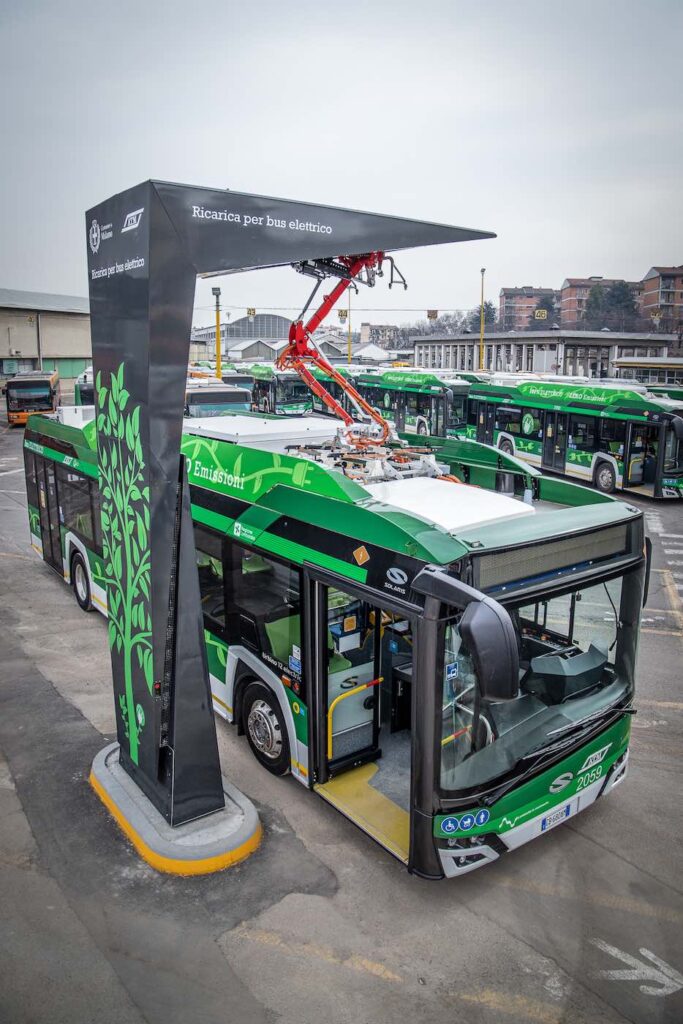
As we navigate through our busy cities, it’s natural to wonder about the environmental impact of our daily commutes. One question that often comes to mind is: how much CO2 does a bus emit during its journey? When the engine is running at the traffic lights, making multiple stops throughout the day, and frequent braking and acceleration, the answer can be surprising.
The transportation sector accounts for nearly 27% of greenhouse gas emissions in the United States, with buses being one of the most polluting modes of transportation. However, there are innovative solutions on the horizon that promise to revolutionize the way we think about urban mobility. One such solution is the electrification of buses.
The Benefits of Electric Buses
One potential solution lies in electric buses. Unlike their diesel-powered counterparts, electric buses don’t produce harmful emissions that contribute to climate change. They also have a fixed route, which makes it easier to plan maintenance and scheduling. In California, an innovative system called “fast charging” has been tested, providing a unique opportunity for sustainable transportation.
Fast charging technology enables electric buses to recharge their batteries quickly, making them ideal for urban routes. At each bus stop, the vehicle can be charged in just 10 minutes, allowing drivers to take a short break between trips. This rapid recharge is made possible by advanced lithium titanate batteries.
Case Study: Foothill Transit’s Fast Charging Initiative
Foothill Transit, a local transportation provider, has partnered with funding agencies to develop and deploy a fleet of fast-charging buses. The project has received $20 million in funding to support the development of more buses. Initial estimates suggest that the initiative will save around $600,000 annually, primarily due to reduced fuel costs.
The Foothill Transit initiative is an excellent example of how governments and private companies can collaborate to create a sustainable transportation system. By investing in electric buses and fast charging technology, they are not only reducing their carbon footprint but also improving the overall passenger experience.
Comparing Fuel Costs: Electric vs. Diesel
When it comes to fuel costs, electric buses have a clear advantage over diesel-powered vehicles. According to calculations, electric buses can save drivers up to 18 cents per mile compared to diesel vehicles. This translates to significant cost savings for transportation providers and a reduced carbon footprint.
To put this into perspective, let’s consider an example of how much it would cost to operate a bus using either a diesel or electric engine. Assume that our bus travels 12 miles per hour and operates for approximately 8 hours a day, which is a typical route for many urban buses. If we assume the fuel efficiency of the two types of engines to be different, here’s how much it would cost:
- Diesel: With an estimated 6 miles per gallon and assuming $3 per gallon, our bus would use around 4 gallons of diesel per day.
- Electric: Using 1/8 of a kilowatt-hour (kWh) of electricity per mile, with the electricity being purchased at 12 cents per kWh, our bus would consume approximately 0.16 kWh per hour or 1.28 kWh per day.
Now, let’s calculate how much it would cost to operate these buses for one year:
- Diesel: With a daily fuel consumption of 4 gallons and an annual operating cycle of 365 days, the total fuel consumption would be 1,460 gallons.
- Electric: Using 1.28 kWh per hour and assuming 8 hours of operation per day, our electric bus consumes approximately 10.24 kWh per day.
Based on these calculations, we can estimate that:
- Diesel: Would cost around $2,760 per year (4 gallons/day * $3/gallon)
- Electric: Would be approximately $1,120 (10.24 kWh/day * $0.12/kWh)
As you can see, electric buses have a significant advantage when it comes to fuel costs, and this is likely to continue in the future as technology improves.
The Italian Response: Project ZET
In Italy, the focus is on developing sustainable mobility solutions through the “ZET” project. Aimed at creating the country’s first electric highway, this initiative seeks to revolutionize transportation in Italy. By adopting innovative technologies like fast charging, Italy can reduce its environmental impact and create a more sustainable future.
Conclusion: A Brighter Future for Transportation
As we continue to navigate the complexities of urban mobility, it’s essential that we prioritize sustainability. Electric buses offer a promising solution, with their rapid recharge capabilities and reduced emissions making them an attractive option. By embracing innovative technologies like fast charging, we can create a more environmentally friendly transportation system that benefits both people and the planet.
In conclusion, electric buses are becoming increasingly popular as they have many benefits including lower emissions, less noise pollution and operating costs which are likely to be in line with traditional fossil fuel vehicles once scale-up is reached.


