
As we spend more time staring at screens, computers, and other devices, our eyes are constantly working to focus and adjust. But what happens when this constant strain becomes too much for our eyes? Welcome to the world of eye fatigue, also known as asthenopia.
In this article, we’ll delve into the symptoms, causes, and treatment options for eye fatigue, helping you understand how to prevent and manage this common condition.
What is Eye Fatigue or Asthenopia?
Eye fatigue occurs when our eyes are overworked due to prolonged focusing on close objects, such as screens. The muscular apparatus of the eyeball contracts and relaxes repeatedly to adjust focus, leading to strain and fatigue. This can be particularly problematic for individuals who work on computers or have vision problems.
Related Eye Pathologies
While eye fatigue is a common condition, it’s often associated with other eye diseases that affect vision and overall eye health. Some of the primary pathologies linked to asthenopia include:
- Amblyopia (lazy eye)
- Astigmatism (irregular curvature of the cornea)
- Blepharitis (inflammation of the eyelids)
- Hypermetropia (farsightedness)
- Hypometropia (nearsightedness)
- Myopia (nearsightedness)
- Presbyopia (age-related loss of near vision)
- Retinoblastoma (cancer of the retina)
- Diabetic retinopathy (complications of diabetes affecting the retina)
- Dry eye syndrome
- Strabismus (crossed eyes)
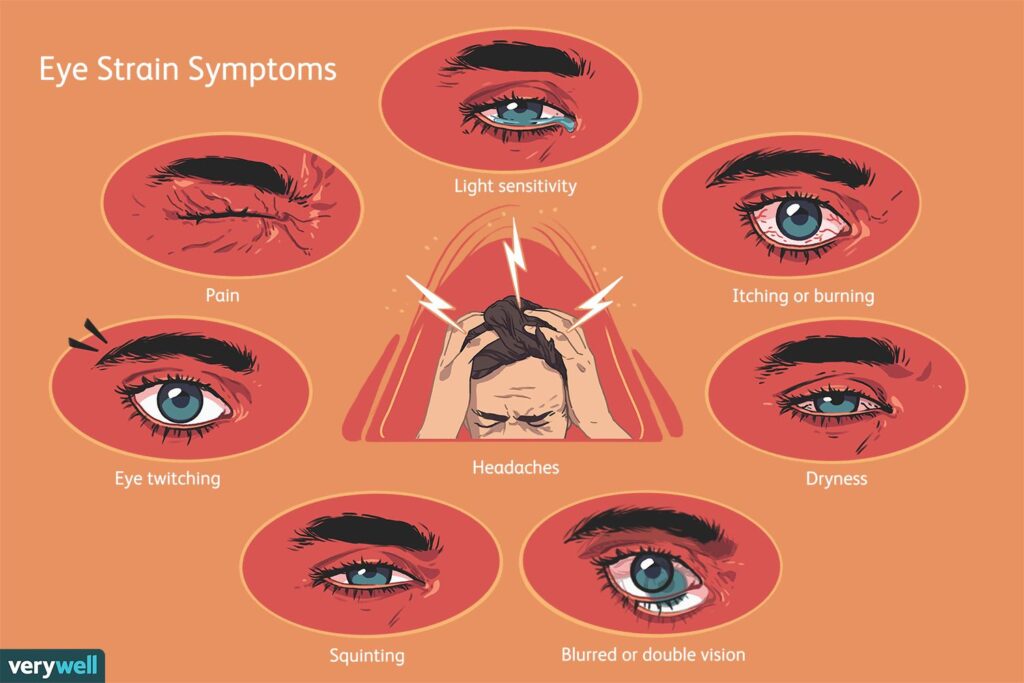
Symptoms of Eye Fatigue
The symptoms of eye fatigue can vary, but common signs include:
- Tearing or burning sensation in the eyes
- Dryness or irritation
- Feeling like there’s sand or foreign particles in the eyes
- Sensitivity to light (photophobia)
- Eye pain or headache
- Blurred vision
- Double vision
If you’re experiencing any of these symptoms, it’s essential to take steps to prevent further strain on your eyes.
Causes of Eye Fatigue
There are several factors that can contribute to eye fatigue:
- Prolonged screen time: Working or playing video games for extended periods can lead to eye strain.
- Poor lighting: Inadequate lighting in the work environment can cause eye strain and discomfort.
- Insufficient breaks: Failing to take regular breaks from screens can exacerbate eye fatigue.
- Vision problems: Uncorrected vision problems, such as myopia or hypermetropia, can contribute to eye fatigue.
- Dry eyes: Dry eyes caused by insufficient tear production or blockages in the tear ducts can lead to discomfort and strain on the eyes.
Prevention is Key
To prevent eye fatigue, follow these tips:
- Follow the 20-20-20 rule: Every 20 minutes, look away from your screen and focus on something 20 feet away for 20 seconds.
- Adjust lighting: Ensure the lighting in your workspace is comfortable and adjustable.
- Use good posture: Maintain good posture while working on computers or screens to reduce strain on your eyes.
- Take breaks: Take regular breaks to rest your eyes and brain.
- Get regular eye exams: Regular eye exams can help detect vision problems and other eye diseases early on.
Treatment Options
While prevention is key, treatment options are available to help manage eye fatigue. Before starting treatment, consult an ophthalmologist to determine the underlying cause of your eye fatigue.
Preventative measures include:
- Optimizing lighting conditions in the work environment
- Wearing glasses or contacts to correct vision problems
- Taking regular breaks to rest your eyes
Treatment options may include:
- Artificial tears or eye drops to lubricate the eyes
- Orthoptic examination to assess fixation and oculomotor muscle function
- Refraction measurements to determine the correct correction for glasses or contacts
- Additional treatments, such as medication or surgery, in severe cases.
Managing Eye Fatigue
To reduce eye fatigue, follow these everyday tips:
- Maintain good posture while working on computers or screens: Keep your head straight, shoulders relaxed, and eyes at a comfortable distance from the screen.
- Correct any undiagnosed vision problems with glasses or contacts: Ensure that your vision is corrected to prevent further strain on your eyes.
- Take regular breaks (every 2 hours) to rest your eyes and brain: Get up from your desk, stretch, and take a few minutes to relax.
- Adjust lighting in the work environment to minimize strain: Ensure the lighting is comfortable and adjustable to reduce eye strain.
- Use artificial tears or eye drops to keep your eyes lubricated: Use artificial tears or eye drops regularly to maintain healthy tear production.
Additionally, consider using special lenses for glare reduction or consulting an eye doctor about the best course of treatment.
Conclusion
Eye fatigue is a common condition that affects millions worldwide. By understanding its symptoms, causes, and treatment options, you can take steps to prevent and manage this condition. Remember to prioritize your eye health by following preventative measures, taking regular breaks, and adjusting your work environment to minimize strain on your eyes.
Common Mistakes to Avoid
To avoid exacerbating eye fatigue, be mindful of the following common mistakes:
- Staring at screens for extended periods: Take regular breaks to rest your eyes.
- Not wearing corrective lenses: Ensure that your vision is corrected to prevent further strain on your eyes.
- Insufficient lighting: Adjust the lighting in your workspace to minimize eye strain.
- Not taking breaks: Regular breaks can help reduce eye fatigue and improve overall eye health.
Prevention Strategies
To prevent eye fatigue, consider implementing the following strategies:
- Follow the 20-20-20 rule: Every 20 minutes, look away from your screen and focus on something 20 feet away for 20 seconds.
- Adjust your workspace: Ensure that your workspace is comfortable and adjustable to minimize strain on your eyes.
- Take regular breaks: Take regular breaks to rest your eyes and brain.
- Get regular eye exams: Regular eye exams can help detect vision problems and other eye diseases early on.
Eye Care Tips
To prioritize eye care, follow these tips:
- Clean your contact lenses regularly: Clean and disinfect your contact lenses regularly to prevent eye infections.
- Wear sunglasses outdoors: Wear sunglasses that provide 100% UV protection to protect your eyes from harmful rays.
- Get regular eye exams: Regular eye exams can help detect vision problems and other eye diseases early on.
- Maintain a healthy diet: A balanced diet rich in fruits, vegetables, and omega-3 fatty acids can support eye health.
Conclusion
Eye fatigue is a common condition that affects millions worldwide. By understanding its symptoms, causes, and treatment options, you can take steps to prevent and manage this condition. Remember to prioritize your eye health by following preventative measures, taking regular breaks, and adjusting your work environment to minimize strain on your eyes.


