
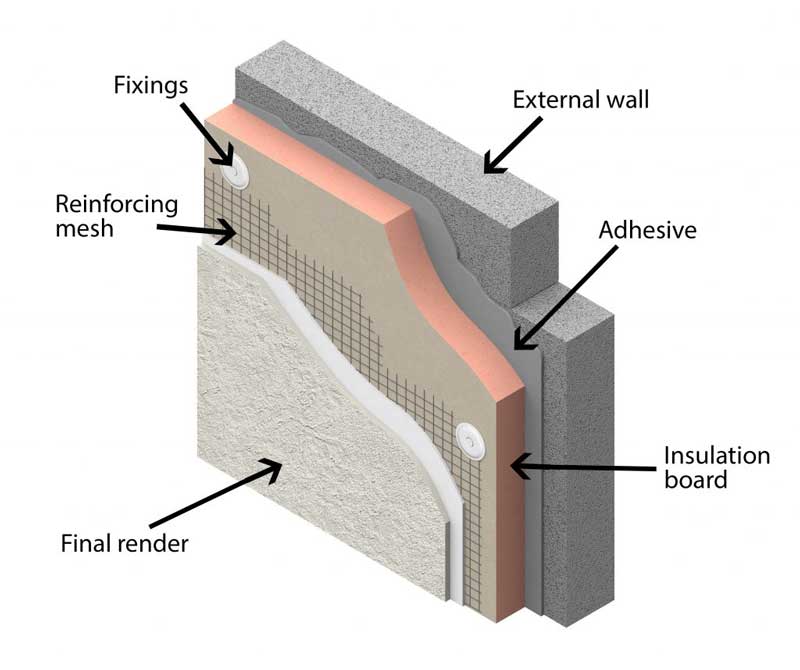
Understanding External Insulation
External insulation, also known as “capped insulation,” is a method of treating an exterior wall by applying insulated panels or materials to the exterior surface. This technique aims to reduce heat transfer between the interior and exterior environments, leading to improved thermal performance and reduced energy consumption.
What Does External Insulation Do?
In simpler terms, external insulation helps regulate the internal temperature of a building by reducing fluctuations in external temperatures. This allows occupants to make the most of their home’s thermal mass during various seasons. In winter, insulated walls absorb heat from heating systems and release it gradually at night, minimizing discomfort caused by interrupted heating. Conversely, in warmer months, the insulation slows down the entry of external heat, allowing for better ventilation inside.
Benefits of External Insulation
We’ve already discussed some key advantages of external insulation. Here’s a summary:
- Reduced temperature fluctuations: This leads to lower energy costs and increased comfort levels.
- Minimized moisture buildup: By controlling humidity, external insulation reduces the risk of mold growth and water damage.
- Enhanced property value: Insulated buildings tend to appreciate in value more than non-insulated ones.
- Easy installation: While it may seem daunting, external insulation can be applied both internally and externally with relative ease.
- Expandable to roofs: When retrofitting an existing building, consider extending insulation to the roof to maximize energy efficiency.
The External Insulation Process
There are several methods for implementing external insulation, but the most common involves attaching insulated panels to walls using tacks or other fasteners. Before installation, it’s essential to select the right type and thickness of insulation material to suit each building’s unique needs. Following installation, apply an additional layer of finish materials like paint or drywall to seal gaps and protect the surface.
Types of External Insulation Materials
External insulation can be made from a variety of materials, including:
- Mineral wool
- Polystyrene foam
- Expanded polystyrene (EPS)
- Reflective insulation
- External insulation kits
Each material has its pros and cons, such as cost, durability, and thermal performance.
Key Factors to Consider When Choosing an External Insulation Material
When selecting the perfect external insulation material for your project, consider factors like:
- Climate: Different materials perform better in various climates.
- Budget: The cost of installation can vary greatly depending on the type of material used.
- Environmental impact: Some materials have a more environmentally friendly reputation than others.
- Durability: Assess how well the material will withstand wind, rain, and other environmental stressors.
Installation Options
There are two primary ways to install external insulation:
- Exterior installation: This involves attaching insulated panels directly to the exterior surface of the wall.
- Interior installation: In this approach, insulation is applied from the inside out, typically by inserting panels between studs.
Each method has its advantages and disadvantages.
Benefits of External Insulation Installation
Both exterior and interior installation methods offer several benefits:
- Reduced energy consumption
- Improved thermal performance
- Increased comfort levels for occupants
- Potential cost savings on utility bills
Challenges and Considerations
While external insulation offers numerous benefits, there are also some challenges to consider, such as:
- Cost: While the initial investment may be high, the long-term energy savings can offset this expense.
- Space constraints: In densely packed urban areas, finding space for installation can be a challenge.
- Building codes and regulations: Ensure compliance with local building codes and regulations to avoid potential issues.
Combining External Insulation with Other Energy-Efficient Features
External insulation can complement other energy-efficient strategies, such as:
- Double-glazed windows
- Efficient heating systems
- Solar panels
- Green roofs
By combining these features, you can create a highly efficient and sustainable building that minimizes environmental impact.
Ensuring Water-Tightness
To prevent water intrusion, ensure that any gaps or openings between the walls and roof are sealed using a suitable sealant before installing insulation. This will help protect your home from moisture damage and maintain its integrity over time.
Frequently Asked Questions
- What is the typical cost of external insulation?
The cost of external insulation varies depending on factors such as material choice, installation complexity, and location. On average, a well-insulated building can expect energy savings ranging from 15% to 30%. - How long does it take for the benefits of external insulation to become apparent?
Generally, you’ll start noticing the positive effects within one year after installation. - Can I apply external insulation myself or do I need professional assistance?
While some DIY enthusiasts may attempt this project, expert help is usually recommended due to potential complications and liability concerns.
- Will my roof still leak if I insulate only the walls?
Insulation on individual walls won’t necessarily affect rooftop integrity. However, consider expanding insulation coverage to the entire structure, especially in regions with high precipitation. - Can external insulation be used in combination with other energy-efficient features?
Absolutely! External insulation can complement strategies like double-glazed windows and efficient heating systems for enhanced performance. - How will I ensure that my home remains dry if there are gaps between the walls and roof?
Seal any openings or gaps using a suitable sealant before installing insulation to prevent water intrusion.


