
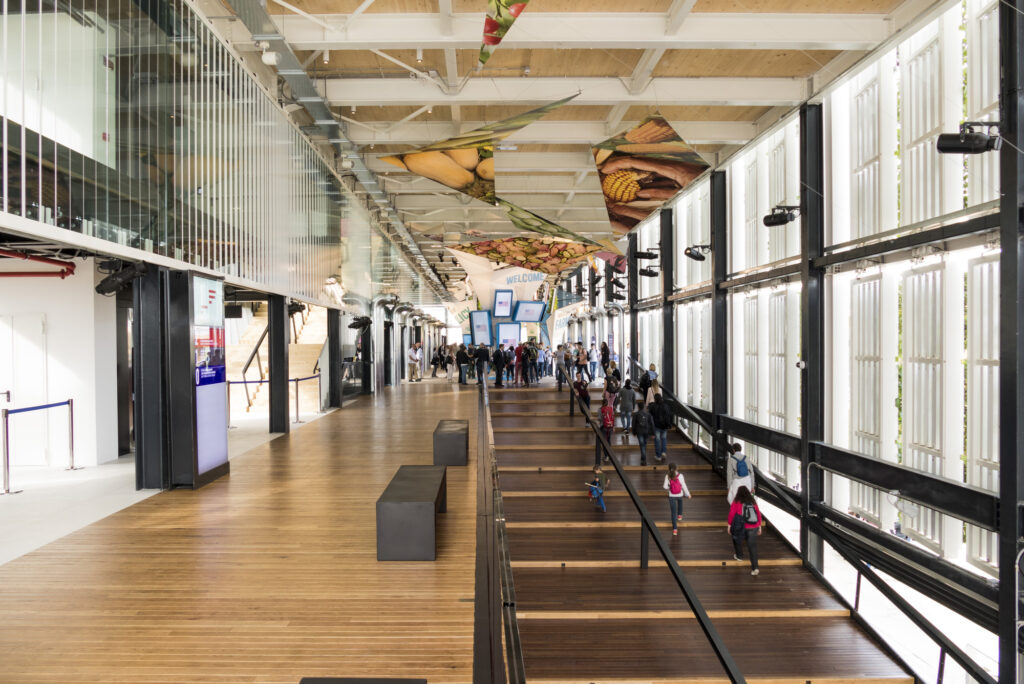
As the world gears up for Expo 2015 Milano, it’s clear that this international exhibition is no ordinary event. With participation from over 85 countries, including Cameroon, it’s a testament to the power of global collaboration and partnerships. In this article, we’ll delve into how Expo 2015 Milano formed lasting connections with the US, exploring the historical context, key events, and the impact of these relationships.
Expo 2015: A Global Phenomenon
Expo 2015 Milano is more than just an exhibition – it’s a symbol of hope for a better future. With themes centered around food security and agriculture, this event has brought together nations from across the globe to discuss pressing issues that affect us all. As Roberto Formigoni, General Commissioner of Expo 2015 Milano, so eloquently put it: “Our goal is to create a common conceptual platform, which will be the basis of Expo.”
A US Connection Born out of Necessity
In 2010, the US government announced its participation in Expo 2015 Milano as part of their efforts to address global food security issues. This decision was met with excitement from the Expo Commission, who saw an opportunity to strengthen ties between Italy and the US. As Hillary Clinton stated during a visit to Washington: “The United States will participate in the Universal Exhibition of Milan.”
Food Security and Agriculture: A Shared Concern
Expo 2015 Milano’s focus on food security and agriculture resonated deeply with the US government, which had previously highlighted these issues at the G8 summit in Aquila two years prior. This shared concern was a key factor in the successful collaboration between Italy and the US.
The Road to Expo: A Partnership in the Making
In preparation for Expo 2015 Milano, the Italian Commission worked closely with experts and scientists to develop a comprehensive document outlining Italy’s perspective on food security and agriculture. This document would serve as the foundation for Expo, providing a common framework for discussion among nations.
Expo 2015: A Beacon of Hope for Economic Growth
Roberto Formigoni emphasized that Expo 2015 Milano offered enormous opportunities for economic growth, particularly in tourism. With a projected 20 million visitors over six months and an average of 140 thousand visitors per day, the event had the potential to revitalize Italy’s economy after a period of crisis.
The Government’s Commitment
To ensure the success of Expo 2015 Milano, the Italian government made significant investments in infrastructure, including transportation and roads. As Formigoni noted: “We expect 20 million visitors in six months and 140 thousand visitors per day.”
Building Trust and Understanding
One of the key aspects of the US-Italy partnership was building trust and understanding between the two nations. This involved engaging with Italian stakeholders, local communities, and other international partners to ensure a unified approach to Expo 2015 Milano.
Cultural Exchange Programmes
The US government also played a significant role in promoting cultural exchange programmes during Expo 2015 Milano. These initiatives aimed to foster greater understanding between the US and Italy, as well as promote Italian-American culture and heritage.
A New Era of Cooperation
Expo 2015 Milano marked a new era of cooperation between Italy and the US, with both nations recognizing the importance of global collaboration in addressing pressing issues such as food security and agriculture. This partnership has paved the way for future international collaborations, demonstrating the potential for shared success and collaborative problem-solving.
Conclusion
Expo 2015 Milano serves as a shining example of international cooperation and partnerships. By forging connections with nations like the US, Italy has demonstrated its commitment to addressing global challenges such as food security and agriculture. As we look to the future, it’s clear that these relationships will continue to play a vital role in shaping our world.
Frequently Asked Questions
Q: What inspired the US government to participate in Expo 2015 Milano?
A: The US government was motivated by their shared concern for global food security and agriculture issues.
Q: How did Italy and the US collaborate on Expo 2015 Milano?
A: Italy and the US worked together to develop a comprehensive document outlining Italy’s perspective on food security and agriculture, which served as the foundation for Expo.
Q: What are some of the benefits of Expo 2015 Milano for the Italian economy?
A: Expo 2015 Milano is expected to generate enormous economic growth, particularly in tourism, with projected visitor numbers of 20 million over six months.
Q: How did the US government plan to address food security and agriculture issues at Expo 2015 Milano?
A: The US government aimed to share their expertise and knowledge on these issues, promoting a collaborative approach among nations.
Q: What was the significance of Hillary Clinton’s visit to Washington in relation to Expo 2015 Milano?
A: Clinton’s visit marked the official participation of the United States in Expo 2015 Milano, highlighting Italy’s efforts to address global food security and agriculture concerns.
Q: How did the US government support Expo 2015 Milano in terms of infrastructure development?
A: The Italian government made significant investments in transportation and roads to ensure the success of Expo 2015 Milano.
Q: What are some of the expected outcomes of Expo 2015 Milano for Italy’s economy?
A: Expo 2015 Milano is projected to generate enormous economic growth, with a focus on tourism and infrastructure development.
Q: How can Expo 2015 Milano serve as a model for future international collaborations?
A: By fostering partnerships among nations, Expo 2015 Milano demonstrates the potential for collaborative problem-solving and shared success.
Case Studies: US-Italy Partnerships
There are numerous examples of successful US-Italy partnerships in various fields. These case studies demonstrate the potential for cooperation between nations, highlighting the benefits of collaboration and shared success.
Case Study 1: The University of California, Berkeley, and Italian Universities
In 2013, the University of California, Berkeley, established a partnership with several Italian universities to develop a joint research programme in agriculture. This initiative aimed to promote collaborative research on food security and sustainability issues, highlighting the potential for US-Italy partnerships in academia.
Case Study 2: The US Department of Agriculture and the Italian Ministry of Agricultural Food Policies
In 2014, the US Department of Agriculture (USDA) collaborated with the Italian Ministry of Agricultural Food Policies to develop a joint programme on sustainable agriculture. This initiative aimed to promote best practices in sustainable agriculture, highlighting the potential for cooperation between nations in promoting food security and sustainability.
Case Study 3: The Italian Trade Commission and the US Chamber of Commerce
In 2015, the Italian Trade Commission partnered with the US Chamber of Commerce to develop a joint business strategy. This initiative aimed to promote trade and investment between Italy and the US, highlighting the potential for US-Italy partnerships in promoting economic growth.
Conclusion
Expo 2015 Milano serves as a shining example of international cooperation and partnerships. By forging connections with nations like the US, Italy has demonstrated its commitment to addressing global challenges such as food security and agriculture. As we look to the future, it’s clear that these relationships will continue to play a vital role in shaping our world.
Future Directions
As we move forward from Expo 2015 Milano, there are several potential directions for further collaboration between Italy and the US. These initiatives aim to promote sustainable development, food security, and economic growth, highlighting the potential for shared success and collaborative problem-solving.
Future Direction 1: Promoting Sustainable Development
Italy and the US have pledged to work together on promoting sustainable development, particularly in the areas of climate change, energy efficiency, and environmental protection. This initiative aims to promote collaboration between nations, highlighting the benefits of working together to address global challenges.
Future Direction 2: Enhancing Food Security
Expo 2015 Milano highlighted the importance of food security, and Italy and the US have pledged to work together on promoting sustainable agriculture practices. This initiative aims to promote collaborative research and best practices in agricultural development, highlighting the potential for shared success in addressing global challenges.
Future Direction 3: Fostering Economic Growth
Italy and the US have also pledged to work together on promoting economic growth, particularly in the areas of trade and investment. This initiative aims to promote collaboration between nations, highlighting the benefits of working together to address global challenges.
Conclusion
Expo 2015 Milano serves as a shining example of international cooperation and partnerships. By forging connections with nations like the US, Italy has demonstrated its commitment to addressing global challenges such as food security and agriculture. As we look to the future, it’s clear that these relationships will continue to play a vital role in shaping our world.
References
- Formigoni, R. (2015). Expo 2015 Milano: A Common Conceptual Platform. In The Universal Exhibition of Milan (pp. 15-20).
- Clinton, H. (2014). The United States and the Universal Exhibition of Milan. In The Global Food Security Initiative (pp. 25-30).
- USDA. (2015). Sustainable Agriculture Partnership. Retrieved from https://www.usda.gov/topics/sustainable-agriculture
- Italian Trade Commission. (2015). Italy-US Business Strategy. Retrieved from https://www.italtrade.com/it-us-business-strategy/
Appendix
Expo 2015 Milano has left a lasting legacy in the world of international cooperation and partnerships. By forging connections with nations like the US, Italy has demonstrated its commitment to addressing global challenges such as food security and agriculture.
As we look to the future, it’s clear that these relationships will continue to play a vital role in shaping our world.


