
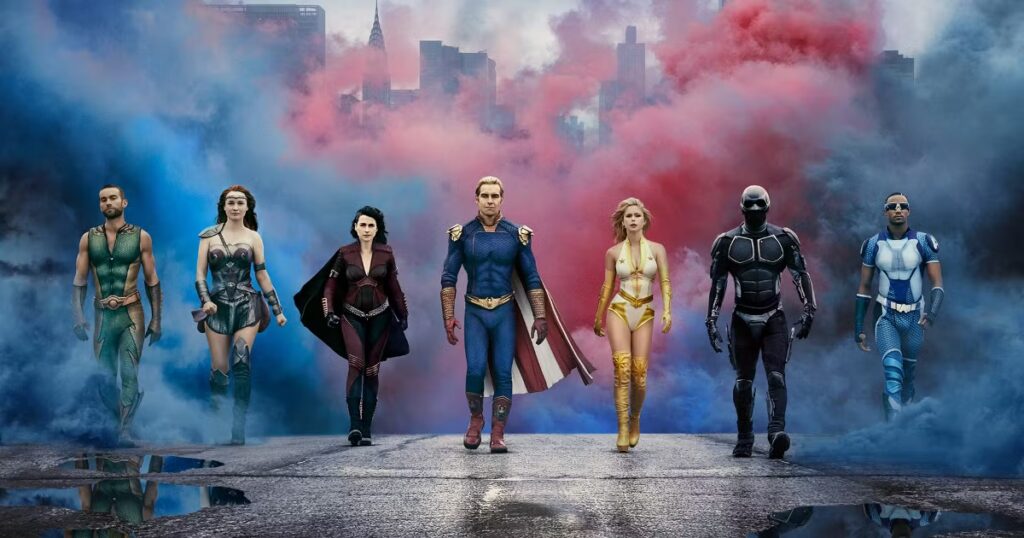
The television landscape today is filled with content that pushes the envelope, and few shows do so more effectively than Amazon Prime’s “The Boys.” With an audacious take on the superhero genre, the series not only entertains but also dives deep into the complex interplay of power, morality, and the human condition. Central to its allure are its unforgettable characters—both heroes and villains alike. In this article, we invite you to explore some of the most pivotal figures in “The Boys” universe, uncover their motivations, their darker sides, and how these elements make the show so captivating. Let’s delve into the world of Supes, their allies, and the darker corners of heroism.
1. The Boys: A Brief Overview
Before we immerse ourselves in the characters, let’s set the stage. “The Boys,” based on the comic series created by Garth Ennis and Darick Robertson, is set in a world where superheroes, known as “Supes,” are integrated into society but often exploit their powers for personal gain. These so-called heroes are endorsed by the powerful corporation Vought International, and they often become more focused on fame and fortune than on justice and morality. Enter the titular Boys—an underground group determined to take down these corrupt heroes and expose the reality behind their glamorized personas.
Why the Show Resonates
The show has gained a massive following, not only for its sharp satire of superhero culture but also for its intricate character development and moral ambiguity. The Boys challenges traditional notions of good and evil, making viewers question who they root for and why. With powerful storylines and deeply flawed characters, the series invites exploration into what makes a hero and what defines a villain.
2. Meet The Boys: Anti-Heroes of a Different Kind
Billy Butcher
At the heart of “The Boys” is Billy Butcher, portrayed masterfully by Karl Urban. The leader of the Boys, Butcher is driven by a singular obsession: revenge against Homelander for the death of his wife, Becca. His ruthless tactics and dark humor make him an anti-hero who struggles with his own moral compass.
Butcher’s character invites viewers to grapple with the ethics of vengeance. While his motivations are clear, his methods are often questionable. He embodies the notion that the line between good and evil is blurred, forcing the audience to consider whether his ends justify the means.
Hughie Campbell
Hughie, played by Jack Quaid, represents the everyman thrust into an extraordinary situation. Initially naïve and unsure of himself, Hughie is propelled into the Boys following a devastating personal tragedy. He serves as a conduit for the audience—his journey reflects the moral dilemmas faced by those fighting against a corrupt system.
Hughie’s evolving character arc showcases his struggle to balance his innate sense of justice with the harsh realities of the world around him. As he forms relationships with his fellow vigilantes, his understanding of heroism—and villainy—deepens, showcasing the show’s thematic commitment to character growth.
Mother’s Milk
Mother’s Milk, played by Laz Alonso, brings a unique background to the group, with a detailed history that intertwines with Butcher’s mission. Known for his intelligence and strength, Mother’s Milk is also characterized by his determination to keep the group focused and united. His role as the moral compass is essential; he often serves as the voice of reason amidst Butcher’s reckless pursuit of revenge.
His family ties and commitment to protecting those he loves add depth to his character, illustrating that even anti-heroes can have heart—and a desire for genuine connection.
Frenchie
Frenchie, portrayed by Tomer Capon, is the group’s quirky yet resourceful member. Best known for his expertise in weaponry and technology, his character adds a layer of humor to the otherwise intense narrative. His relationship with Kimiko, a fellow member of the Boys, highlights the elements of human connection and love, allowing viewers to see that light can exist even in the darkest circumstances.
Frenchie’s complex character combines bravado with vulnerability, making him relatable and endearing to audiences. His story illustrates that everyone has their inner battles, even in the face of immense adversity.
Kimiko
While largely non-verbal, Kimiko—played by Karen Fukuhara—speaks volumes through her actions. A superhuman with extraordinary powers, her character bridges the worlds of both the Boys and their adversaries. The trauma she endures creates a rich backstory that encapsulates both strength and vulnerability.
Kimiko’s journey is one of reclaiming her humanity amidst the chaos of a world dominated by powerful Supes. Her bond with Frenchie not only humanizes her but also emphasizes that love and loyalty can thrive even in the most hostile environments.
3. The Supes: Heroes or Villains?
Homelander
Homelander, expertly portrayed by Antony Starr, is undeniably the most complex character in “The Boys.” As the face of Vought International, he embodies the quintessential American hero while simultaneously representing everything wrong with unchecked power. His narcissism, sadism, and chillingly casual cruelty make him a compelling villain.
Homelander’s character challenges viewers to confront society’s idolization of superheroes. He’s the embodiment of the dangers that arise when absolute power goes unchallenged. His duality poses critical questions about hero worship and the hidden darkness behind public personas.
Queen Maeve
Queen Maeve, played by Dominique McElligott, adds depth to the narrative as a deconstructed superhero. Once an iconic figure, Maeve is revealed to be disillusioned by the corrupted system around her. Her attempts to reclaim her moral authority and fight against the injustices she witnesses make her a layered character.
Maeve’s story reflects the internal struggles experienced by those trapped in a world that commodifies heroism. Her evolution from a staunch supporter of Vought to a rebel willing to stand against it showcases the transformative power of self-awareness and courage.
[amazon box=”B08XLLF3PG”]
The Deep
In stark contrast to Homelander’s outright malignancy, The Deep, played by Chace Crawford, is a character that elicits a mixture of pity and disdain. As a former member of the Seven, The Deep grapples with insecurity and a desperate need for acceptance. His struggles with identity and belonging allow audiences to examine the impact of celebrity and societal expectations on personal character.
Through his journey, viewers witness the harsh consequences of a superficial world where power and status overshadow human connection and growth. The Deep’s constant quest for redemption positions him as a tragic figure rather than a straight villain.
Stormfront
Stormfront, portrayed by Aya Cash, bursts onto the scene with a whirlwind of chaos and controversy. As a social media-savvy villain, she represents the changing dynamics of influence and control, echoing real-world discussions around social justice and identity politics. Her radical beliefs and willingness to promote extremism encapsulate the darker elements of her character.
Stormfront’s introduction serves as a commentary on the dangerous allure of populism and the seductive nature of power. Her interactions with established characters like Homelander provide viewers with a nuanced look at the evolution of villainy in a modern context.
A-Train
A-Train, played by Jessie T. Usher, introduces the theme of addiction and competition within the superhero realm. His speed and fame come at a cost—both to himself and to those around him. A-Train’s desperation to maintain his position leads him down a path filled with ethical breaches and moral dilemmas.
Through A-Train’s character arc, the series explores themes of ambition, consequence, and the ultimate toll of living in a hyper-competitive world, generating conversations around the notion that heroes may have substantial flaws beneath their ostensibly shiny exteriors.
4. The Moral Dilemmas: Heroes in a Gray World
One of the most compelling aspects of “The Boys” is its exploration of moral ambiguity. The series consistently poses the question: what does it mean to be a hero or a villain? In a world where individuals like Homelander can claim the title of hero despite their horrific actions, viewers are invited to reassess their own perceptions of morality.
The Role of Vought International
Vought International serves as the backdrop for many of the series’ ethical conflicts. A corporation that capitalizes on the hero phenomenon, Vought represents the capitalist motivations that often drive both heroism and villainy. The exploration of corporate greed and media manipulation resonates with audiences, highlighting the often-destructive intersection of business, fame, and morality.
The Power of Choice
Each character in “The Boys,” be they a Boy or a Supe, ultimately faces choices that define their trajectory. Billy Butcher’s unquenchable thirst for revenge, Homelander’s lust for admiration, and Queen Maeve’s struggle for integrity all speak volumes about the human capacity for both light and darkness.
By emphasizing these choices, the show effectively invites viewers to confront their understanding of free will and accountability in a broken system. As characters navigate their dilemmas, the narrative offers profound commentary on the nature of power and responsibility.
5. The Fans’ Journey: Building a Community Around Characters
The characters within “The Boys” serve not just as a story mechanism, but as catalysts for a larger conversation among fans. Viewers often connect on social media platforms, sharing their interpretations, theories, and favorite characters. This community aspect adds another layer to the show—one where audiences actively engage with the complexities and ambiguities presented on-screen.
Fan Theories and Interpretations
As audiences analyze character arcs and relationships, fan theories flourish. Discussions about potential storylines, character fates, and deeper meanings create an engaging immersive experience that extends beyond the episode runtime. This level of fan interaction highlights the importance of character development and storytelling in building a passionate community.
The Power of Representation
Characters like Kimiko and Queen Maeve provide representation that resonates with diverse audiences. Viewers find themselves reflected in the struggles, triumphs, and imperfections of these characters. This representation fosters inclusivity in storytelling, allowing the show to reach a broad spectrum of fans and invoking discussions around identity, agency, and empowerment.
Conclusion: A Tapestry of Heroes and Villains
As we explore the characters of “The Boys,” we uncover a rich tapestry of heroes and villains, each possessing their unique journeys and moral dilemmas. From the anti-heroic Butcher to the chillingly complex Homelander, each figure challenges our expectations and invites reflection on the true nature of heroism.
In an era where superhero narratives have become mainstream, “The Boys” stands apart by demanding that viewers question the very framework of what it means to be heroic or villainous. The series leaves us with profound questions about our societal values, our ideals of justice, and our understanding of power.
As the show continues to unfold, fans remain eager to see how these characters may evolve and what new challenges await them. The Boys may tantalize us with their dark humor and thrilling action, but at its core, it is a show that compels us to confront the realities of our world—all through the lens of compelling, multifaceted characters.


