
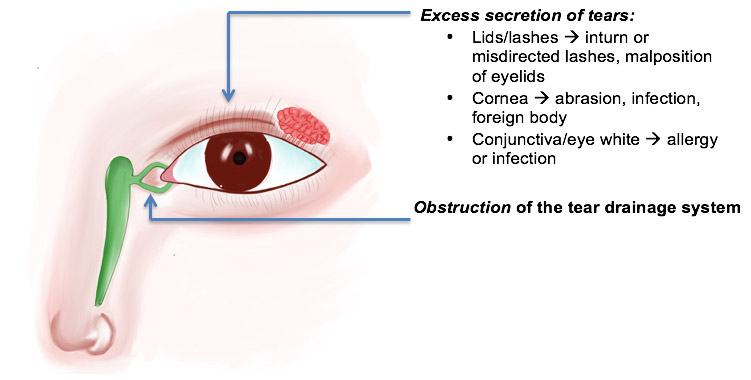
Excessive lacrimation, or the excessive flow of tears, is a normal function of the eye. However, excessive tear production without an apparent reason can be a sign of an underlying health issue or a chronic condition manifesting itself.
How the Eye Works
The tears in the eye come from the lacrimal gland located above the outer corner of the eye. Tears are composed of water, oil, and mucins: the moisture on the front surface of the eye is essential to prevent the eye from drying out and becoming inflamed (keratitis), leading to abrasions or ulcers.
The tears drain from the eye through the lacrimal ducts. If these ducts become blocked, tears can rise back into the eye, causing “tearful” eyes (epiphora), often mistakenly thought to be crying. The lacrimal ducts can be blocked by infections and inflammations, which can also cause excessive tear production: however, it is true that ductal blockage can occur due to conditions like sarcoidosis, lymphoma, trauma, and radiation treatment.
The outer membrane of the eye is called conjunctiva. Any irritation of the cornea or conjunctiva can lead to watery eyes: among the main causes are conjunctivitis, using irritating substances, or allergies. Eye infections may require prescription antibiotic eye drops.
Symptoms of Excessive Lacrimation
As clarified above, let’s summarize the symptoms associated with excessive tear production and watery eyes:
- Eye pain,
- Eye inflammation or infection,
- Nasal discharge,
- Vision impairment,
- Allergies,
- Coughing,
- Eyelid swelling,
- Redness of the eyes.
Causes of Excessive Lacrimation
The causes of excessive lacrimation, as previously mentioned, can be quite numerous. Let’s briefly look at some:
Adenovirus
Adenoviruses are common infections that often have no symptoms. They cause various illnesses such as bladder infections, diarrhea, bronchitis, coughs, conjunctivitis, colds, encephalitis, sore throats and meningitis. Symptoms of an adenoviral infection depend on the type of virus responsible for it. Treatment focuses on alleviating the primary discomfort.
Allergies
An allergy is a “mistaken” reaction from our immune system in response to certain foreign substances. When these allergens come into contact with the body, the immune system develops an allergic reaction in those who are predisposed. Affected areas include eyes, nose, lungs, skin and stomach. Common allergic disorders include hay fever, asthma, itchy eyes, eczema, hives and anaphylaxis.
Blepharitis
Blepharitis is inflammation of the eyelids. Acne rosacea, staphylococcus bacteria, allergies, sensitivity to cosmetics or contact lenses, lice or other conditions can cause it. Symptoms include: itching in the eyelids, eye burning sensation, light sensitivity, reddened and swollen eyelids, hair loss around the eyes and crust on the eyelashes.
Common Cold
The common cold (viral infection of the upper respiratory tract) is a contagious disease that can be caused by various viruses. Symptoms include nasal congestion, headache, coughing, sore throat and sometimes fever and tearful eyes. Antibiotics are ineffective against the typical cold, and there is no evidence to support the effectiveness of zinc and vitamin C as treatments.
Dry Eyes
Dry eye is caused by an imbalance in the eye’s tear flow system. It can also be due to the evaporation of the tear film: this is often facilitated by dry air created by air conditioning, heat or other environmental conditions. Treatment may involve medications or, rarely, surgical intervention. Sometimes dry eyes resolve on their own with increased tear production.
Eye Allergy
Eye allergy (or eye condition) is typically associated with hay fever and atopic dermatitis. Cosmetics and drugs can cause eye allergies. Ocular allergic conditions include conjunctival allergy, conjunctivitis with atopic dermatitis, vernal keratoconjunctivitis and papillary conjunctivitis. Eye dryness, ductal blockage, and conjunctiva due to infection are often mistaken for ocular allergies. Ocular allergies can be treated with antihistamines, decongestants, tear stabilizers, anti-inflammatory eye drops, systemic medications.
Conjunctivitis
Conjunctivitis is inflammation of the conjunctiva. If contagious or not… depends on what causes irritation. With conjunctivitis, people may experience: swollen eyelids, red color in the white part of eyes, secretion from eyes, light sensitivity, increased tear production and itching.
Mold Exposure
Exposure to mold can cause symptoms in individuals who are sensitive. Symptoms of mold allergy include: coughing, nasal discharge, breathing difficulties, eye redness and skin rash. Reducing internal humidity between 30% and 50%, using bathroom fans during showers, promptly repairing leaks and using air conditioners during humid seasons, can be helpful.
Sinusitis
Sinusitis is inflammation or infection of the sinuses. The symptoms are quite diverse: they include facial pressure, nasal congestion, headache and fatigue. When this occurs, it is often mistaken for allergies or an upper respiratory tract infection. Treatment involves antibiotics to combat infections, pain relievers to reduce discomfort.
How to Identify Excessive Lacrimation
In many cases, excessive lacrimation may be a harmless condition that resolves itself once the underlying cause has been addressed. However, if symptoms persist or worsen over time, it is essential to consult with an eye care professional for proper diagnosis and treatment.
Here are some steps you can take to identify excessive lacrimation:
- Keep a symptom journal: tracking your tear production, any discomfort or pain in the eyes, nasal discharge, vision impairment, allergies, coughing, eyelid swelling, redness of the eyes, and any other symptoms may help determine the cause of the excessive lacrimation.
- Monitor your eye health: regularly inspect your eyes for signs of irritation, infection, or inflammation. Consult with an eye care professional if you notice anything unusual.
Treatment Options
Once a diagnosis has been made, treatment options will depend on the underlying cause of the excessive lacrimation. Here are some possible treatments:
- Over-the-counter (OTC) medications: antihistamines, decongestants and lubricating eye drops can help alleviate symptoms.
- Antibiotic eye drops or ointments: for infections such as conjunctivitis or blepharitis.
- Steroid eye drops: to reduce inflammation and swelling in the eyes.
- Antifungal eye drops: for fungal infections like candidiasis.
In some cases, surgery may be necessary to treat excessive lacrimation caused by a blockage in the lacrimal ducts. This is usually performed under local anesthesia and involves creating a small incision to open up the duct.
Prevention
While it’s not possible to completely prevent excessive lacrimation, there are some steps you can take to reduce the risk of developing this condition:
- Maintain good eye hygiene: wash your hands regularly, especially before touching your eyes.
- Avoid irritants: stay away from pollutants, allergens, and other substances that can cause irritation or inflammation in the eyes.
- Use protective gear: wear goggles or glasses when engaging in activities that may irritate the eyes, such as sports or construction work.
- Stay hydrated: drinking plenty of water can help maintain a healthy tear production system.
By understanding the causes and symptoms of excessive lacrimation, you can take steps to prevent this condition from occurring or reduce its severity if it does occur. If you suspect that you are experiencing excessive lacrimation, consult with an eye care professional for proper diagnosis and treatment.
In addition to these general tips, here are some specific prevention strategies:
- Avoid exposure to mold: regular cleaning and dusting can help prevent mold growth in your home.
- Use air purifiers: removing pollutants from the air can reduce the risk of irritation or inflammation in the eyes.
- Wear sunglasses with UV protection: this can help protect your eyes from the sun’s rays, which can contribute to excessive lacrimation.
By taking these steps, you can reduce your risk of developing excessive lacrimation and maintain healthy, comfortable eyes.


