
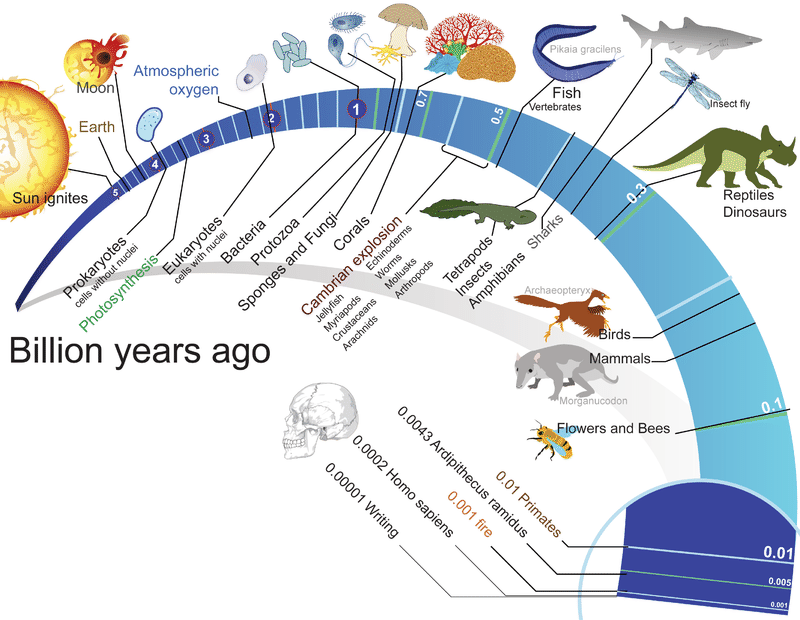
As we ponder the concept of evolution, it’s easy to connect Charles Darwin to its development in our minds. However, he wasn’t the only one working on this theory, and his ideas were met with criticism and debate. The ongoing discussion around evolution is natural, especially when new discoveries shed light on human origins and the evolutionary journey.
The Evolution of Species: Theory
Darwin’s theory of evolution is built upon two fundamental concepts. Firstly, he explains that species undergo gradual changes over long periods of time, a concept known as “gradualism.” This means that changes occur gradually, almost imperceptibly, from one generation to the next. This gradual change allows for adaptation and survival in various environments.
The second key aspect of Darwin’s theory is that both species and their environment evolve over time. The environment acts as a filter, selecting which individuals are best suited to survive and reproduce. This process, known as natural selection, drives evolution forward.
Not everyone has welcomed Darwin’s ideas with open arms. Some scientists have challenged his theories, arguing for rapid changes in evolution. Goldschmidt, for instance, proposed that sudden changes could occur.
What is Evolution?
While these two concepts might seem straightforward, they require further explanation to truly grasp the complexity of evolution. Darwin’s theory highlights a struggle for survival among individuals, with selection acting as the driving force behind adaptation. This natural selection process has been observed and documented in various species, including birds, reptiles, and amphibians.
In the case of human evolution, we are most interested in understanding our origins and how we have developed over time. The study of human evolution spans multiple disciplines, including biology, archaeology, geology, linguistics, and genetics.
The widely accepted theory suggests that the Hominidae family evolved from a population of primates around 5-6 million years ago in Africa. This led to the emergence of the genus Homo, which began to distinguish itself from its predecessors around 2.8-3.0 million years ago. The Homo erectus species then spread across the globe, giving rise to local species, including the Neanderthal in Europe.
There is also an alternative theory proposing that Homo erectus evolved into modern humans only after leaving Africa, with some speculating about a “multiregional” origin of humanity.
Charles Darwin: The Father of Evolution
Darwin’s contributions to evolution cannot be overstated. His book, “On the Origin of Species,” published in 1859, laid the foundation for modern evolutionary theory. However, Darwin didn’t work alone; he drew inspiration from various scientists, including Charles Lyell, Malthus, and Smith.
During his journey to America, Darwin observed differences between species, noting changes in birds, lizards, and turtles. These observations sparked questions about how these changes occurred and led him to develop his theory of evolution through natural selection.
Evolution: Explained for Children
When explaining evolution to children, using stories like “In viaggio con Darwin” (On a Journey with Darwin) is an excellent approach. This book, paired with a CD-ROM, provides an engaging and accessible introduction to the subject. By exploring the solar system through the eyes of a child, we can better understand our place in the world and the vastness of space.
FAQs
- What is evolution?
Evolution refers to the gradual changes that occur in species over time due to environmental pressures and natural selection. - Who is Charles Darwin?
Charles Darwin was an English naturalist who proposed the theory of evolution through his book “On the Origin of Species.” - How does natural selection work?
Natural selection is a process where the environment selects for individuals that are best suited to survive and reproduce, driving evolution forward. - What is gradualism in evolution?
Gradualism refers to the idea that changes occur gradually over long periods, allowing species to adapt to their environments. - Can humans evolve rapidly?
While some scientists propose rapid changes in evolution, the majority of evidence supports gradual, long-term adaptations. - How do we know what our human ancestors looked like?
Fossil records and genetic analysis provide clues about our ancestral appearance. - What role does environment play in evolution?
The environment plays a crucial role in driving natural selection, which in turn shapes the evolution of species. - Can other animals evolve rapidly too?
Yes, many animal species can undergo rapid changes in response to environmental pressures.
Types of Evolution
There are several types of evolution that have been identified and studied:
- Microevolution: This type of evolution involves small-scale changes within a species over time.
- Macroevolution: This refers to the large-scale changes that occur within species, leading to new species emerging or existing ones becoming extinct.
- Adaptive radiation: This occurs when a single species splits into multiple distinct species, often in response to environmental pressures.
Evolutionary History of Humans
The human evolutionary journey began around 6-8 million years ago, with the emergence of the hominin family. The early hominins were characterized by bipedalism and a mix of ape-like features and human-like traits.
Over time, these early humans evolved into different species, including Australopithecus afarensis and Homo habilis. These species exhibited more advanced cognitive abilities and tool use than their predecessors.
The Emergence of Modern Humans
Modern humans, or Homo sapiens, emerged around 300,000 years ago in Africa. This new species was characterized by a larger brain size, bipedalism, and the ability to produce complex tools and language.
From Africa, modern humans migrated to other parts of the world, replacing or coexisting with other human species like Neanderthals and Denisovans.
Genetic Variation and Evolution
Genetic variation is a key driver of evolution. It refers to the differences in DNA sequences between individuals within a population or species.
Natural selection acts on these genetic variations, favoring those that confer an adaptive advantage. Over time, this process leads to the accumulation of adaptations, driving evolution forward.
Evolutionary Biogeography
This field of study examines how geographical features and processes have shaped the evolutionary history of different species.
By analyzing fossil records, genetic data, and geological evidence, researchers can reconstruct the paths that ancient species took as they migrated across continents and adapted to changing environments.
The Ethics of Evolution
As we continue to explore the complexities of evolution, it’s essential to consider the ethical implications of our discoveries.
For instance, the existence of extinct human species raises questions about our responsibility towards these lost populations and their potential rights.
Additionally, the discovery of genetic variations within modern humans challenges traditional notions of identity and morality.
Conclusion
Evolution is a multifaceted concept that has captivated human imagination for centuries. From Darwin’s groundbreaking theory to ongoing debates around human origins, evolution continues to shape our understanding of the natural world.
As we navigate the complexities of evolutionary biology, we must consider not only the scientific evidence but also the ethical implications of our discoveries. By embracing this rich and fascinating topic, we can gain a deeper appreciation for the intricate web of life that surrounds us all.


