
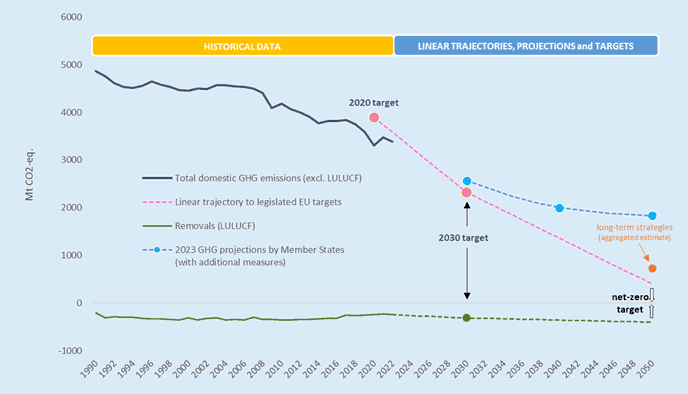
As the news of the EU agreement to reduce emissions by 2030 spread like wildfire, it brought a sense of relief and accomplishment. After years of intense negotiations, the European Union finally reached a consensus on this crucial issue, marking a significant step towards achieving its climate goals.
The Green Deal: A Success Story
At the heart of this achievement lies the Green Deal, a comprehensive strategy aimed at reducing greenhouse gas emissions while promoting sustainable growth. The agreement to reduce emissions by 40% was a major milestone, but it’s not just about meeting targets – it’s also about creating a more sustainable future for all.
The Green Deal is built on three pillars:
- Climate Action: This pillar focuses on reducing greenhouse gas emissions and increasing the use of renewable energy sources.
- Sustainable Growth: This pillar aims to promote sustainable growth while reducing emissions, providing opportunities for businesses and industries to innovate and invest in clean technologies.
- Circular Economy: This pillar encourages the adoption of circular economy practices, reducing waste and promoting the efficient use of resources.
The agreement to reduce emissions by 40% was a major milestone, but it’s not just about meeting targets – it’s also about creating a more sustainable future for all. The Green Deal has been hailed as a success story, with many experts praising its ambition and scope.
The Challenges Ahead
However, the journey towards this achievement has been long and arduous. The EU faced significant challenges in reaching an agreement, including differences in priorities between member states. Poland, in particular, was a major obstacle, with its economy heavily reliant on fossil fuels.
Poland’s opposition to the agreement was rooted in concerns about the impact of climate policies on its economy. However, after years of intense negotiations, the EU reached a compromise that took into account Poland’s concerns while still meeting its climate targets.
A Leader in Climate Action
The EU’s commitment to reducing emissions is just one example of its leadership in climate action. As the world grapples with the challenges of climate change, Europe has taken a vital role in setting the agenda and driving innovation.
The agreement reached on December 12, 2020, marks a significant step forward in this effort. It demonstrates the EU’s commitment to reducing emissions and promoting sustainable growth, while also providing funding for sustainable development and climate action.
The Role of EU Leaders
Leaders from across the EU have praised the agreement, with Italian Prime Minister Giuseppe Conte stating that it’s “a beautiful night for Europe.” French President Emmanuel Macron echoed this sentiment, saying that the EU is “the leader in the fight against climate change.”
Angela Merkel, Chancellor of Germany, played a crucial role in brokering a compromise between rival factions within the EU. The deal was also contingent on the introduction of new funding for sustainable development and climate action.
Behind the Scenes: The Politics of Climate Change
The negotiations leading up to the agreement were far from straightforward. The EU’s climate policy has been shaped by decades of debate and negotiation, with different member states having different priorities and interests.
In recent years, there have been significant efforts to strengthen the EU’s climate policy, including the introduction of new targets and measures. However, reaching an agreement on reducing emissions by 2030 was a major challenge.
The Future Looks Brighter
As we move forward, it’s clear that the EU has taken a vital step towards achieving its climate goals. With this agreement, the path to net-zero emissions by 2050 is becoming increasingly viable. The European Union has demonstrated its commitment to climate action, setting an example for the world to follow.
The future of the EU’s climate policy looks bright, with many experts predicting that it will play a significant role in driving global progress on climate change. However, there are still significant challenges ahead, including the need to implement and monitor the agreement, as well as address concerns about affordability and fairness.
Frequently Asked Questions
- What does the EU agreement on reducing emissions mean for the environment?
The agreement marks a significant step towards achieving the EU’s climate goals, with a reduction in greenhouse gas emissions of 55% by 2030 and net-zero emissions by 2050. - How did the EU reach this agreement?
After years of intense negotiations, the EU reached an agreement through compromise and cooperation between member states. - What are the implications for Poland and other countries with high carbon footprints?
The agreement recognizes the need for transition to a low-carbon economy and provides funding for sustainable development and climate action. - How does this agreement impact economic growth?
The Green Deal aims to promote sustainable growth while reducing emissions, providing opportunities for businesses and industries to innovate and invest in clean technologies. -
What is the role of EU leaders in promoting climate action?
Leaders from across the EU have praised the agreement and emphasized their commitment to climate action, setting an example for other nations to follow. -
How will this agreement be implemented and monitored?
The agreement includes measures to ensure its implementation and monitoring, including regular reviews and assessments. -
What are the next steps for the EU in terms of reducing emissions?
The EU has set ambitious targets for reducing emissions, with a focus on promoting sustainable growth and innovation. -
How can individuals contribute to reducing emissions?
Individuals can make a difference by adopting sustainable lifestyles, investing in renewable energy, and supporting policies that promote climate action. -
What is the role of civil society in shaping EU climate policy?
Civil society organizations have played a crucial role in shaping EU climate policy, raising awareness about the importance of climate action and advocating for stronger measures to reduce emissions. -
How can businesses contribute to reducing emissions?
Businesses can make a significant contribution to reducing emissions by investing in clean technologies, adopting sustainable practices, and promoting sustainable growth. -
What is the impact of the EU agreement on the global economy?
The EU agreement has implications for the global economy, with potential benefits including reduced costs associated with climate change and increased investment in clean technologies. -
How can governments around the world learn from the EU’s experience?
Governments around the world can learn from the EU’s experience by adopting a similar approach to climate policy, including setting ambitious targets and providing funding for sustainable development and climate action.


