
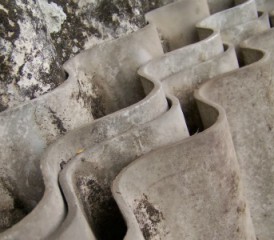
The Eternit case has finally come to a close, with the two imprenditors behind the company receiving a 16-year sentence for their role in causing a devastating environmental disaster. However, as we delve deeper into the world of asbestos, it becomes clear that the true extent of its impact is far from over.
The History of Eternit
Eternit was an Italian company with four factories across Italy, specializing in the production of asbestos. The law in Italy finally caught up with the company in 1992, after more than 2,100 people had died and over 800 had fallen ill due to the hazardous conditions at its factories in Cavagnolo and Casale.
The company was founded in 1905 by Angelo Ratti, an Italian industrialist who had a vision for a new type of cement that could be used in construction. Initially, the company’s products were considered innovative and revolutionary, but as time went on, it became clear that asbestos, which was used extensively in their products, posed significant health risks.
The Global Impact of Asbestos
Despite being banned in many countries, including those in Europe, asbestos remains widely used globally. In fact, it’s estimated that 125 million people are exposed to asbestos on a daily basis, resulting in over 107,000 deaths every year – equivalent to 294 deaths per day.
Asbestos is a highly versatile material with numerous applications, from insulation and fireproofing to brake pads and clutch facings. Its widespread use has led to its presence in countless products that are commonly found in our homes, schools, and workplaces.
The Human Toll of Asbestos
Asbestos is a deadly substance that causes mesotelioma, lung cancer, and other life-threatening diseases. Every five minutes, someone dies from exposure to asbestos. The cost of this “affordable” material is staggering, with millions of people losing their lives each year due to its use.
Asbestosis, a chronic respiratory disease caused by inhaling asbestos fibers, affects an estimated 20 million people worldwide. Mesothelioma, a rare form of cancer that occurs in the lining of the lungs and abdomen, claims thousands of lives each year. The risk of developing these diseases increases exponentially with the length of exposure to asbestos.
The Global Production of Asbestos
Asbestos is still widely used globally, with over 2 million tons produced every year. This raises questions about the motivations behind its continued use, particularly in countries like China and India, where workers are often exposed to hazardous conditions without proper protection.
In many cases, asbestos is used as a cheap substitute for safer materials, despite the high cost of dealing with its health impacts. The lack of regulation and enforcement mechanisms in some countries has allowed companies to prioritize profits over people’s lives.
The Role of Industry and Governments
So why does the industry continue to prioritize profits over people’s lives? The answer lies in the fact that asbestos is still cheaper than many alternative materials. However, this comes at a terrible cost – literally hundreds of thousands of lives lost each year.
Governments and regulatory agencies around the world have been criticized for their slow response to the dangers posed by asbestos. In some cases, they have even gone so far as to downplay or deny the risks associated with its use.
What Can We Do?
As individuals, we can take action by denouncing the presence of asbestos in our communities and advocating for its removal. We can also sign petitions calling on international organizations like the WHO to increase awareness and education about the dangers of asbestos, particularly in countries where it’s still widely used.
We can support organizations working to raise awareness about asbestos and advocate for stronger regulations and enforcement mechanisms. By working together, we can reduce the devastating effects of this deadly substance and create a safer, healthier world for all.
Frequently Asked Questions
- Q: Why is asbestos still widely used despite its known dangers?
A: The use of asbestos continues due to cost savings and industry lobbying. However, many countries have banned or restricted its use. - Q: What are the most common health effects of asbestos exposure?
A: Asbestos exposure can cause mesotelioma, lung cancer, and other life-threatening diseases such as asbestosis and pleural plaques. - Q: How many people die each year from asbestos exposure?
A: An estimated 107,000 people die every year due to asbestos exposure. - Q: Which countries have banned or restricted the use of asbestos?
A: More than 40 countries have banned or restricted the use of asbestos, including those in Europe and North America. - Q: What can I do to help reduce the impact of asbestos?
A: You can denounce the presence of asbestos in your community, sign petitions calling for its removal, and support organizations working to raise awareness about its dangers. - Q: Is there an alternative to asbestos that is just as effective?
A: Yes, there are many alternatives to asbestos that are safer and more effective. However, cost savings continue to be a major factor in the industry’s decision-making process. - Q: How can I get involved in efforts to ban or restrict the use of asbestos?
A: You can contact your local government representatives, join advocacy groups, and participate in public awareness campaigns to raise support for banning or restricting the use of asbestos.
The Future of Asbestos
As we move forward, it’s essential that we prioritize public health over profits. Governments and regulatory agencies must take a stronger stance against the use of asbestos, enforcing stricter regulations and holding companies accountable for their actions.
Individuals can also play a critical role in reducing the impact of asbestos by taking steps to protect themselves and their communities from its dangers. By working together, we can create a safer, healthier world for all.
Conclusion
The Eternit case has finally come to a close, but the true extent of the damage caused by asbestos remains a pressing concern. As we move forward, it’s essential that we prioritize public health over profits and take steps to reduce the devastating effects of this deadly substance.
By working together, we can create a safer, healthier world for all. Let us continue to advocate for stronger regulations and enforcement mechanisms, support organizations working to raise awareness about asbestos, and denounce the presence of this deadly material in our communities.
Together, we can make a difference and ensure that no more lives are lost due to the reckless use of asbestos.


