
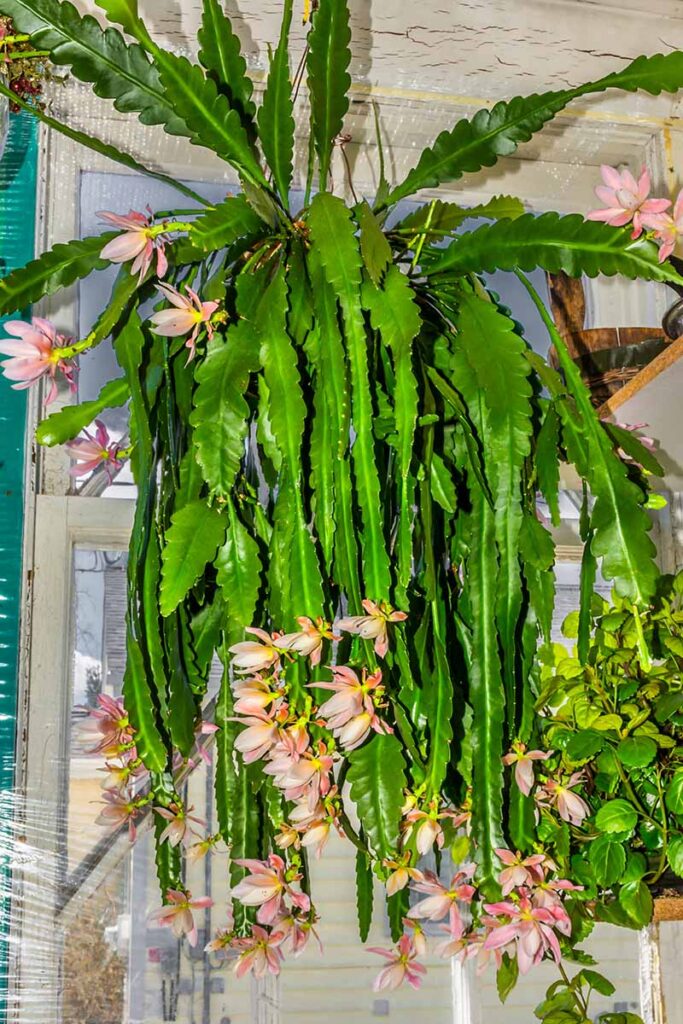
Introduction to Epiphyllum
Epiphyllum, a type of succulent plant, is widely appreciated for its vibrant flowers. Native to the Americas, this unique plant thrives in humid environments, typically found growing on large trees or rocks. Its ability to absorb moisture from the air makes it an ideal choice for indoor cultivation.
Understanding Epiphyllum
Epiphyllum belongs to the Cactacea family and is characterized by its spineless stems. Unlike other cacti, this plant does not have sharp spines and is therefore more accessible for domestic cultivation. In its natural habitat, Epiphyllum grows by inserting its slender roots into decomposing organic matter, such as fallen leaves or moss.
Growing Epiphyllum
To successfully cultivate Epiphyllum, you’ll need a modest amount of well-draining soil that remains consistently moist. In the winter months, it’s essential to maintain high humidity levels and provide supplemental heat to prevent damage. Additionally, Epiphyllum benefits from regular fertilization, with cacti-specific nutrients applied between March and September.
Lighting and Temperature Requirements
Epiphyllum demands a balanced environment with moderate sunlight, avoiding direct sun exposure and maintaining temperatures above 10°C (50°F). To replicate its natural habitat, ensure the plant is situated in a shaded area or near an east-facing window. By providing optimal conditions, you’ll be rewarded with stunning flowers and healthy growth.
Popular Epiphyllum Varieties
Several species are widely available for cultivation, including:
- Epiphyllum Anguliger: Known for its striking white flowers that bloom at night.
- Epiphyllum Crenatum: Features large, white blooms with a sweet fragrance.
- Epiphyllum Oxypetalum: Showcases vibrant red fruits and fragrant white flowers.
Other Epiphyllum Varieties
In addition to the above species, there are several other varieties worth mentioning:
- Epiphyllum Ackermannii: Not actually an Epiphyllum but a Discocactus, this plant is still popular among enthusiasts.
- Epiphyllum Kimnachii: A variant of Crenatum characterized by more compact growth and oval-shaped leaves.
- Epiphyllum Angulier: Also known as Euphyllum Yellow, it produces yellow-brown fruits and fragrant white flowers.
Sowing Epiphyllum Seeds
Acquiring seeds for your desired Epiphyllum variety can be challenging. However, online retailers like Amazon offer a wide range of seed varieties, including rare ones. Sow Epiphyllum seeds in well-draining soil mix with perlite or vermiculite. Keep the soil consistently moist and warm to encourage germination.
Propagation Techniques
Epiphyllum can be propagated using stem cuttings, leaf segments, or division. Stem cuttings are often used for propagation as they promote healthy root growth. When taking cuttings, ensure the section includes a node with at least two “eyes” (the swollen areas on the stem). Remove any leaves that may interfere with rooting and plant them in a moistened potting mix.
Epiphyllum Care Tips
To keep your Epiphyllum plants thriving:
- Monitor temperature: Maintain temperatures between 65-75°F (18-24°C) for optimal growth.
- Use proper lighting: Provide filtered sunlight or shade to prevent scorching.
- Water carefully: Avoid overwatering, as this can lead to root rot and other issues.


