
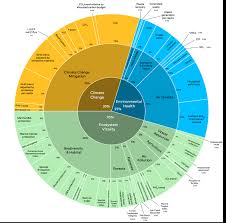
As the world grapples with the challenges of climate change, environmental degradation, and sustainable development, it’s essential to understand how countries are performing on these critical issues. One tool that can provide valuable insights is the Environmental Performance Index (EPI). In this article, we’ll delve into what EPI measures, Italy’s current position, and explore ways to improve.
What is the Environmental Performance Index (EPI)?
The EPI is a widely recognized metric that assesses countries’ environmental performance, ranking them in terms of their impact on the environment. It was developed by researchers at Columbia University, Yale University, and the World Economic Forum, in collaboration with the European Commission’s Joint Research Centre. The index evaluates 20 indicators across two macro-areas: human health and ecosystem health.
The EPI considers various aspects of environmental performance, including:
- Biodiversity: The extent to which a country protects its natural habitats and preserves biodiversity.
- Climate Change: A country’s level of greenhouse gas emissions and efforts to mitigate climate change.
- Air Quality: The concentration of pollutants in the air, such as particulate matter, ozone, and nitrogen dioxide.
- Water Quality: The quality of water sources, including rivers, lakes, and oceans.
- Land Use: The way a country uses its land for agriculture, urbanization, and other purposes.
Italy’s EPI Position
In the 2016 EPI report, Italy ranked 29th out of 180 countries. This decline is concerning, especially when considering the country’s previous rankings in 2014 (22nd) and 2012 (8th). While there are regional variations, it’s essential to recognize that Italy cannot be excused by its geographical location alone.
Regional Variations
Looking at EPI scores for European countries reveals a mix of results. Finland, Iceland, and Sweden occupy the top spots, while other Nordic countries like Denmark follow closely behind. As we move down the rankings, we see a more diverse group of countries, including Italy’s neighbors Slovenia, Spain, and Portugal.
Finland, for example, has an EPI score of 85, ranking it as one of the highest-performing countries in Europe. Its strong performance is due to its investments in renewable energy, green infrastructure, and sustainable forestry practices.
Iceland, on the other hand, has an EPI score of 83, driven by its commitment to reducing greenhouse gas emissions and promoting sustainable tourism.
Relationship Between EPI and GDP
While there is no direct correlation between EPI scores and GDP, studies suggest that high-income countries tend to perform better on environmental issues. For instance, countries like Sweden and Norway have high EPI scores despite having relatively low GDP per capita compared to other European nations.
In contrast, some countries with high GDP per capita but poor environmental records include Kuwait, Qatar, Oman, and Saudi Arabia. These countries often prioritize economic growth over environmental protection, which can lead to negative consequences for human health and the environment.
The Connection Between Economic Growth and Environmental Performance
Economic growth can drive investment in areas that improve human well-being and environmental quality. However, this doesn’t always translate to better environmental performance. Countries with high GDP per capita but poor environmental records include:
- Kuwait: Despite having one of the highest GDP per capita in the world, Kuwait’s EPI score is 72 due to its reliance on oil exports and lack of investment in renewable energy.
- Qatar: Qatar’s EPI score is 68, despite its high economic growth rates, which are largely driven by natural gas exports.
- Oman: Oman’s EPI score is 62, due to its limited investment in renewable energy and poor air quality.
Investing in Sustainable Development
To improve its EPI score, Italy should focus on investing in sustainable development. This can involve initiatives like:
- Renewable Energy: Investing in solar, wind, and other forms of renewable energy to reduce dependence on fossil fuels.
- Green Infrastructure: Developing green infrastructure, such as parks, gardens, and green roofs, to improve air quality and mitigate the urban heat island effect.
- Reducing Waste: Implementing effective waste management practices, including recycling and composting, to minimize waste sent to landfills.
- Promoting Sustainable Agriculture Practices: Encouraging sustainable agriculture practices, such as organic farming and permaculture, to reduce the environmental impact of agriculture.
Lessons from Other Countries
Looking at countries that have achieved high EPI scores provides valuable lessons for Italy’s improvement. Finland, for example, has successfully implemented low-emission transportation systems, including electric vehicles and “green” roads. The country has also invested in sustainable forestry practices and protected natural areas.
Sweden’s commitment to reducing greenhouse gas emissions has led to a significant decline in its carbon footprint. The country aims to be carbon neutral by 2045, making it one of the most ambitious targets set by any country.
Conclusion
Italy’s 29th position on the Environmental Performance Index is a cause for concern, but it also presents an opportunity for improvement. By learning from other countries’ experiences and investing in sustainable development, Italy can enhance its environmental performance and create a better future for its citizens.
Frequently Asked Questions (FAQs)
- What is the Environmental Performance Index (EPI)?
The EPI is a widely recognized metric that assesses countries’ environmental performance by evaluating 20 indicators across two macro-areas: human health and ecosystem health.
2. Why did Italy decline in the EPI rankings?
Italy’s decline in the EPI rankings can be attributed to various factors, including increased pollution, reduced investment in renewable energy, and inadequate waste management practices.
3. How can Italy improve its EPI score?
To improve its EPI score, Italy should focus on investing in sustainable development initiatives like renewable energy, green infrastructure, and reducing waste.
4. What role does economic growth play in environmental performance?
Economic growth can drive investment in areas that improve human well-being and environmental quality, but it’s essential to ensure that these investments are sustainable and environmentally conscious.
5. How can Italy learn from other countries’ experiences?
Italy can learn from other countries’ experiences by studying their successful initiatives in areas like renewable energy, green infrastructure, and sustainable forestry practices.
6. What is the relationship between EPI scores and GDP?
While there is no direct correlation between EPI scores and GDP, high-income countries tend to perform better on environmental issues.
7. Can Italy’s EPI score be improved without compromising economic growth?
Yes, it is possible for Italy to improve its EPI score without compromising economic growth. By making sustainable investments and adopting environmentally conscious practices, the country can create jobs, stimulate economic growth, and enhance environmental quality.
8. What are some effective strategies for improving EPI scores?
Effective strategies for improving EPI scores include investing in renewable energy, reducing waste, promoting sustainable agriculture practices, and protecting natural areas.
By understanding the Environmental Performance Index (EPI) and its implications for Italy, we can work towards creating a more sustainable future for this important European country.


