
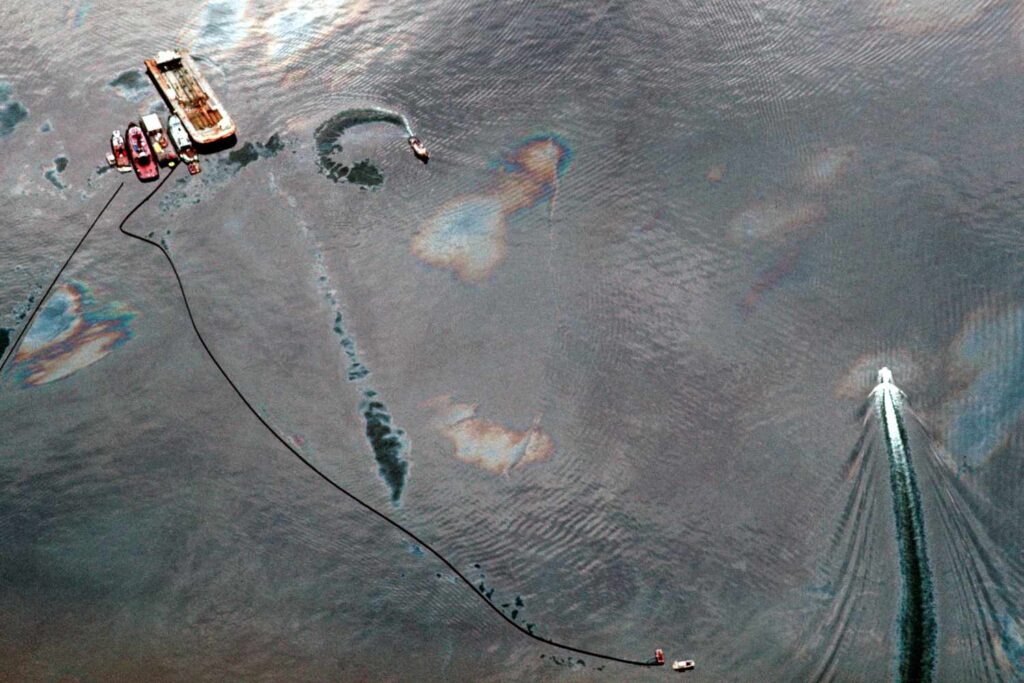
As citizens of the world, we are all aware that our planet is facing numerous environmental disasters. Among these, some may be more prominent in our minds than others, but the consequences of oil spills still affect us today.
Between wars and earthquakes, it’s easy to forget about another category of disasters, but the explosion and sinking of the Deepwater Horizon platform in the Gulf of Mexico in April 2010 brought attention to environmental disasters caused by oil. Even more so did a film bring attention to the topic of oil spills.
The use of oil has been a cornerstone of modern society for decades. However, with the negative impact it has on our environment, it’s time to consider alternatives and take steps towards reducing our reliance on this non-renewable resource.
In recent years, there have been numerous environmental disasters caused by oil. These include tankers sinking in the middle of oceans, pipelines bursting under pressure, and refineries catching fire. The consequences of these spills are often devastating and can last for years or even decades.
The 5 Most Devastating Oil Spills in History
Before we dive into this “top five,” let’s clarify that it shouldn’t be taken as a rigid ranking. It’s not just about being picky, but also because even if we were, it would be impossible to accurately quantify the amount of oil dispersed and the consequences on the ecosystem.
The Deepwater disaster is still being evaluated due to its recent nature, so let’s take a look at the film “Deepwater Horizon,” directed by Peter Berg, which is based on the explosion of the oil platform that occurred in April 2010.
Among the most severe oil spills are those that happened during the Gulf War. One notable example was the incident on January 21st, when Iraq opened specific valves on Kuwait’s petroleum pipelines to hinder American troops’ landing. This resulted in a massive spill of between 1,360,000 and 1,500,000 tons of oil into the Persian Gulf.
While a significant amount of oil spilled into Kuwait, Arabia Saudita, and Iran, another disaster occurred. The Iraq military had intentionally ignited 732 oil wells to further complicate American forces again.
Looking at the long list of environmental disasters caused by oil, I would like to bring up the incident in which a tanker collided with an oil platform off the coast of Iran on February 10th, 1983, during the war between Iran and Iraq. The spill lasted for months and is estimated to have been around 300,000 tons.
Another notable example is the explosion that occurred aboard a tanker off the coast of Angola in May 1991, which resulted in the deaths of crew members, a massive fire, and approximately 260,000 tons of oil spilled into the Atlantic Ocean.
Prior to Deepwater, however, the most significant oil spill seemed to be that of the Exxon Valdez, which ran aground on March 24th, 1989, in Prince William Strait, Alaska. This resulted in about 38,000 tons of oil being released into the ocean.
Environmental Disasters Caused by Oil Tankers
More often than not, these environmental disasters are caused by tankers. Let’s examine three instances:
The first incident took place in the Gulf of Mexico in June 1979 when a Mexican ship called Ixtoc I suffered an accident while navigating and set fire, causing oil to spill into the ocean for nine months.
In August 1983, a Spanish tanker called Castillo de Beliver caught fire off the coast of South Africa before sinking and releasing approximately 227,000 tons of oil. Even further back in time, on July 19th, 1979, a Greek cargo ship called Atlantic Empress collided with another vessel during a storm near Trinidad and Tobago, resulting in a loss of around 287,000 tons of oil.
Environmental Disasters Caused by Oil in Italy
In Italy, we can find several environmental disasters caused by oil. One notable example occurred in 1991 in Genoa when a Cypriot ship called “M/C Haven” sank in the Gulf of Liguria, resulting in the deaths of some crew members and the release of around 144,000 tons of oil.
Recent Environmental Disasters
One of the most recent environmental disasters caused by oil is the incident that occurred in March 1992 in Uzbekistan’s Fergana Valley. This disaster resulted in approximately 285,000 tons of oil being released into the environment. The consequences were felt throughout a predominantly agricultural area rich in petroleum and natural gas.
Dangers Caused by Oil Spills
We’ve discussed environmental disasters caused by oil, which are sometimes referred to as “oil spills.” Sometimes, these spills have devastating effects on our environment, leading to severe damage to land ecosystems, certainly irreparable. While it’s difficult to fully understand the extent of the damage when it happens, we can try to imagine what would occur if it happened.
When oil is released from tankers, we call it an oil spill. This results in severe damage to the terrestrial environment, definitely irreparable. Oil forms a waterproof layer on the surface of oceans and seas that “kills” all forms of life. It takes years to repair these damages when possible.
If you’re concerned about the impact of oil spills on our planet, there are several things you can do to help reduce your carbon footprint. Here are some suggestions:
- Use public transportation or walk whenever possible
- Reduce energy consumption by using LED light bulbs and turning off lights when not in use
- Eat a balanced diet that is rich in fruits and vegetables
- Avoid products with palm oil, which contributes to deforestation
Frequently Asked Questions
Here are some questions and answers related to the topic:
Q: What is an oil spill?
A: An oil spill occurs when oil is released from a tanker into the environment.
Q: How long does it take for oil to break down in the environment?
A: The time it takes for oil to break down in the environment varies depending on several factors, including temperature and water chemistry. In general, it can take years or even decades for oil to fully break down.
Q: Can oil spills be prevented?
A: While it’s impossible to completely prevent oil spills, there are steps that can be taken to reduce the risk of accidents. These include regular maintenance of tankers, improved safety protocols, and better training for crew members.
Q: What is being done to address the impact of oil spills on the environment?
A: There are several organizations and governments working to address the impact of oil spills on the environment. These include efforts to develop more efficient and sustainable technologies, improve waste management practices, and provide financial compensation to affected communities.
In conclusion, environmental disasters caused by oil are a significant threat to our planet. While we can’t completely eliminate the risk of these accidents, there are steps that can be taken to reduce their impact. By being aware of the risks associated with oil spills and taking action to prevent them, we can help protect our environment for future generations.
Conclusion
Environmental disasters caused by oil are a serious threat to our planet. While we’ve discussed some examples of these events, it’s essential to recognize that this is not an exhaustive list. Oil spills can occur at any time and in any location, causing irreparable damage to the environment and ecosystems.
To mitigate the impact of these events, governments, organizations, and individuals must work together to develop more sustainable technologies, improve waste management practices, and provide financial compensation to affected communities.
By taking action to address the impact of oil spills on our planet, we can help protect the environment for future generations. This includes reducing our reliance on non-renewable resources, promoting sustainable transportation options, and supporting organizations that work to preserve the natural world.
In conclusion, environmental disasters caused by oil are a pressing concern that requires immediate attention. By working together to address this issue, we can create a more sustainable future for all living beings.


