
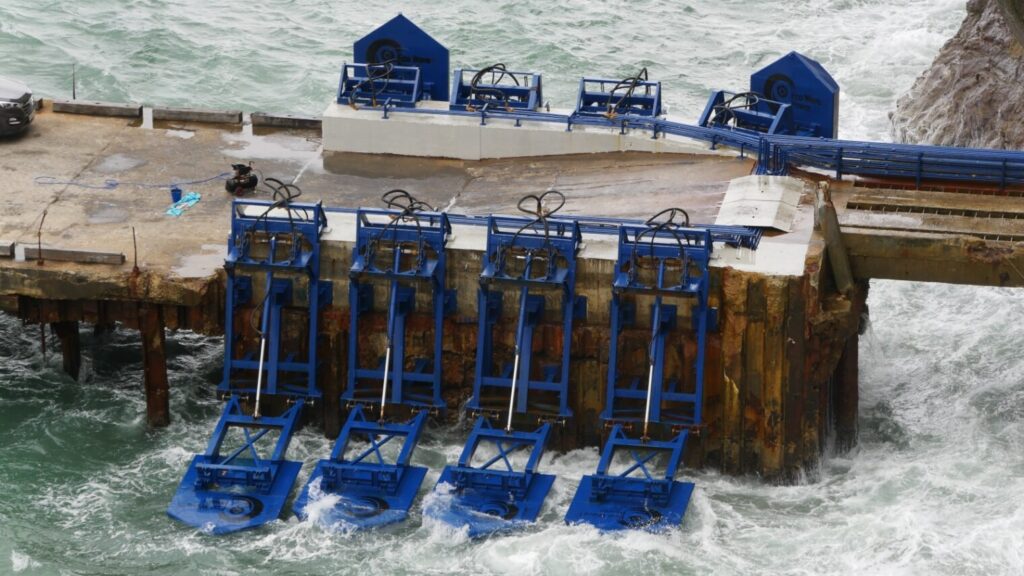
Harnessing Ocean Energy: A Game-Changer for Venice
The city of Venice is at the forefront of a revolutionary new technology that harnesses the power of ocean waves to generate electricity. The “Energia dalle Onde” project, led by Agire Agency, aims to convert the kinetic energy of waves into clean and sustainable electricity. This innovative approach not only provides a solution to the city’s increasing energy needs but also contributes to reducing its carbon footprint.
The primary goal of this ambitious project is to assess the feasibility of a renewable energy system that can be installed in both marine and laguna environments. The project began in 2011, on the orders of the City of Venice’s Environment and Youth Policy Office, and was undertaken by Agire Agency. The organization has been working tirelessly to overcome the numerous challenges associated with harnessing ocean waves as a renewable energy source.
What Does the Project Involve?
The project involves researching existing installations that harness ocean waves to generate electricity, as well as developing and testing new technologies. Two specific systems were chosen for study: GIANT (Generatore Integrato Autonomo Non Tradizionale) and WEM (Wave Energy Module). These prototypes have been designed to capture the energy from waves and convert it into electricity.
GIANT is a linear generator that harnesses the power of the ocean using the Principle of Archimedes. This system uses the movement of water to generate electricity, which is then fed into the power grid. The WEM system, on the other hand, uses a central core containing a rotating generator, connected to floating buoys that transfer energy during the wave’s descent.
What’s Been Achieved So Far?
The first wave energy module was installed in Venice’s laguna in August 2011, followed by a series of tests and modifications. In March 2013, a fourth prototype was installed, which will be completed by May. The team has encountered several challenges, including obtaining necessary permits from multiple authorities, dealing with the harsh marine environment, and anchoring the devices.
One of the key successes of the project is the development of a new technique for attaching buoys to the sea floor using magnetic anchors. This technology allows the buoys to move freely during extreme weather conditions while maintaining a secure connection to the anchor.
What’s the Secret to Converting Energy from Waves?
The process of converting wave energy into electricity involves several key steps. First, sensors detect the movement of waves and send signals to the control system. The control system then activates the linear generator or rotating generator, depending on the chosen technology. As the generator moves up and down or rotates, it produces electrical energy.
The GIANT system uses a linear generator that harnesses the power of the ocean using the Principle of Archimedes. This principle states that the buoyancy force exerted by a fluid is equal to the weight of the fluid displaced by an object. In the case of wave energy harvesting, this means that the movement of water creates a pressure differential that drives the generator.
How Much Energy Can This Technology Produce?
Estimates suggest that with a 2-meter diameter prototype and an output of 1.5 kW, GIANT could produce around 12,000 kWh of electricity per year. The Venice-based WEM model, with a larger diameter of 6 meters, has been shown to generate approximately 35,000 kWh of electricity annually.
The potential energy production from wave energy harvesting is vast and varied depending on the location and technology used. In areas with high wave activity, such as near coastal cliffs or reefs, the energy generation can be substantial.
Why Venice? What’s So Special About This City?
According to Gianfranco Bettin, the city’s Environment and Youth Policy Office Director, “This technology allows us to produce clean energy while utilizing the unique characteristics of our territory.” The Energy Globe Award for 2013 was also bestowed upon this project, highlighting its innovative approach to sustainable energy.
The city of Venice is particularly well-suited for wave energy harvesting due to its unique geography. The lagoon’s shape and depth create a complex system of tides and currents that can be harnessed to generate electricity.
Will We See More of This Technology in the Future?
With the success of these early prototypes, it’s likely that wave energy harvesting will become a prominent player in the renewable energy sector. As research and development continue, we can expect to see more efficient and cost-effective systems being deployed worldwide.
The potential for wave energy harvesting is vast and varied, with numerous locations around the globe offering opportunities for harnessing this renewable energy source. In addition to coastal cities like Venice, other regions such as the Gulf of Mexico, the North Sea, and the Pacific Ocean could also benefit from wave energy harvesting.
Frequently Asked Questions:
- What is the potential impact on Venice’s energy infrastructure?
- The project aims to provide clean, renewable energy for small-scale consumption, reducing reliance on traditional energy sources.
- Will this technology be scalable?
- Yes, multiple units can be connected to form larger power stations, making it a viable option for meeting growing energy demands.
- Can we expect other coastal cities to adopt similar technologies?
- Absolutely, with the success of Venice’s project, other coastal cities may follow suit to harness the power of ocean waves.
- What are the main challenges facing this technology in its early stages?
- The primary obstacles include securing necessary permits, dealing with harsh environmental conditions, and addressing technical issues.
- How can we ensure that this technology is integrated into existing energy grids effectively?
- This will require further research and collaboration between engineers, policymakers, and industry experts to overcome technical challenges.
- What role does the Energy Globe Award play in promoting this technology?
- The award recognizes innovation and sustainability in renewable energy projects like Venice’s wave energy harvesting initiative.
Conclusion:
The “Energia dalle Onde” project is a pioneering effort that showcases the potential of harnessing ocean waves as a renewable energy source. By converting the kinetic energy of waves into clean and sustainable electricity, this technology has the potential to transform the way we generate and consume energy.
As the world continues to grapple with the challenges of climate change, it’s clear that innovative solutions like wave energy harvesting will play an increasingly important role in our transition to a more sustainable future. With continued research and development, it’s likely that we’ll see more efficient and cost-effective systems being deployed worldwide, making this technology a game-changer for cities like Venice and other coastal regions around the globe.


