
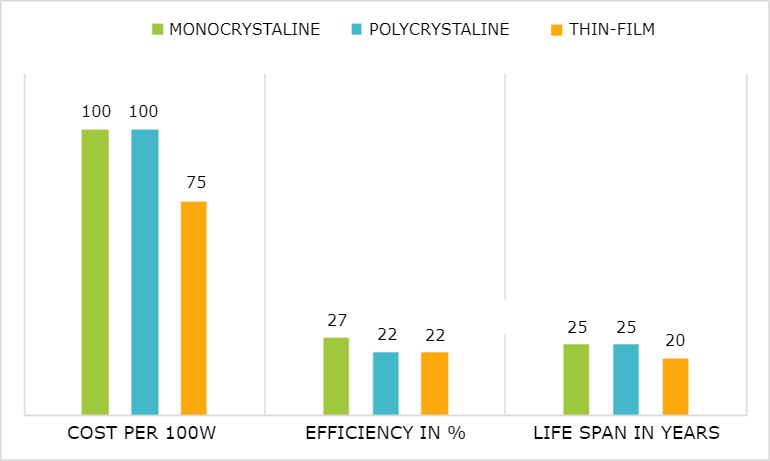
The efficiency of solar panels is a crucial parameter that determines their performance and quality. It’s essential to understand the factors that affect solar panel efficiency, as it directly impacts the overall energy output.
What is Efficiency in Solar Panels?
Efficiency in solar panels refers to the ratio of the energy captured by the panel to the total energy incident on it. It’s usually expressed as a percentage and is influenced by various factors such as the type of materials used, temperature, and irradiation.
How Does Efficiency Affect Solar Panel Performance?
The efficiency of a solar panel directly affects its performance. A more efficient panel will produce more electricity per unit area, making it a better choice for applications where space is limited. However, increasing efficiency often comes at the cost of increased complexity and higher material costs.
Factors Affecting Efficiency in Solar Panels
Several factors can impact the efficiency of solar panels:
- Temperature: Temperature affects the efficiency of solar panels. As temperature increases, the efficiency decreases.
- Material: The type of material used to produce the solar panel can significantly impact its efficiency. Different materials have different efficiencies at various temperatures.
- Irradiation: Irradiation refers to the amount of sunlight a solar panel receives. A higher irradiation rate can improve efficiency.
Efficiency of Solar Panels: A Historical Perspective
Solar panels have undergone significant improvements in recent years, leading to increased efficiency. Some notable examples include:
- Silicon-based solar panels: These were the first commercialized solar panels and had an average efficiency of around 10%.
- Copper-indium-gallium (CIGS) solar cells: These introduced a new technology that improved efficiency by up to 17%.
- Bifacial solar panels: These can generate electricity from both the front and back sides, leading to higher efficiencies.
- Perovskite solar cells: These are a new type of solar cell material that has shown great promise for improving efficiency.
Panasonic’s Breakthrough in Solar Panel Efficiency
In 2016, Panasonic introduced its first commercialized solar panel with an efficiency rating of up to 25.6%. This marked a significant milestone in the industry and has set the stage for future innovations.
What Can You Expect from Future Developments?
As technology continues to advance, we can expect even higher efficiencies from solar panels. Researchers are exploring new materials and designs that could lead to breakthroughs in efficiency. Some areas of focus include:
- Quantum dot solar cells: These use tiny particles to absorb light and convert it into electricity.
- Perovskite-based solar cells: These have shown great promise for improving efficiency and reducing costs.
- Concentrated photovoltaic (CPV) systems: These use mirrors or lenses to focus sunlight onto a smaller area, increasing efficiency.
Benefits of High-Efficiency Solar Panels
High-efficiency solar panels offer several benefits over traditional panels:
- Increased electricity output: More efficient panels can generate more electricity per unit area.
- Reduced cost per watt: High-efficiency panels can reduce the overall cost of a solar panel system, making it more affordable for consumers.
- Improved aesthetics: Modern high-efficiency solar panels are designed to be sleek and visually appealing, making them suitable for residential and commercial applications.
Challenges and Limitations
While high-efficiency solar panels offer many benefits, there are also some challenges and limitations:
- Higher upfront cost: High-efficiency panels can be more expensive than traditional panels.
- Increased complexity: More advanced materials and designs can make high-efficiency panels more complicated to manufacture and install.
- Reduced durability: Some studies suggest that high-efficiency solar panels may have reduced lifespans compared to traditional panels.
Conclusion
The efficiency of solar panels is a critical factor in determining their performance and overall effectiveness. By understanding the factors that impact efficiency, we can make informed decisions about choosing the right technology for our needs. As research continues to advance, we can expect even higher efficiencies from solar panels in the future.
FAQs:
- What determines the efficiency of a solar panel?
- How does temperature affect solar panel efficiency?
- What is the difference between monocrystalline and polycrystalline silicon-based solar panels?
- How do bifacial solar panels generate electricity?
- Can perovskite solar cells be used in commercial applications?
- What are some potential drawbacks of using quantum dot solar cells?
- How does concentrated photovoltaic (CPV) systems compare to traditional solar panels?
- Are there any emerging technologies that could potentially replace traditional solar panels?
Glossary:
- Monocrystalline silicon: A type of semiconductor material used in solar panels.
- Polycrystalline silicon: A type of semiconductor material used in solar panels.
- Bifacial solar panels: Solar panels that can generate electricity from both the front and back sides.
- Perovskite solar cells: A new type of solar cell material that has shown great promise for improving efficiency.
- Quantum dot solar cells: A technology that uses tiny particles to absorb light and convert it into electricity.
Further Reading:
- “Solar Energy and the Environment” by the National Renewable Energy Laboratory
- “The Future of Solar Energy” by the International Energy Agency
- “Solar Cells: The Next Generation” by the Journal of Photovoltaics


