
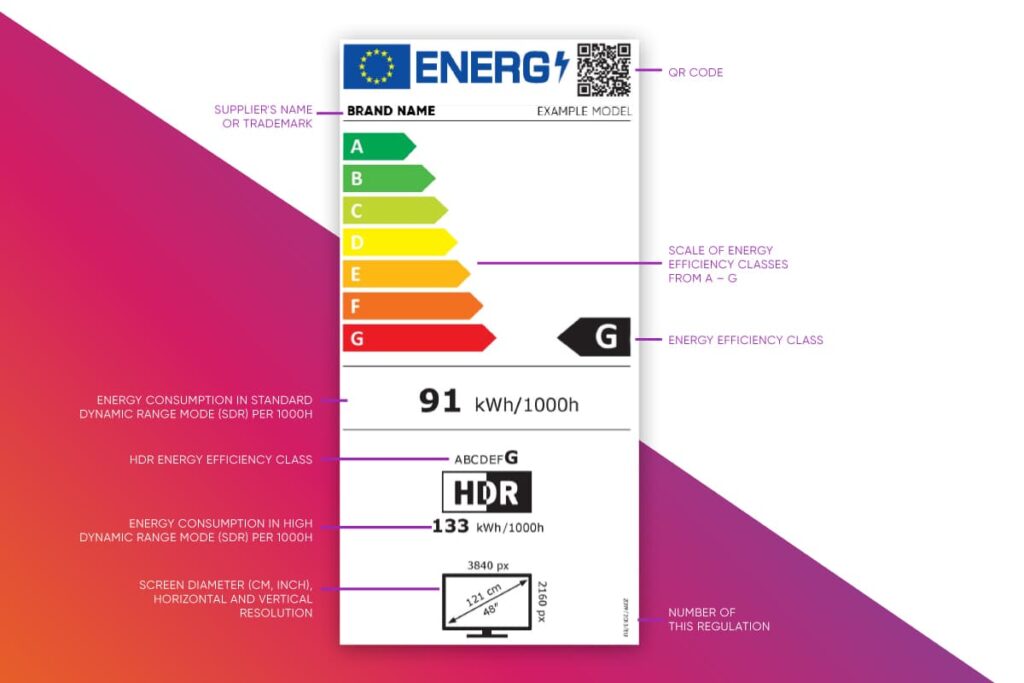
Since 2013, energy efficiency classifications have decreased. The old classes of high energy consumption have been eliminated because the appliances that consume a lot of electricity are now considered outdated. As a result, there are only classes from A to D (classes E, F, and G have been eliminated). Class A has been expanded with categories such as A+, A++ and A+++ (the higher the efficiency, the lower the energy consumption).
When it comes to refrigerators, energy efficiency classifications refer to a device kept always closed in a laboratory setting. The predicted energy consumption for high-efficiency appliances ranges from 188 kWh (class A+++ up to class A) to 300 kWh (class A). For fridges of class B, the energy consumption is between 300-400 kWh and for those of class C it’s between 400 – 560 kWh. Class D has an energy consumption range of 563 a 625 kWh.
For washing machines, energy consumption values are based on two weekly uses with a total of 104 washes per year, 5 kg of load, and 60°C temperature. Estimated energy consumption for class A, B, C, and D washing machines is:
* Class A: up to 247 kWh
* Class B: between 247 and 299 kWh
* Class C: between 299 and 351 kWh
* Class D: between 351 and 403 kWh
For electric ovens, energy efficiency classifications are based on the following consumption values:
* Class A: up to 60 kWh
* Class B: between 60 and 80 kWh
* Class C: between 80 and 100 kWh
* Class D: between 100 and 120 kWh
For medium-sized ovens (between 35-60 liters), energy consumption is as follows:
* Class A: up to 80 kWh
* Class B: between 80 and 100 kWh
* Class C: between 100 and 120 kWh
* Class D: between 120 and 140 kWh
High-efficiency classes, such as A++, pay a premium but offer guaranteed savings in bills, especially for appliances that must be in use (like refrigerators and freezers) or high-energy-consuming devices like air conditioners. Energy consumption values are based on a cooling power of 5.7 kWh:
* Class A++: 321 kWh
* Class A+: between 321 to 734 kWh
* Class A: between 734 to 890 kWh
* Class B: between 891 and 950 kWh
* Class C: between 950 to 1018 kWh
* Class D: between 1018 to 1096 kWh
Note that these consumption values are laboratory-based estimates, which may vary significantly in real-world use.
Understanding Energy Efficiency Classification and Its Implications
Energy efficiency classification plays a crucial role in determining the environmental impact of our daily choices. By understanding how these classifications work and their effects on energy consumption, we can make informed decisions when purchasing appliances and reducing our carbon footprint.
The concept of energy efficiency classification is based on the idea that certain appliances consume more or less electricity than others. The higher the efficiency class, the lower the energy consumption, resulting in cost savings and reduced environmental impact.
The energy efficiency classifications range from A to D, with each category representing a level of efficiency. Class A+ has been expanded to include subcategories like A++, which offers even higher efficiency. When choosing an appliance, it is essential to consider its class and potential energy consumption.
In addition to the benefits for individual households, energy efficiency classification also plays a significant role in shaping our broader environmental policies. Governments around the world have implemented regulations and standards that mandate minimum energy efficiency levels for appliances. By promoting high-efficiency appliances, these regulations help reduce greenhouse gas emissions, mitigate climate change, and promote sustainable development.
Moreover, energy efficiency classification has a positive impact on human health and well-being. Reducing energy consumption leads to lower air pollution levels, improved indoor air quality, and reduced exposure to hazardous pollutants. By choosing high-efficiency appliances, we can create healthier living environments for ourselves and future generations.
Energy Efficiency Classification: A Comparison of Appliances
When evaluating the energy efficiency of appliances, it’s crucial to compare their classification rates. Here’s a brief comparison:
| Appliance | Energy Consumption Range (kWh) |
|---|---|
| Refrigerator | 188 – 300 kWh (class A+++ to class A) |
| Washing Machine | 247 – 403 kWh (class A to class D) |
| Electric Oven | 60 – 140 kWh (class A to class D) |
To give you a better understanding of the differences in energy efficiency among appliances, let’s consider some examples. For instance, a refrigerator with a high-efficiency rating of A+++ will consume significantly less electricity than one with a lower rating of A.
| Appliance | Energy Consumption Range (kWh) |
|---|---|
| Refrigerator | 188 – 300 kWh (class A+++ to class A) |
| Washing Machine | 247 – 403 kWh (class A to class D) |
| Electric Oven | 60 – 140 kWh (class A to class D) |
When comparing different appliances, it’s essential to consider their intended use and potential energy consumption. For example, a washing machine used frequently will consume more electricity than one used less often.
Tips for Reducing Energy Consumption with Your Appliance Choices
- Choose appliances with a higher energy efficiency classification.
- Consider the appliance’s intended use and potential energy consumption.
By selecting high-efficiency appliances, you can reduce your carbon footprint, lower utility bills, and contribute to a more sustainable future.
Frequently Asked Questions (FAQs)
-
What is energy efficiency classification?
Energy efficiency classification refers to the level of electricity used by an appliance or device. -
How do I choose the most efficient appliance?
Choose appliances with higher energy efficiency classifications, such as A+++ or A++. -
Can I reduce my energy consumption by using different appliances for similar tasks?
Yes, switching from a low-efficiency appliance to a more efficient one can significantly lower your energy bills. -
What is the difference between class A and class B appliances?
Class A appliances consume less electricity than Class B ones. -
Can I use high-efficiency appliances in both my kitchen and living room?
Yes, many high-efficiency appliances are suitable for multiple areas of your home. -
Will using high-efficiency appliances increase the overall cost of ownership?
No, high-efficiency appliances often come with lower operational costs over time. -
What is a good energy efficiency classification rating for an appliance?
A higher rating (e.g., A+++ or A++) typically means lower electricity consumption and increased savings. -
How do I know if my current appliances are energy-efficient?
By checking the labels on your appliances or looking up their specifications online.
-
Can I use a high-efficiency appliance with multiple features, such as both heating and cooling?
Yes, many modern appliances offer advanced features while still maintaining high efficiency ratings. -
Is it worth investing in high-efficiency appliances?
Absolutely; they can provide long-term savings on your energy bills and contribute to a more environmentally friendly lifestyle.


