
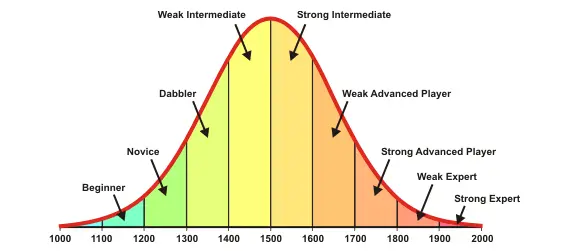
As a chess player, your skill level is measured by a unique rating system called Elo. But did you know that Elo was not actually named after the letter? Instead, it’s derived from the Hungarian engineer Arpad Emrick Elo who created the system based on the theory of normal distribution applied to the outcome of a chess game.
In this article, we’ll delve into the world of Elo ratings and explore what they mean for you as a chess player. From understanding how Elo works to tips on improving your rating, we’ve got you covered.
Understanding Elo Ratings
Elo ratings are a way to measure a player’s skill level in chess. The system takes into account the results of games played against other players with known Elo ratings. The goal is to determine whether one player is better than another at any given time.
To calculate your Elo rating, you need to have played enough games against opponents with known Elo ratings. You can use online tools or calculators to estimate your Elo rating based on the results of your games.
But how does it work? Let’s break it down:
- The difference between your Elo rating and that of your opponent is called the “rating difference.”
- If you win, your rating increases by 12.4 points if your opponent has a higher rating than you.
- If you lose, your rating decreases by 7.6 points if your opponent has a lower rating than you.
Differences Between FIDE and Chess.com Elo Ratings
There are two main types of Elo ratings: FIDE (Fédération internationale des échecs) and Glicko. Both systems use the same basic principle, but they have some differences in their calculations and methodology.
- FIDE Elo: This is the traditional Elo rating system used by the World Chess Federation (FIDE). It’s calculated based on the results of games played against other players with known FIDE Elo ratings.
- Glicko Elo: Introduced in 1995, Glicko is a more modern and flexible Elo rating system. It takes into account the performance of players at different skill levels and is used by online chess platforms like Lichess.
How to Get Your Elo Rating
To get your Elo rating, you need to play enough games against opponents with known ratings. Here are some general guidelines:
- FIDE: To get a FIDE Elo rating, you need to play at least 20 games in official tournaments or events.
- Lichess: Lichess uses the Glicko-2 rating system, which means you can get your rating by playing against other players on the platform.
What Is Your Starting Point?
So, what’s a good starting point for your Elo rating?
Here are some general guidelines:
- Principianti (Class E): 1000-1199
- Giocatori di classe D: 1200-1399
- Giocatori di classe C: 1400-1599
Keep in mind that these are just rough estimates, and your actual rating may vary depending on the specific platform or tournament you’re playing in.
Tips for Improving Your Elo Rating
Here are some tips to help you improve your Elo rating:
- Practice regularly: The more games you play, the better you’ll get.
- Analyze your games: Reviewing your games can help you identify areas for improvement and develop new strategies.
- Study chess theory: Familiarize yourself with basic tactics and strategies to improve your overall gameplay.
The key to improving your Elo rating is to be consistent and persistent in your practice. Don’t get discouraged if you don’t see immediate results – it takes time and effort to develop your skills.
Common Mistakes to Avoid
Here are some common mistakes to avoid when trying to improve your Elo rating:
- Don’t overplay: Playing too many games at once can lead to burnout and decreased performance.
- Don’t get too attached to your rating: A high or low rating doesn’t necessarily reflect your true skill level. Focus on improving your gameplay rather than worrying about your rating.
Conclusion
Elo ratings are a valuable tool for measuring your progress as a chess player. By understanding how Elo works and using online tools to calculate your rating, you can identify areas for improvement and develop new strategies to improve your gameplay.
Remember that improving your Elo rating takes time and effort – be consistent, persistent, and patient in your practice. With dedication and the right mindset, you can achieve your goals and become a stronger chess player.
Frequently Asked Questions (FAQs)
Here are some common questions about Elo ratings:
- Q: What is the highest possible Elo rating?
A: The highest possible Elo rating is theoretically unlimited. - Q: Can I earn more than 3000 Elo points?
A: Yes, it is theoretically possible to earn more than 3000 Elo points, but it would require an extremely high level of performance and an exceptionally large number of games played. - Q: How often should I check my Elo rating?
A: It’s a good idea to check your Elo rating regularly to monitor your progress and identify areas for improvement. However, you don’t need to check it too frequently – once a month is usually sufficient.
We hope this guide has been helpful in understanding the world of Elo ratings. If you have any further questions or would like more information on how to improve your chess skills, feel free to ask!


