
Are you tired of dealing with allergies, itching, and skin rashes caused by dust mites? You’re not alone. In this comprehensive article, we’ll delve into the common household pest that’s responsible for these issues, its lifecycle, habits, and most importantly, how to eliminate them.
The Enemy: Dust Mites
Dust mites are tiny, microscopic insects that live in dusty environments and feed on organic matter like dead skin cells, hair, and fabric fibers. Unlike skin mites and scabies, dust mites don’t burrow under human skin and aren’t parasites. They thrive in domestic settings and can cause severe allergies, asthma, and dermatitis.
Understanding the Lifecycle of Dust Mites
A male dust mite’s lifespan is approximately 10-19 days, while a female’s reproductive cycle can last up to 70 days during which she lays between 60 to 100 eggs. The larvae go through four stages before reaching adulthood.
Ideal Habitat for Dust Mites
Dust mites love to live in cozy environments like bedrooms and kitchens, particularly on bedding, carpets, upholstered furniture, and discarded linens. They’re attracted to moisture and humidity, making them thrive in damp conditions.
How Many Dust Mites Live in Your Home?
Estimates suggest that there are between 100 to 500 dust mite eggs per gram of dust! This is why regular cleaning and maintenance are crucial in preventing infestations.
The Connection Between Dust Mites and Allergies
Allergic reactions occur when the body responds to waste products from dust mites, such as feces. These reactions can lead to respiratory issues like asthma, rhinitis, and skin conditions like eczema and dermatitis.
Eliminating Dust Mites: Natural Remedies
To get rid of these pesky insects, focus on two essential steps:
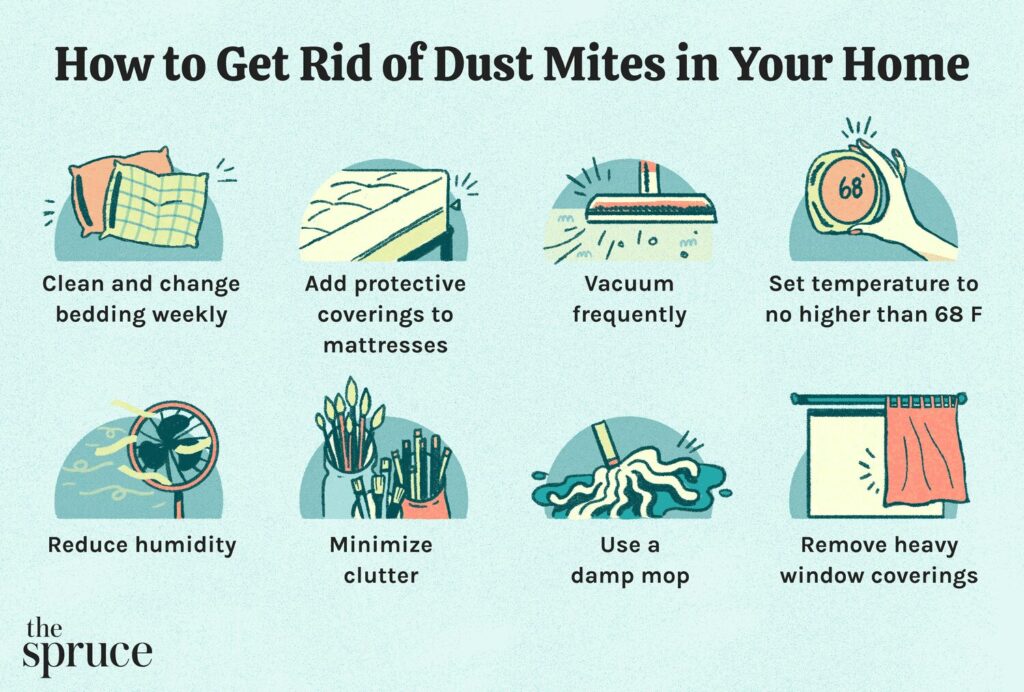
- Thorough cleaning: Remove dust mite habitats by vacuuming with a HEPA-filtered machine, washing bedding in hot water, and dry-cleaning or steaming upholstered furniture.
- Reducing humidity: Maintain a stable environment with low humidity levels to prevent dust mites from breeding.
Chemical-Free Acaricidal Treatments
If natural methods aren’t enough, consider using chemical-free acaricides. These products can provide protection for up to six months and are easy to use. For instance, the Inspired spray anti-dust mite on Amazon offers a 500ml bottle at $11.36 with free shipping when buying two or more.
Tips for Eliminating Dust Mites
- Avoid using materials made from feathers, fur, wool, or silk.
- Clean your home regularly with an HEPA-filtered vacuum.
- Wash bedding in hot water and dry on high heat.
- Use acaricides sparingly, following the instructions on the label.
Conventional Methods for Eliminating Dust Mites
If natural methods aren’t effective, consider using conventional methods:
- HEPA-filtered vacuum: Regular vacuuming with a HEPA-filtered machine can help remove dust mite allergens.
- Steam cleaning: Steam cleaning can kill dust mites and their eggs on surfaces like carpets and upholstered furniture.
- Dust-repelling fabrics: Using fabrics that are resistant to dust mites, such as synthetic fibers, can help reduce the presence of these insects.
Conclusion
Dust mites may seem like a minor pest, but they can cause significant discomfort and health issues. By understanding their lifecycle, habits, and habitats, you can take steps to eliminate them from your home. Remember to maintain a clean environment, reduce humidity, and use chemical-free treatments for long-term success.
Frequently Asked Questions
- How often should I vacuum my home?
- Daily vacuuming with an HEPA-filtered machine is recommended.
- Can I use bleach to kill dust mites?
- No, bleach can actually make the problem worse and release toxic fumes.
- What’s the best way to remove dust mite allergens from bedding?
- Wash bedding in hot water (at least 130°F) and dry on high heat.
- Are there any natural ways to repel dust mites?
- Yes, using essential oils like lavender or tea tree oil can help deter them.
- Can I use a dehumidifier to get rid of dust mites?
- While a dehumidifier can reduce humidity, it’s not enough to eliminate dust mites entirely.
- How often should I wash my bedding?
- Wash bedding at least once a week, especially if you or a family member suffers from allergies.
- Are there any specific fabrics that are more prone to attracting dust mites?
- Yes, materials like wool, silk, and fur can attract dust mites due to their high protein content.
- Can I use an air purifier to get rid of dust mites?
- While an air purifier can help reduce the amount of allergens in the air, it’s not a substitute for regular cleaning and maintenance.
By following these tips and staying vigilant about keeping your home clean and dust-free, you can say goodbye to those pesky dust mites.


