
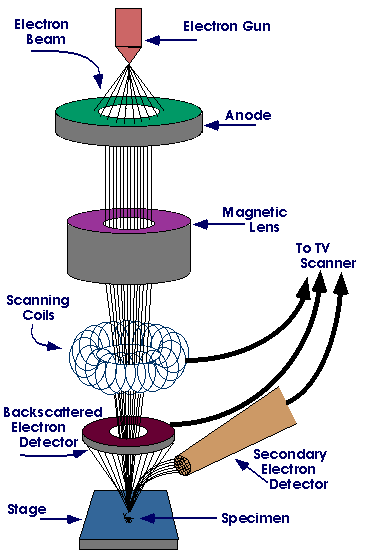
As we explore the world of science, it’s essential to understand the tools that help us uncover its secrets. One such tool is the electron microscope, a device that uses electrons instead of light to produce high-resolution images of tiny objects.
In this article, we’ll delve into the world of electron microscopy, exploring how it works, its types, and its applications. We’ll also examine the history of electron microscopes and their significance in various fields.
The Principle Behind Electron Microscopy
Electron microscopes don’t use light like traditional microscopes do. Instead, they rely on a beam of electrons to produce an image. This is because electrons have a much shorter wavelength than light, allowing them to resolve smaller objects.
In 1931, Ernst Ruska and Max Knoll invented the first electron microscope, which used a beam of electrons to produce an image. Since then, electron microscopes have evolved significantly, with advancements in technology leading to improved resolution and capabilities.
How Electron Microscopy Works
Electron microscopy uses a beam of electrons to produce an image of a sample. The process involves several steps:
- Sample preparation: The sample is prepared by coating it with a thin layer of material, such as carbon or gold.
- Electron beam generation: A high-voltage electron gun generates a beam of electrons that are focused onto the sample.
- Electron scattering: The electrons scatter off the atoms in the sample, producing a signal that is detected by a sensor.
- Image formation: The signal from the sensor is used to form an image of the sample.
Types of Electron Microscopes
There are several types of electron microscopes, each with its unique characteristics and applications:
- Transmission Electron Microscope (TEM): This type of microscope uses a beam of electrons that pass through the sample to produce an image. TEMs are commonly used for studying the structure of materials at the nanoscale.
- Scanning Electron Microscope (SEM): SEMs use a focused beam of electrons to scan the surface of a sample, producing an image. SEMs are often used for surface analysis and imaging.
- Electron Beam Lithography (EBL): EBL uses a focused beam of electrons to pattern material onto a substrate, allowing for the creation of high-resolution structures.
Advantages and Applications
Electron microscopes have numerous advantages over traditional microscopes:
- Higher resolution: Electron microscopes can produce images with resolutions down to a few nanometers.
- Better image quality: Electron microscopes can provide higher-quality images than traditional microscopes due to the shorter wavelength of electrons.
- Wider range of applications: Electron microscopes can be used for various applications, including materials science, biology, and electronics.
Electron microscopes have revolutionized our understanding of the world at the nanoscale. From studying the structure of materials to analyzing biological samples, electron microscopy has opened up new avenues for research and discovery.
History of Electron Microscopy
The history of electron microscopy dates back to the 1930s, when Ernst Ruska and Max Knoll invented the first electron microscope. Since then, electron microscopes have undergone significant advancements, with improvements in technology leading to improved resolution and capabilities.
Some notable milestones in the development of electron microscopy include:
- 1931: Ernst Ruska and Max Knoll invent the first electron microscope.
- 1940s: Electron microscopes begin to be used for biological studies.
- 1950s: The first commercial electron microscopes are released.
- 1960s: Electron microscopes become widely available for research and industrial applications.
Significance of Electron Microscopy
Electron microscopy has had a significant impact on various fields, including:
- Materials science: Electron microscopes have revolutionized the study of materials at the nanoscale, allowing researchers to understand their structure and properties.
- Biology: Electron microscopes have enabled researchers to study biological samples in unprecedented detail, leading to new insights into cellular biology and disease mechanisms.
- Electronics: Electron microscopes have played a critical role in the development of electronic devices, including transistors and microchips.
FAQs
Here are some frequently asked questions about electron microscopes:
- Q: How do electron microscopes work?
A: Electron microscopes use a beam of electrons to produce an image of a sample. - Q: What are the different types of electron microscopes?
A: There are several types of electron microscopes, including transmission electron microscopes (TEM), scanning electron microscopes (SEM), and electron beam lithography (EBL). - Q: What are the advantages of electron microscopes?
A: Electron microscopes offer higher resolution, better image quality, and a wider range of applications compared to traditional microscopes. - Q: How have electron microscopes evolved over time?
A: Electron microscopes have undergone significant advancements since their invention in 1931, with improvements in technology leading to improved resolution and capabilities.
Applications of Electron Microscopy
Electron microscopy has numerous applications across various fields:
- Materials science: Electron microscopes are used to study the structure and properties of materials at the nanoscale.
- Biology: Electron microscopes are used to analyze biological samples, including cells, tissues, and organs.
- Electronics: Electron microscopes are used to develop electronic devices, including transistors and microchips.
Challenges and Limitations
While electron microscopy has revolutionized our understanding of the world at the nanoscale, it also comes with challenges and limitations:
- Cost: Electron microscopes are expensive instruments that require significant investment.
- Complexity: Electron microscopes require specialized knowledge and expertise to operate and interpret results.
- Sample preparation: Electron microscopes require careful sample preparation to produce high-quality images.
By understanding how electron microscopes work, their applications, and their significance in various fields, we can unlock the secrets of the nanoscale world and make new discoveries that will shape our future.


