
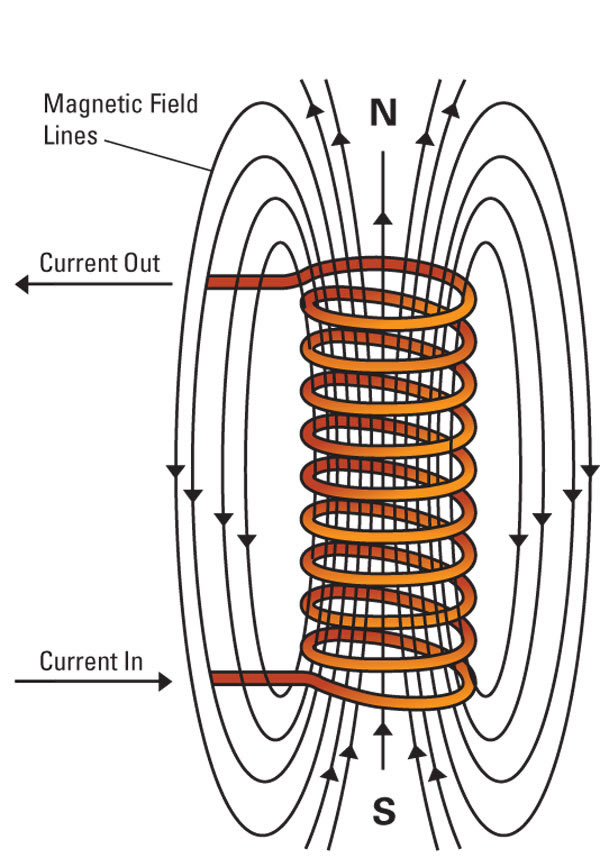
Electromagnets are often misunderstood as “lab equipment” or tools for scientists, but they have many practical applications in our daily lives. From closing doors to lifting heavy objects, electromagnets play a crucial role in various industries.
The story of the electromagnet began with William Sturgeon, a British engineer who built it first in 1824. However, it was Joseph Henry, an American physicist and engineer, who further developed and improved it technologically. The concept of electromagnets originated in England, where Hans Christian Ørsted discovered the relationship between electric currents and magnetism in 1820.
What is an Electromagnet?
An electromagnet is a device that generates a magnetic field from an electrical current. It differs from an inductor, which uses the principle of electromagnetic induction to store energy.
To understand how an electromagnet works, we need to look at its components:
- Nucleus: The core of the electromagnet is typically made of ferromagnetic material. This allows it to attract magnetic fields.
- Coil: A solenoid (also known as a bobbin) consisting of multiple coils of wire. When an electric current flows through these coils, a magnetic field is generated.
The process by which this works is called electromagnetic induction. Here’s how:
- An alternating current (AC) flows into the coil.
- The changing magnetic fields around the wire inducts currents in the wire itself.
- These induced currents create their own magnetic fields, which interact with each other to produce a net magnetic field.
The strength of this magnetic field depends on several factors:
- Number of coils: More coils mean a stronger magnetic field.
- Voltage and current: Higher voltage and current result in a stronger magnetic field.
- Material: The type of ferromagnetic material used can affect the strength of the magnetic field.
How Electromagnets Work
When an electromagnet is turned on, it generates a magnetic field that interacts with other magnetic fields. This interaction can have several effects:
- Attracting objects: The magnetic field can pull metal objects towards it.
- Lifting heavy objects: The electromagnetic force can be strong enough to lift small objects or even large machinery.
- Closing doors and gates: Electromagnets are often used in automatic door systems to securely close doors.
Electromagnets also have several applications in various industries:
- Transportation: Magnetic levitation (maglev) trains use electromagnets to lift the train above the track, reducing friction and allowing for high speeds.
- Industrial automation: Electromagnets are used in robotics and manufacturing to move parts or objects around a work surface.
- Medical equipment: Electromagnets are used in MRI machines to generate strong magnetic fields that can create detailed images of the body.
How Electromagnets Are Used
Electromagnets have several applications in our daily lives. Here are some examples:
- Closers and gates: Electromagnets are often used to automatically close doors and gates.
- Lifting equipment: Electromagnets can be used to lift heavy objects, such as cars or machinery.
- Transportation systems: Maglev trains use electromagnets to lift the train above the track.
Safety Considerations
Electromagnets have several safety considerations:
- Electric shock: Electromagnets generate strong magnetic fields that can cause electric shock if not handled properly.
- Fire hazards: Overheated coils or sparks from the electromagnet can ignite flammable materials.
- Mechanical hazards: The electromagnetic force can damage machinery or objects, so care must be taken when handling them.
In conclusion, electromagnets are devices that generate strong magnetic fields from electrical currents. They have many practical applications in our daily lives, and their use has transformed various industries. However, they also require careful handling to avoid accidents and ensure safe operation.


