
Introduction
In the vast and wondrous world of birds, there exist species that continue to fascinate and intrigue us with their unique characteristics and behaviors. One such species is the edredone, a sea duck that has captivated the imagination of many with its striking appearance and intriguing habits. In this article, we will delve into the fascinating world of edredones, exploring their characteristics, reproduction, habitat, feeding habits, social behavior, and more.
Edredone Characteristics
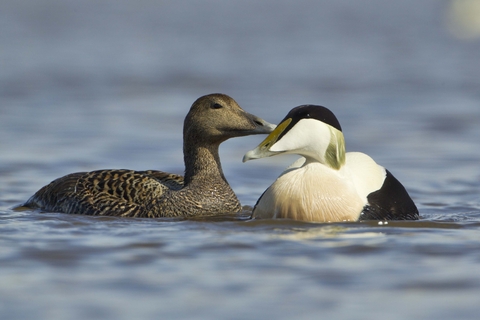
The adult male edredone is easily recognizable by its thick white feathers on its back and black belly, while its head is brown-greenish-brown in color. The female, on the other hand, is identifiable by her large size and unique head shape. These characteristics are not only visually striking but also play a crucial role in their survival and success as a species.
One of the most distinctive features of the edredone is its feathers. The adult male has thick white feathers on his back, which serve as a vital identifier for potential mates. The female, on the other hand, has brownish-gray feathers with dark bars, which help to distinguish her from males.
Edredone Reproduction
The edredone is a migratory disperser that lives along the coasts of northern Eurasia – particularly in Scandinavia, Iceland, Scotland, and western Siberia – as well as in Northern America. It spends winters along the coastlines and in freshwater lakes; it can also be found in Italy as a wintering bird.
The males have greenish-brown nape feathers during breeding season, while their necks and chests are mottled with pink; the belly, gular region, and tail are black. The female is brownish-gray, striped with dark bars. These distinctive markings serve as a vital identifier for potential mates and help to distinguish between males and females.
The edredone’s reproductive habits are also unique. The female lays 4-6 eggs per year, which she incubates for three or four weeks. After hatching, the young ducks will stay with their parents for several months before dispersing on their own.
Where Does the Edredone Live?
The edredone is found on the northern coastlines of Europe, North America, and eastern Siberia, as well as in Iceland. This duck species primarily nests in the Arctic and more temperate regions north, while migrating to warmer areas south during winter. Colonies of edredons can be found in the Farne Islands off Northumberland, England, and throughout the entire Icelandic territory.
The edredone’s habitat is varied and adaptable, with individuals able to thrive in a range of environments. They can be found in coastal wetlands, estuaries, and even freshwater lakes and rivers. This adaptability has helped them to establish a wide distribution across their range.
Edredone Feathers
In all of Northern Europe, but not just there, the custom of using edredone feathers to stuff pillows, clothing, and blankets exists. The same bird recovers fallen feathers from its body to cover and protect its nest. Since the edredone is not a domesticated species for breeding, these feathers come primarily from wild birds found near abandoned nests.
These feathers are highly prized material that is also very expensive due to their rarity and unique characteristics. They have been used for centuries in various cultural practices, demonstrating the significant impact of this bird on human societies.
Raising Edredones
In Iceland, where one of the world’s largest breeding grounds for edredons has been established, there exists a perfect coexistence between humans and the species without disrupting its reproductive balance; in fact, it enhances it. This practice only occurs after the female and her young have left their original nesting site.
This unique relationship between humans and edredones has led to the establishment of a UNESCO World Heritage center at the Vega region in Norway. The center showcases fascinating exhibitions and activities that demonstrate the importance of conservation efforts and responsible wildlife management practices.
Conservation Efforts
The edredone is not currently considered endangered, but efforts are being made to monitor and protect their habitats. This includes the establishment of protected areas, such as national parks and wildlife reserves, where the species can thrive without human disturbance.
Additionally, researchers are studying the edredone’s behavior and ecology in order to better understand its needs and how it can be conserved. This research has led to the development of effective conservation strategies that balance human activities with the protection of the species.
Conclusion
The edredone is a remarkable bird species that continues to captivate scientists, conservationists, and enthusiasts alike with its unique characteristics and behaviors. Through our exploration of their habitat, feeding habits, social behavior, and more, we have gained a deeper understanding of this fascinating species and the importance of preserving its populations for future generations.
Frequently Asked Questions
Q: What is the primary source of food for edredones?
A: Edredones primarily feed on bivalve mollusks that they catch after long dives.
Q: How do edredone females reproduce?
A: Female edredones lay 4-6 eggs per year, which they incubate for three or four weeks.
Q: Where can I find edredone colonies?
A: Edredon colonies can be found in the Farne Islands off Northumberland, England, and throughout the entire Icelandic territory.
Q: Why are edredone feathers highly prized material?
A: Edredone feathers are highly prized material due to their rarity, unique characteristics, and cultural significance.
Q: Can I raise edredones in captivity?
A: In Iceland, it is possible to raise edredones in captivity after the female and her young have left their original nesting site.
Q: What is the current conservation status of edredone populations?
A: Edredon populations are not currently considered endangered, but efforts are being made to monitor and protect their habitats.
Q: Can I see edredones in person?
A: Yes, it is possible to see edredones in person, particularly during migration periods or at breeding grounds in Iceland.


