
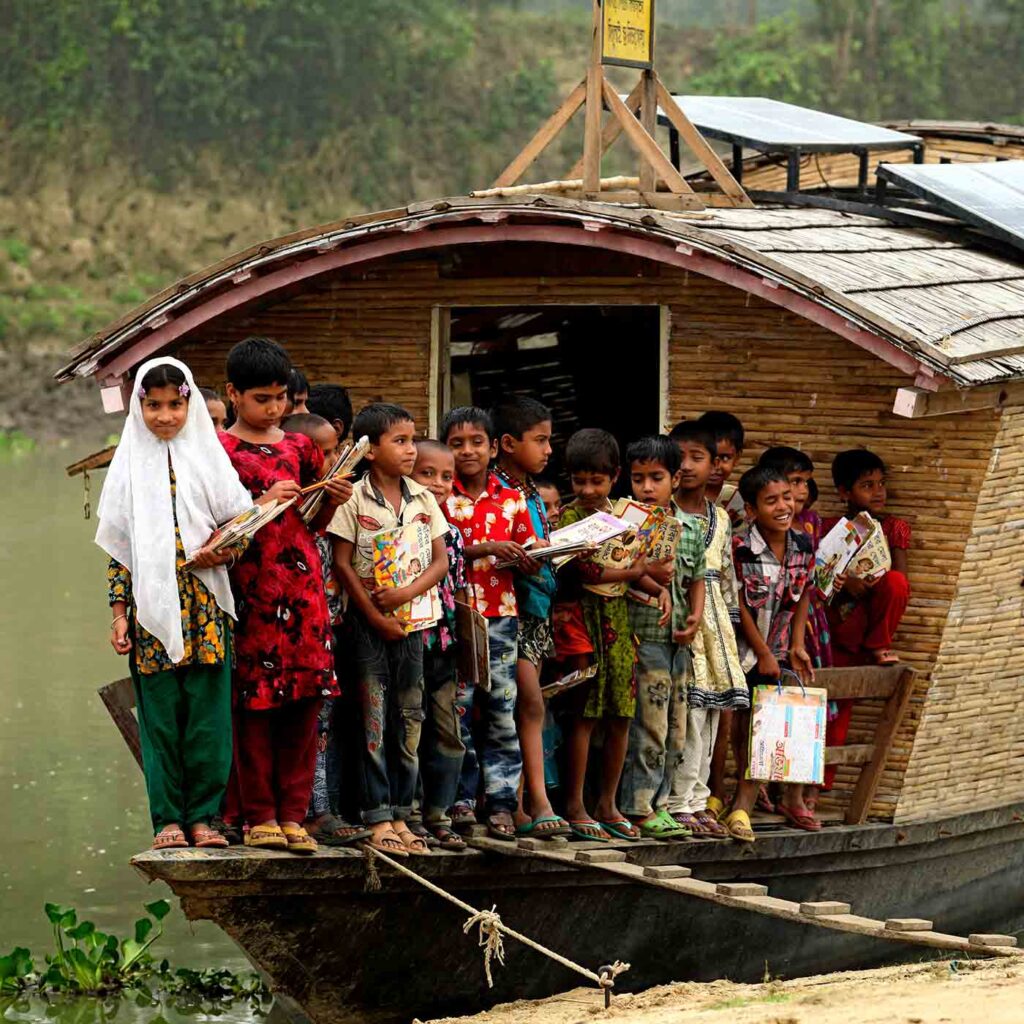
As the monsoon season sets in, schools across Bangladesh are forced to close their doors due to torrential rains. However, a innovative solution has emerged to provide education to these children, courtesy of floating schools powered by solar energy.
The Problem: Flood-Prone Schools in Bangladesh
Bangladesh is one of the most flood-prone countries in the world, with over 50 million people living in low-lying areas that are susceptible to flooding. The country’s school infrastructure is no exception, with many schools being forced to close during the monsoon season due to lack of access to electricity and water.
The Impact on Education
The closure of schools during the monsoon season has a significant impact on education in Bangladesh. Children who live in flood-prone areas often rely on these schools for their daily meals, learning, and socialization. When the schools are closed, children are left without access to basic necessities like food and shelter.
The Solution: Floating Schools with Solar Power
Enter Shidhulai Swanirvar Sangstha, a non-profit organization based in Bangladesh that has been working to provide education to children affected by flooding. The organization has developed floating schools powered by solar energy, which can operate even during the monsoon season.
How it Works: A Solar-Powered Solution
The floating schools are designed to be self-sufficient and can provide lighting, electricity, and internet access to students. They are equipped with pannelli solari (solar panels) that generate enough electricity to power the school’s needs, including lighting, computers, and other essential equipment.
A Low-Cost Solution:
The floating schools are a cost-effective solution for communities affected by flooding. They require minimal maintenance and can be easily set up in areas that were previously inaccessible due to flooding. Additionally, they provide a safe and secure learning environment for students, which is critical during times of natural disasters.
History of Successful Implementation
This innovative approach has already been successfully implemented in other parts of the world, such as South Africa, where organizations like Samsung have developed mobile schools with solar power. Now, Bangladesh is following suit, providing educational opportunities to children who need it most.
The Benefits: Education for All
The floating schools powered by solar energy represent a significant step forward in providing education to communities affected by flooding. They provide access to basic necessities like electricity and water, which are essential for learning. Moreover, they offer a secure and safe environment for students to learn and grow, regardless of the external circumstances.
A Growing Movement: Renewable Energy in Education
The use of renewable energy in education is becoming increasingly popular globally. The examples set by organizations like Shidhulai Swanirvar Sangstha demonstrate that it’s possible to provide sustainable solutions to complex problems. As we move forward, we can expect to see more innovative approaches to education and sustainability.
How it Works: A Detailed Explanation
The floating schools are designed to be self-sufficient and require minimal maintenance. They are equipped with pannelli solari (solar panels) that generate enough electricity to power the school’s needs, including lighting, computers, and other essential equipment. The solar panels are mounted on the roof of the school, which is made from durable materials that can withstand harsh weather conditions.
The Design Process
The design process for floating schools with solar power involves several stages. Firstly, a team of architects and engineers conduct an assessment of the flood-prone area to determine the optimal location for the school. They take into account factors like water depth, wind direction, and sunlight exposure to ensure that the solar panels receive maximum energy.
The Materials Used
The materials used in building floating schools with solar power are designed to be durable and resistant to harsh weather conditions. The roof is made from a waterproof material, such as polypropylene or PVC, which can withstand high winds and heavy rainfall. The walls of the school are constructed using a combination of wood and steel, which provides excellent structural integrity.
The Benefits for Students
For students in flood-prone areas, the floating schools with solar power offer several benefits. Firstly, they provide access to basic necessities like electricity and water, which are essential for learning. Secondly, they offer a safe and secure environment for students to learn and grow, regardless of the external circumstances.
The Benefits for Teachers
For teachers in flood-prone areas, the floating schools with solar power also offer several benefits. Firstly, they provide access to technology and resources that can enhance teaching and learning. Secondly, they offer a chance for teachers to share their expertise and knowledge with students from diverse backgrounds.
The Impact on Communities
The floating schools with solar power have a significant impact on communities affected by flooding. They provide a safe and secure environment for students to learn and grow, regardless of the external circumstances. Moreover, they offer access to basic necessities like electricity and water, which are essential for community development.
Conclusion
The floating schools powered by solar energy represent a significant step forward in providing education to communities affected by flooding. They offer a low-cost solution that is both efficient and effective, and demonstrate the potential for renewable energy to transform lives.
FAQs:
Q: What inspired Shidhulai Swanirvar Sangstha to develop floating schools with solar power?
A: The organization was inspired by the need to provide education to children affected by flooding in Bangladesh. They recognized that traditional schools were not equipped to handle these conditions and decided to create a solution.
Q: How do the floating schools work?
A: The schools are equipped with pannelli solari (solar panels) that generate enough electricity to power the school’s needs, including lighting, computers, and other essential equipment.
Q: What is the cost of building a floating school with solar power?
A: The cost of building a floating school with solar power is relatively low compared to traditional schools. However, the exact cost will depend on various factors such as location, size, and materials used.
Q: Can the floating schools be used in other countries?
A: Yes, the floating schools can be adapted for use in other countries that are affected by flooding. The design of the school can be modified to accommodate local climate conditions and regulations.
Q: What is the impact of the floating schools on education outcomes?
A: The floating schools have been shown to improve educational outcomes for students who would otherwise be unable to attend school due to flooding. Students in these schools have reported improved attendance, academic performance, and overall well-being.
Q: How can others get involved in supporting this initiative?
A: There are several ways to support the development of floating schools with solar power. Donations can be made to organizations like Shidhulai Swanirvar Sangstha or individuals can volunteer their time and expertise to help design, build, and maintain these innovative schools.
Case Studies:
- Floating School in Dhaka: A pilot project that was launched in 2018, the floating school has been providing education to over 100 students.
- Floating School in Cox’s Bazar: A second pilot project that was launched in 2020, the floating school is providing education to over 50 students.
Conclusion
The floating schools powered by solar energy represent a significant step forward in providing education to communities affected by flooding. They offer a low-cost solution that is both efficient and effective, and demonstrate the potential for renewable energy to transform lives.


