
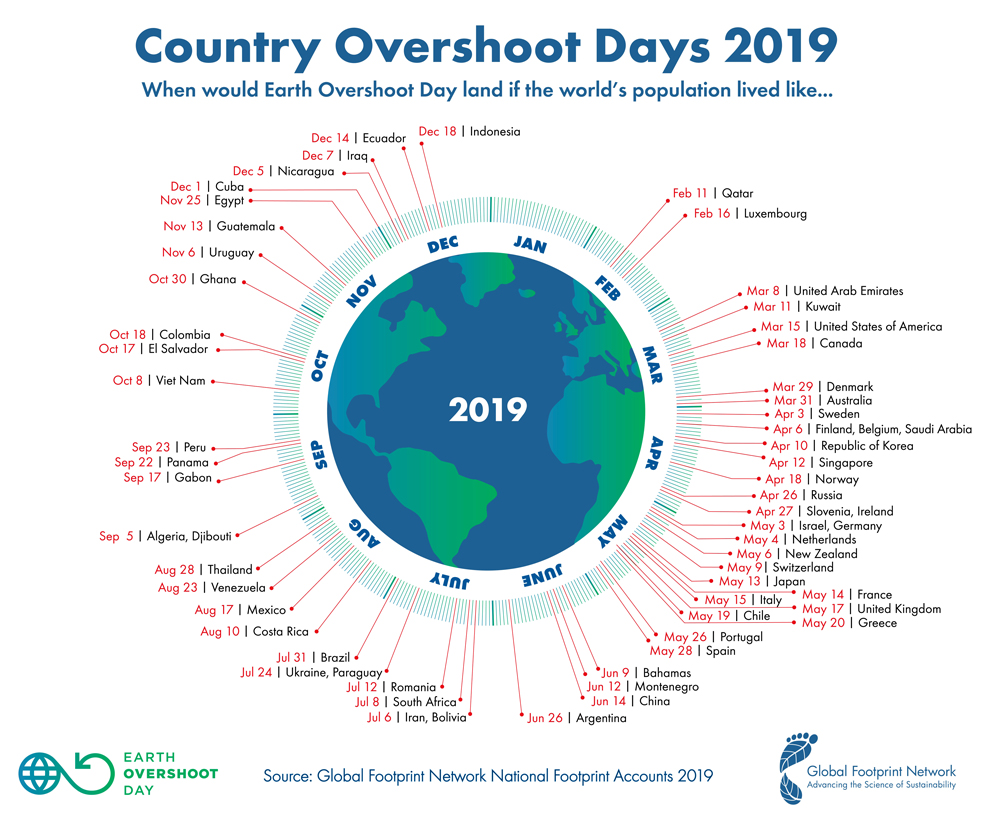
The Earth Overshoot Day: Understanding the Human Impact on Our Planet
As we approach the end of summer, many of us are already thinking about the upcoming holiday season and the environmental impact that comes with it. However, there’s a more pressing concern that deserves our attention: the Earth Overshoot Day (EOD). This annual event marks the date when humanity has consumed all the resources the Earth can sustainably produce in a given year, leading to a “deficit” in natural resources.
In 2019, the EOD fell on July 29, three days ahead of schedule. This is not a good sign, as it highlights our excessive consumption of resources and the devastating impact it has on the planet.
What is the Earth Overshoot Day?
The EOD can be seen as an annual balance sheet of the Earth’s natural resources, calculated through the ecological footprint. The Global Footprint Network (GFN) conducts this calculation, which takes into account human consumption patterns. Currently, our consumption rate is 1.75 times faster than the Earth’s ability to regenerate itself.
In simpler terms, we’re using 1.75 planets’ worth of resources. This means that if we continue down this path, the consequences will be severe for the planet and its inhabitants.
The Loss of Biodiversity
Biodiversity is paying the price for our excessive consumption. The EOD’s impact on ecosystems is profound, leading to habitat destruction, degradation, and fragmentation. The loss of forests, in particular, has severe repercussions for both plant and animal life.
Deforestation not only destroys habitats but also releases massive amounts of greenhouse gases into the atmosphere, contributing to global warming. This leads to rising temperatures, extreme weather events, and altered ecosystems, further exacerbating biodiversity loss.
A Chance to Reverse the Trend
Despite the dire situation, experts believe it’s still possible to turn things around. By moving the EOD date forward by five days each year, humanity can return to a sustainable state before 2050.
To achieve this, individuals must make conscious changes in their daily lives. One simple step is to reduce meat consumption and adopt a vegetarian diet. This alone could shift the EOD date forward by 15 days.
Another crucial area for improvement is reducing CO2 emissions by 50%. This would result in an 93-day delay of the EOD.
Calculating Your Ecological Footprint
The GFN has developed a calculator to help individuals assess their ecological footprint. This online tool allows users to calculate their impact and make informed decisions about how to reduce it.
For 2019, the EOD campaign included an invitation to explore the “Steps to #MoveTheDate” page, which promotes a global movement towards living in harmony with the planet. By focusing on five key areas – energy, food, cities, population, and the planet – individuals can make a tangible difference.
Concrete Actions You Can Take
There are numerous ways to contribute to the EOD movement:
- Adopt sustainable practices at work
- Reduce food waste by planning meals and using up leftovers
- Launch petitions to your government to promote responsible resource management
- Switch to public transportation or use a bike for daily commutes
By working together, we can create a more sustainable future. The EOD serves as a wake-up call, reminding us that our individual actions have a collective impact on the planet.
Frequently Asked Questions
- What is the Earth Overshoot Day?
- The EOD marks the date when humanity has consumed all the resources the Earth can sustainably produce in a given year.
- Why is the EOD important?
- It highlights our excessive consumption of resources and the devastating impact it has on the planet.
- Can we reverse the trend?
- Experts believe that by moving the EOD date forward by five days each year, humanity can return to a sustainable state before 2050.
- How can I make a difference?
- Individuals can reduce meat consumption, adopt a vegetarian diet, and engage in sustainable practices at work to contribute to the EOD movement.
- What is the Global Footprint Network?
- The GFN conducts calculations of human ecological footprint and provides resources for individuals to assess their impact and make changes.
- Can I use the calculator to calculate my ecological footprint?
- Yes, the GFN has developed a calculator that allows users to calculate their impact and make informed decisions about how to reduce it.
- What are some concrete actions I can take to contribute to the EOD movement?
- Examples include adopting sustainable practices at work, reducing food waste, launching petitions to your government, and switching to public transportation or using a bike for daily commutes.
- Can working together create a more sustainable future?
- Yes, by working together, individuals can create a more sustainable future and mitigate the impact of excessive consumption on the planet.
In conclusion, the Earth Overshoot Day serves as a stark reminder of our unsustainable practices and the devastating impact they have on the planet. By making conscious changes in our daily lives and working together, we can turn things around and move towards a more sustainable future.
Conclusion
The EOD is an important metric that highlights the human impact on the environment. By understanding our ecological footprint and making conscious changes, individuals can contribute to reducing this deficit and moving the date forward.
By adopting sustainable practices at work, reducing food waste, launching petitions, and switching to public transportation or using a bike for daily commutes, we can create a more sustainable future. The EOD serves as a wake-up call, reminding us that our individual actions have a collective impact on the planet.
As the EOD date continues to move forward each year, it’s imperative that we take action and make conscious changes in our daily lives. By working together, we can turn things around and create a more sustainable future for generations to come.


