
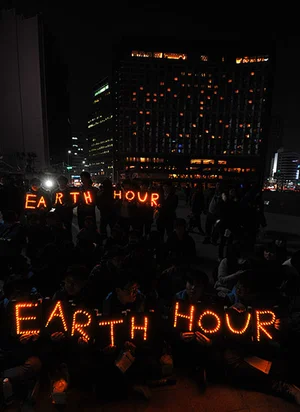
As the clock struck 8:30 PM on March 23, 2013, a peculiar phenomenon took place across the globe. For one hour, monuments, houses, offices, and cities were plunged into darkness, as if nature itself was putting on a show. This was Earth Hour 2013, an event where millions of people came together to make a statement about climate change.
The Power of Collective Action
So, can one small act really change the course of humanity? According to the World Wildlife Fund (WWF), it’s possible if we all get involved in concrete actions of sustainability. Last year’s Earth Hour engaged 2 billion people in 7,000 cities and 152 countries worldwide. It’s clear that collective action can lead to significant impact.
The Science Behind Climate Change
Climate change is a pressing global issue that affects us all. The past decade has seen record-breaking temperatures, melting ice caps, and rising sea levels. These changes are not only harmful to the environment but also have severe consequences for human health and economic stability. According to the Intergovernmental Panel on Climate Change (IPCC), we must limit our global temperature increase to 1.5°C above pre-industrial levels in order to avoid catastrophic effects.
Beyond a Single Hour
Earth Hour is not just about one hour of darkness from 8:30-9:30 PM on March 23, 2013. It’s also about special initiatives that highlight the urgency of changing our ways. In January 2013, CO2 concentrations reached a record high of 305 parts per million. Even scientists, experts, and international organizations like the World Bank, International Energy Agency, and World Economic Forum are sounding the alarm.
The Alarm Bells Are Ringing
“Climate change is accelerating faster than predicted by scientists,” said Mariagrazia Midulla, WWF Italy’s climate and energy expert. “Government actions are too slow to prevent a risk that threatens nature and human civilization.” The message is clear: we need immediate action to address the climate crisis.
A Global Call to Action
Earth Hour is an opportunity for everyone to take action and mobilize the global community. As Mariagrazia Midulla emphasized, “We all need to do our part. We need governments to prioritize the climate crisis before it’s too late. We must transition to a decarbonized world based on saving, efficiency, and renewable energy.” Citizens, cities, businesses will be active participants in this new world, and their voices can shape global politics.
What Does Decarbonization Mean?
Decarbonizing our world means reducing greenhouse gas emissions and transitioning to sustainable practices. It’s about saving energy, increasing efficiency, and harnessing the power of renewable energy sources like solar and wind. This is not a theoretical concept; it’s a practical solution for creating a better future.
The Business Case for Sustainability
While some might argue that sustainability is just a buzzword, the business case is clear. Investing in renewable energy, reducing waste, and promoting sustainable practices can lead to cost savings, increased productivity, and improved brand reputation. As companies like Coca-Cola and Unilever demonstrate, sustainability is good business.
The Role of Cities in Sustainability
Cities are not only hubs of economic activity but also major contributors to greenhouse gas emissions. However, cities can also be leaders in sustainability. By promoting green transportation, energy-efficient buildings, and waste reduction programs, cities can set an example for the rest of the world.
Case Study: Copenhagen’s Carbon Neutrality
Copenhagen, Denmark is a prime example of how cities can lead the way towards sustainability. The city has committed to becoming carbon neutral by 2025, and it’s making significant strides in achieving this goal. By investing in wind power, reducing energy consumption, and promoting sustainable transportation, Copenhagen is showing that it’s possible to balance economic growth with environmental protection.
What Can You Do?
So, what can you do to make a difference? Start by reducing your carbon footprint:
- Use public transport or carpool
- Turn off lights and electronics when not in use
- Eat a plant-based diet
- Reduce air travel
- Support organizations working on climate change
Every small action counts, and collective action can lead to significant impact.
Conclusion
Earth Hour 2013 was more than just a single hour of darkness. It was a call to action, a reminder that we all have a role to play in addressing the climate crisis. As we move forward, let’s continue to work together towards a decarbonized world based on saving, efficiency, and renewable energy.
Frequently Asked Questions
- What is Earth Hour?
Earth Hour is an annual event where people come together to raise awareness about climate change by turning off lights and other electricity for one hour. - How does carbon footprint reduction help the environment?
Reducing carbon footprint helps reduce greenhouse gas emissions, which contribute to climate change. - What can I do to make a difference in reducing my carbon footprint?
Start by making small changes like using public transport, turning off lights, and eating a plant-based diet. - Why is decarbonization important?
Decarbonization is crucial for preventing the worst impacts of climate change on nature and human civilization. - Can individuals make a difference in addressing climate change?
Yes, individual actions can collectively lead to significant impact when combined with government policies and corporate actions. - What role do cities play in sustainability?
Cities can be leaders in sustainability by promoting green transportation, energy-efficient buildings, and waste reduction programs. - How much CO2 is released each year due to human activities?
According to the Intergovernmental Panel on Climate Change (IPCC), human activities release approximately 55 billion metric tons of CO2 into the atmosphere annually. - What is the current global temperature?
As of 2023, the average global temperature has risen by about 1°C since pre-industrial times, according to NASA.
Additional Resources
- World Wildlife Fund (WWF) – www.worldwildlife.org
- International Energy Agency (IEA) – www.iea.org
- United Nations Framework Convention on Climate Change (UNFCCC) – unfccc.int
Final Thoughts
As we look to the future, it’s clear that climate change will require significant changes to our ways of living and working. But with collective action, determination, and a willingness to adapt, we can create a better world for ourselves and future generations. Join us in making a difference – turn off your lights on Earth Hour 2013 and start making sustainable choices today!


