
As a baker, understanding the difference between active dry yeast (ADY) and fresh yeast is crucial for achieving success in your baked goods. In this article, we will delve into the world of yeast and explore how to use ADY versus fresh yeast, their differences, and conversion ratios.
What is Active Dry Yeast?
Active dry yeast is a popular choice among bakers due to its convenience, affordability, and long shelf life. It comes in granular form, making it easy to store and transport. ADY is made from a type of fungus called Saccharomyces cerevisiae, which ferments sugars and produces carbon dioxide gas, causing dough to rise.
What is Fresh Yeast?
Fresh yeast, also known as cake yeast or compressed yeast, is a more traditional choice among bakers. It comes in cube form and has a shorter shelf life than ADY. Fresh yeast is made from the same type of fungus as ADY but is more prone to spoilage due to its higher water content.
Key Differences between Active Dry Yeast and Fresh Yeast
- Appearance: ADY is granular, while fresh yeast is cube-shaped.
- Shelf Life: ADY has a longer shelf life than fresh yeast due to its lower water content.
- Flavor: ADY has a milder flavor compared to fresh yeast, which can have a stronger, more yeasty taste.
Conversion Ratios between Active Dry Yeast and Fresh Yeast
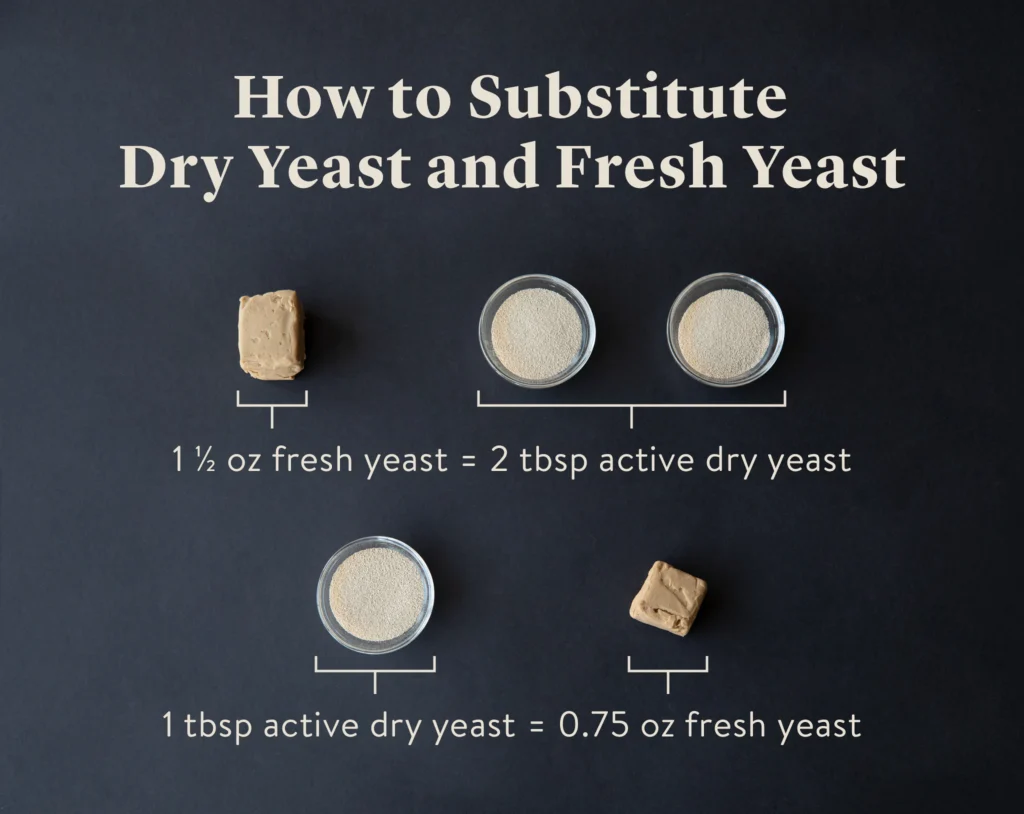
When substituting one type of yeast for another, it’s essential to understand the conversion ratios. In general, 1 gram of active dry yeast is equivalent to 0.7-0.8 grams of fresh yeast. However, this ratio can vary depending on factors such as temperature, pH level, and recipe type.
Using Active Dry Yeast
To use ADY, simply rehydrate the granules in warm water (around 100°F) before adding them to your dough. The general rehydration time is 5-10 minutes, but this can vary depending on the specific yeast product and recipe requirements.
Using Fresh Yeast
Fresh yeast requires a bit more effort, as you need to crumble it into smaller pieces or even liquidize it in water before adding it to your dough. The general rehydration time for fresh yeast is 10-20 minutes.
Tips and Considerations when Working with Yeast
- Always check the expiration date of your yeast product.
- Use warm water when rehydrating yeast to help activate its fermentation process.
- Monitor temperature, as high or low temperatures can affect yeast activity.
- Be patient, as yeast fermentation can take time.
Where to Buy Active Dry Yeast and Fresh Yeast
Active dry yeast is widely available at most grocery stores, home goods stores, and online retailers. You can find it in various package sizes, including small jars, packets, or even bulk quantities. Fresh yeast, on the other hand, may be harder to find in local stores, but you can often purchase it online from reputable suppliers.
Using Yeast for Baked Goods
When using yeast in your baked goods, keep the following tips in mind:
- Use warm water when rehydrating yeast.
- Monitor temperature and adjust as needed.
- Be patient and allow dough to rest and rise according to recipe requirements.
By understanding the differences between active dry yeast and fresh yeast, you can make informed decisions about which type of yeast to use for your baking needs. Whether you’re a seasoned baker or just starting out, this knowledge will help you create delicious, light, and fluffy baked goods that impress friends and family alike.
Understanding Yeast Types and Applications
There are several types of yeast available for bakers, including instant dry yeast, rapid rise yeast, and sourdough starter. Each type has its unique characteristics and applications in baking.
- Instant Dry Yeast: This type of yeast is designed to activate quickly and can be used in place of active dry yeast.
- Rapid Rise Yeast: As the name suggests, this type of yeast produces a faster rise than other types of yeast.
- Sourdough Starter: A sourdough starter is a naturally occurring mixture of wild yeast and bacteria that creates a unique flavor profile.
Using Instant Dry Yeast
Instant dry yeast is designed to activate quickly, making it perfect for recipes where time is of the essence. It can be used in place of active dry yeast and has a milder flavor.
Using Rapid Rise Yeast
Rapid rise yeast produces a faster rise than other types of yeast, making it ideal for recipes that require quick results.
Using Sourdough Starter
Sourdough starter creates a unique flavor profile and texture, making it perfect for artisanal breads and other baked goods. It requires regular maintenance to keep the starter healthy and active.
Tips for Working with Yeast in Baking
- Always follow the instructions on the yeast packaging.
- Use the right amount of yeast for your recipe.
- Monitor temperature and adjust as needed.
- Be patient and allow dough to rest and rise according to recipe requirements.
By understanding the different types of yeast available, you can make informed decisions about which type of yeast to use for your baking needs. Whether you’re a seasoned baker or just starting out, this knowledge will help you create delicious, light, and fluffy baked goods that impress friends and family alike.
Conclusion
Understanding the difference between active dry yeast and fresh yeast is crucial for achieving success in your baked goods. By knowing the conversion ratios, tips, and considerations when working with yeast, you can make informed decisions about which type of yeast to use for your baking needs. Whether you’re a seasoned baker or just starting out, this knowledge will help you create delicious, light, and fluffy baked goods that impress friends and family alike.
In conclusion, active dry yeast and fresh yeast are two popular choices among bakers due to their convenience, affordability, and long shelf life. By understanding the differences between these two types of yeast and following the tips and considerations when working with yeast, you can make informed decisions about which type of yeast to use for your baking needs. Whether you’re a seasoned baker or just starting out, this knowledge will help you create delicious, light, and fluffy baked goods that impress friends and family alike.


