
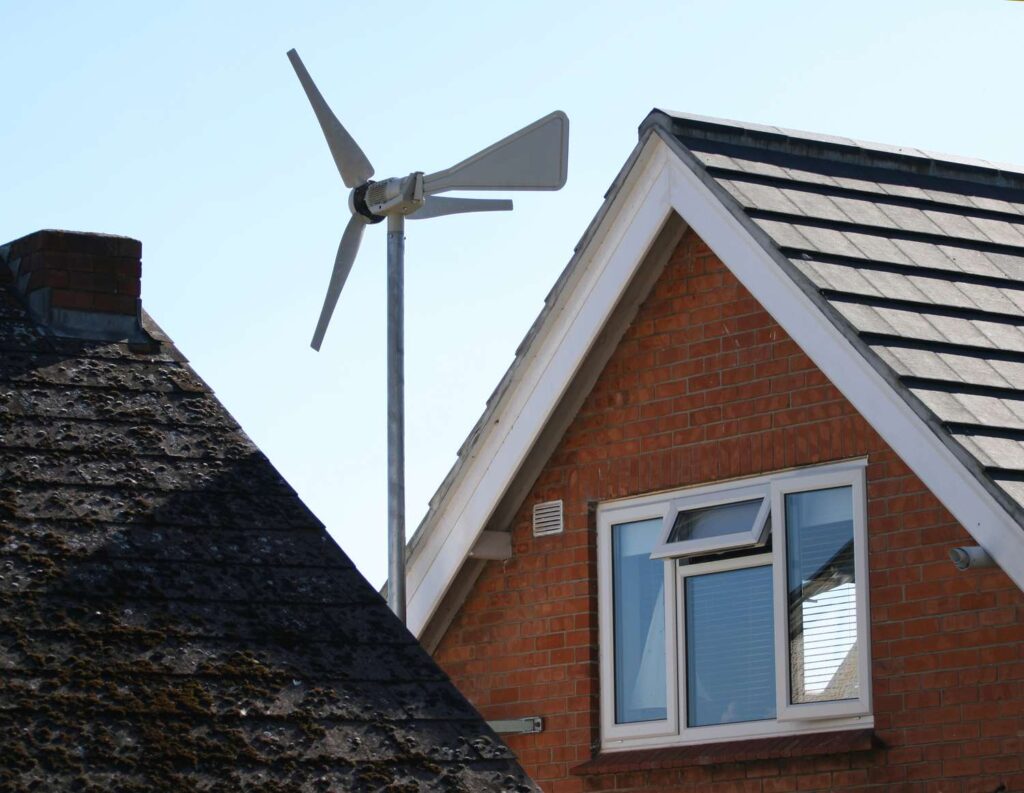
As more and more people ask me about which wind turbine to install on their home’s roof, I think it would be better for them to first consider the convenience of a home wind turbine. Before buying a small wind turbine, you should evaluate the wind conditions at the site where it will be installed.
The Wind Speed: A Crucial Factor
Before proceeding with the purchase of a mini or micro wind turbine, you need to determine if the roof (or balcony, courtyard…) meets the minimum wind speed requirements for making the purchase convenient. The good news is that you don’t necessarily need a technician to make this initial assessment. You can easily check the average wind speed in your area using the Italian Atlas of Wind Energy; however, the bad news is that most of Italy’s territory does not have “good” average wind speeds, so installing a turbine on the roof wouldn’t be convenient at all: only islands, coastal areas, and some mountainous locations meet this criterion.
The Turbine: A More Refined Evaluation
Using data from the Italian Atlas of Wind Energy, you can make a more informed decision about purchasing a wind turbine. For obvious reasons, most families tend to opt for micro-wind turbines. Before buying a turbine, you need to ask yourself one critical question: how much wind speed does this turbine require to produce electricity?
When we talk about micro-wind turbines, many turbines that can produce small amounts of energy even with low wind speeds (less than 1 m/s). In our previous article “Wind on the Roof”, we highlighted some models of domestic wind turbines, one of which achieves a power output of 1 kW and can produce electricity even with wind speeds as low as 0.5 m/s.
Optimizing Turbine Placement
To maximize the energy production capacity of a home wind turbine, it’s essential to choose a location carefully. A good rule of thumb is to position the generator at least 5 meters away from the ground or 5 meters higher than any obstacles (trees, walls, homes…). To ensure optimal installation, it’s recommended to use a tubular steel pole that can elevate your turbine as high as possible.
The Installation: Simple and Easy
Installing a micro-wind turbine does not require any official authorization or permit from the local government. However, you must comply with one condition: the support pole should not exceed 10 meters in height.
In addition to these factors, it’s also important to consider the following:
- Space constraints: If your home has limited space, a vertical axis turbine might be a better option. These turbines can be installed on balconies or even indoor spaces.
- Noise reduction: Some micro-wind turbines are designed with noise-reducing features to minimize the disturbance caused by the turbine’s operation.
- Maintenance access: Ensure that your home’s roof provides easy access for maintenance and repairs.
In conclusion, before deciding whether a home wind turbine is convenient for you, evaluate the wind conditions at your location and consider factors such as turbine placement, energy production capacity, and installation simplicity. With careful planning and consideration, installing a micro-wind turbine can be a viable option for generating clean energy on your home’s roof.
Frequently Asked Questions (FAQs)
- What is the minimum wind speed required to install a home wind turbine?
The minimum wind speed required varies depending on the type of turbine, but most domestic turbines require at least 5 m/s.
2. Can I install a wind turbine without permission from the local government?
Yes, installing a micro-wind turbine does not require any official authorization or permit from the local government, as long as you comply with the support pole height limit (10 meters).
3. How do I determine if my location is suitable for a home wind turbine?
You can use online tools such as the Italian Atlas of Wind Energy to estimate the average wind speed in your area and determine if it’s suitable for a micro-wind turbine.
4. What is the typical lifespan of a home wind turbine?
The typical lifespan of a domestic wind turbine is around 20-25 years, depending on the quality of the turbine and maintenance conditions.
5. How much energy can I expect to generate with a home wind turbine?
The amount of energy generated by a micro-wind turbine depends on factors such as wind speed, turbine efficiency, and installation location. On average, domestic turbines can produce between 1-10 kW of electricity.
6. Can I use my home wind turbine for both residential and commercial purposes?
Yes, many micro-wind turbines are designed to provide a combined energy source for both residential and commercial buildings.
7. How do I maintain and repair my home wind turbine?
Regular maintenance is essential to ensure optimal performance of your domestic wind turbine. It’s recommended to hire a qualified technician to inspect and perform routine maintenance tasks every 6-12 months.
8. Are there any local regulations or restrictions on installing wind turbines in my area?
It’s essential to check with local authorities to determine if there are any specific regulations, permits, or restrictions on installing wind turbines in your area.
Benefits of Home Wind Turbines
In addition to the convenience factor, home wind turbines offer several benefits, including:
- Reduced energy bills: By generating electricity on-site, you can reduce your reliance on grid power and lower your energy bills.
- Environmental sustainability: Home wind turbines produce clean energy and reduce greenhouse gas emissions, contributing to a more sustainable future.
- Increased property value: Installing a home wind turbine can increase the value of your property and potentially boost its resale value.
Conclusion
A home wind turbine can be a convenient and environmentally friendly way to generate electricity on-site. By evaluating wind conditions, considering factors such as turbine placement and energy production capacity, and complying with local regulations, you can make an informed decision about installing a micro-wind turbine on your roof. With careful planning and consideration, you can harness the power of the wind to reduce your reliance on grid power and contribute to a more sustainable future.
Future Developments in Home Wind Turbines
As technology continues to evolve, we can expect to see improvements in home wind turbines, including:
- Higher efficiency: Advancements in turbine design and materials are expected to increase energy production capacity while reducing noise levels.
- Vertical axis turbines: These turbines are designed for indoor or balcony installations and offer greater flexibility in terms of placement and operation.
- Smart grid integration: Home wind turbines will become increasingly integrated with smart grids, allowing for real-time monitoring and optimization of energy production and consumption.
By staying informed about the latest developments in home wind turbines, you can make an even more informed decision about whether a micro-wind turbine is right for your home.


