
As the old saying goes, “Waste not, want not.” In Italy, this phrase takes on a whole new meaning. The country is at war with food waste, and it’s not just about saving money or reducing environmental impact. It’s about respecting oneself, others, and the planet.
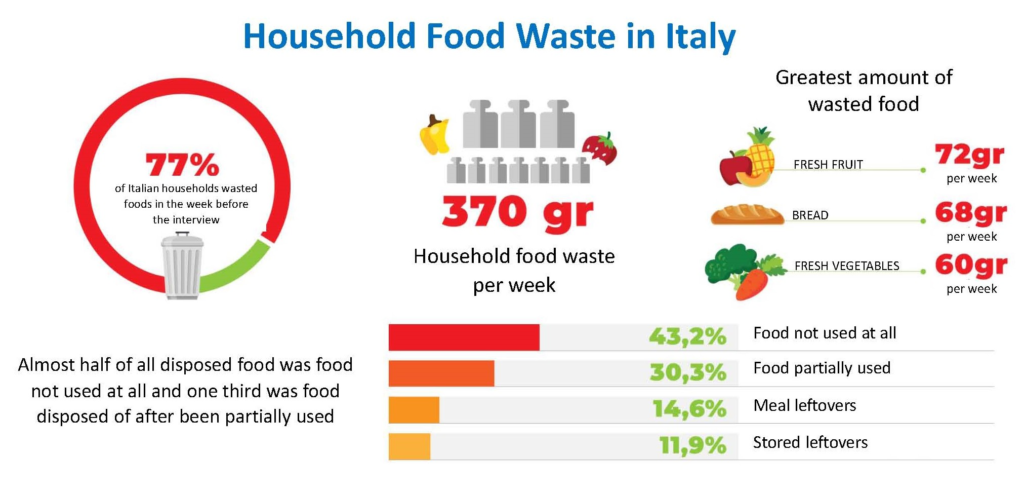
Every week, Italian families throw away 639 grams of edible food per person. That’s equivalent to €6.5 per week, adding up to a staggering €8.1 billion annually. This phenomenon is known as domestic food loss, and it’s not just an Italian problem – it’s a global issue.
The Italian Perspective
A recent study by Waste Watcher – Knowledge for Expo, in collaboration with the Expo 2015 Observatory on Food, Agriculture, Environment, and Sustainability, reveals that Italy is surprisingly mindful of food waste. In fact, 63 out of every 100 citizens consider themselves attentive to this issue, more than those who prioritize buying local products (48%) or caring about environmental respect (47%).
Priorities
So, what drives Italian behavior? Security is a top priority for 42% of respondents, followed by equity (39%), and tolerance (12%). We often assume that Italians are intolerant, but the truth is, most people don’t even recognize a lack of tolerance – they’re just aware of the gravity of food waste.
The Most Pressing Issue
Domestic food loss is considered the biggest problem by 60% of respondents, followed closely by water and energy waste (37% and 20%, respectively). Even gas waste has made an appearance, with 6% of total consumption linked to food waste throughout the supply chain.
The Connection Between Food Waste and Energy Consumption
Did you know that food waste and energy consumption are intimately connected? A whopping 3% of Italy’s total energy consumption is attributed to the food waste industry – from production to consumption. This might seem like a small percentage, but it’s an area where we can make significant improvements.
The Rise of Food Waste Awareness
As sensitivity to food waste grows, so does awareness. In January 2014, 63% of respondents checked expiration dates before purchasing food, while 90% read labels for freshness. A staggering 83% knew the difference between “within” and “best before,” but surprisingly, only 67% truly understood the significance.
The Call to Action
So, what can we do? The answer lies in understanding and changing our behavior. Here are some actionable tips:
- Plan your meals and make a grocery list to avoid buying too much food.
- Store food properly, using the “first in, first out” rule to ensure older items get used before they spoil.
- Use up leftovers creatively, or consider donating them to those in need.
- Support local farmers who prioritize sustainability and reduce waste.
By working together, we can create a more sustainable food culture – one where food is not just fuel but a source of connection and community. The time to act is now; let’s join forces to tackle domestic food loss and become the change we want to see in our world.
Challenges Ahead
While Italy has made strides in reducing food waste, there are still many challenges ahead. One major issue is the lack of standardized labeling for food products. This makes it difficult for consumers to make informed decisions about what they buy and how long it will last.
Another challenge is the high cost of implementing sustainable practices. Many small-scale farmers and producers struggle to access resources and support that would enable them to reduce waste and adopt more environmentally-friendly methods.
Despite these challenges, there is hope on the horizon. In recent years, Italy has seen a surge in innovative companies and initiatives focused on reducing food waste. From vertical farming to food recovery platforms, new solutions are emerging all the time.
The Future of Food Waste Reduction
As we look to the future, it’s clear that tackling domestic food loss will require a multifaceted approach. Governments, businesses, and individuals must work together to create a culture of sustainability and reduce waste in every stage of the supply chain.
One potential solution is the development of more advanced labeling systems. This could include features such as expiration date tracking, allergen alerts, and nutritional information.
Another possibility is the expansion of food recovery programs. These initiatives aim to rescue surplus food from grocery stores and redistribute it to those in need. By doing so, they can help reduce waste while also supporting local communities.
Conclusion
The hidden cost of food waste is a pressing issue that affects us all. In Italy, citizens are increasingly aware of the problem and are taking steps to address it. From planning meals to supporting local farmers, there are many ways to make a positive impact.
As we move forward, let’s continue to prioritize sustainability and reduce waste in every aspect of our lives. By working together, we can create a brighter future for ourselves, our communities, and the planet.


