
Are air purifiers effective? Yes, if used correctly. A complete guide.
Contents
-
What are Air Purifiers and how do they work?
1.1 Ionizers
1.2 Activated Carbon Filters
1.3 UV Light Purifiers
1.4 PCO (Photocatalytic Oxidation) Technology -
Types of Air Purifiers
-
Do air purifiers really work?
-
Benefits of using air purifiers
-
Multi-function air purifiers for comfort temperature control
5.1 Air purification
5.2 Temperature regulation
5.3 Ventilation
- Maintenance of air purifiers
6.1 Filter cleaning
6.2 Filter replacement
6.3 Device maintenance
-
Energy consumption of air purifiers
-
Rumorosity of air purifiers
-
Where to buy an air purifier
What are Air Purifiers and how do they work?
Air purifiers are devices designed to remove harmful contaminants from indoor air. Commonly marketed as useful for people with allergies and asthma, and for reducing or eliminating second-hand smoke.
The functioning of air purifiers can vary depending on the model and technology used. The most common types of air purifiers include:
- Purifiers with Ionizers
- Purifiers with Activated Carbon Filters
- Purifiers with UV Light
- Purifiers with PCO (Photocatalytic Oxidation) Technology
Ionizers work by releasing negatively charged ions into the air, which attract and trap pollutants. This method is effective against particulate matter, but can be less effective against gases and odor-causing molecules.
Activated carbon filters, on the other hand, use a porous material to capture gas, vapor, and particle pollutants. These filters are commonly used in combination with HEPA (High Efficiency Particulate Air) filters for maximum effectiveness.
UV Light Purifiers employ ultraviolet light to kill bacteria, viruses, and other microorganisms present in the air. This technology is effective against airborne pathogens but can be less effective against particulate matter and gases.
PCO Technology uses a chemical reaction to break down pollutants into harmless byproducts. This method is effective against both gas and particle pollutants, but requires electricity to power the process.
Types of Air Purifiers
Air purifiers can be categorized into different types based on their functions.
- Purifier Ventilators: These devices not only remove air pollutants but also circulate clean air throughout a space.
- Thermo-Ventilators: Some air purifiers come with built-in heating or cooling elements, allowing users to control the temperature in their space.
- Humidifiers: Some air purifiers are designed as both humidifiers and air purifiers. These devices can add moisture to dry air while removing pollutants.
There are many manufacturers that produce high-quality air purifiers in Italy. One notable example is Dyson, which offers a wide range of air purifier models.
Do air purifiers really work?
Some people may be skeptical about the effectiveness of air purifiers, but numerous studies demonstrate that they can indeed have several health benefits. For instance:
- A 2020 study published in the Journal of the American College of Cardiology found that using an air purifier reduced cardiovascular symptoms in a polluted environment.
- Another study published in the European Respiratory Journal showed that using an air purifier improved lung function and reduced symptoms of asthma.
These studies demonstrate that air purifiers can be effective tools for improving indoor air quality, particularly for individuals with pre-existing respiratory conditions.
Benefits of using air purifiers
Air purifiers offer several benefits, especially in poorly ventilated indoor spaces. Some key advantages include:
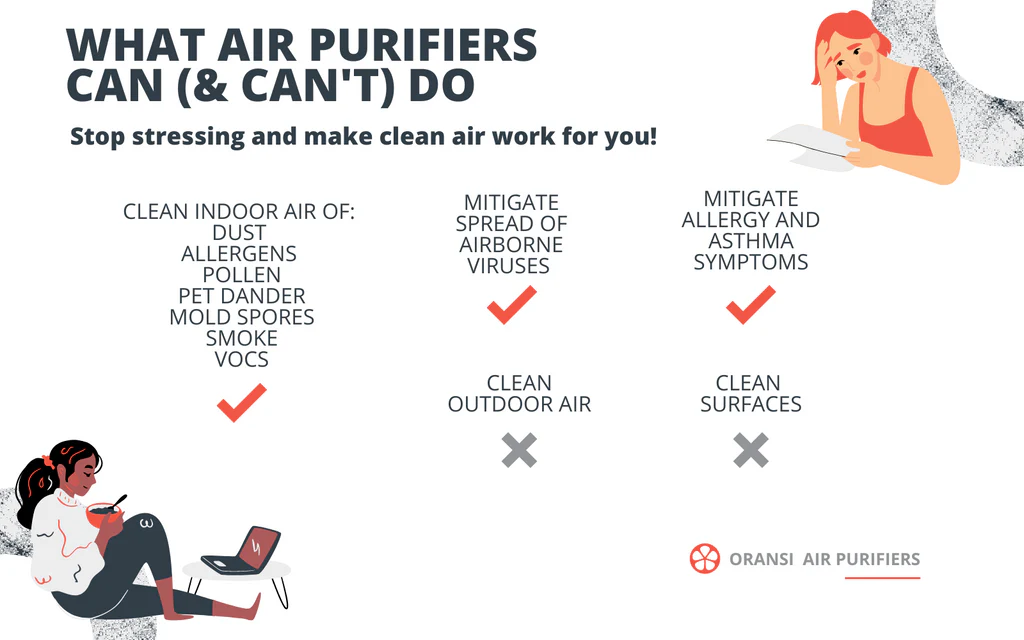
- Reduced allergens: Air purifiers are effective at removing common allergens such as dust, pollen, pet dander, and mold spores.
- Removal of airborne pathogens: In addition to removing allergens, air purifiers can also eliminate viruses, bacteria, and other microorganisms from the air.
- Improved indoor air quality: By removing pollutants and particulate matter from the air, air purifiers help improve overall indoor air quality.
- Reduced odors: Many air purifiers are equipped with activated carbon filters that can neutralize unpleasant odors.
Multi-function air purifiers for comfort temperature control
Some air purifiers come with built-in thermoregulation capabilities, allowing you to control the temperature of your space. These models are often referred to as “multi-function” air purifiers.
They typically have three main functions:
- Air purification: Removing pollutants and particles from the air.
- Temperature regulation: Raising or lowering the temperature in the room.
- Ventilation: Circulating air throughout the space without heating it up.
Maintenance of air purifiers
Proper maintenance is essential to ensure your air purifier works efficiently and effectively. Here are some tips:
- Clean filters regularly
- Replace filters periodically (depending on usage)
- Regularly clean the exterior device and check for blockages in the airflow
Energy consumption of air purifiers
Air purifiers vary significantly in terms of energy consumption, depending on their model, size, and usage patterns. In general, most modern air purifiers are designed to be energy-efficient.
However, some models may consume more power due to additional features like built-in heaters or humidifiers.
To give you a better idea, consider the following:
- A basic air purifier might consume around 20-50 watts
- A mid-range model could consume up to 150 watts
- An advanced model with extra features might reach consumption levels of 250 watts or more
Rumorosity of air purifiers
The noise level of air purifiers can vary greatly, depending on their design and operation. Typically, they produce a gentle hum similar to a quiet fan.
However, some models may be louder than others due to the speed of the fan or other internal mechanisms.
To minimize disturbance, many users prefer to operate their air purifiers at lower speeds during the night or in quiet environments.
Where to buy an air purifier
Air purifiers are widely available for purchase from various retailers. You can find them online on Amazon or through local stores like Mediaworld, Euronics, and Expert.
It’s always a good idea to check reviews and product specifications before making your final decision.
In conclusion, air purifiers offer numerous benefits, especially in poorly ventilated indoor spaces. By understanding the different types of air purifiers available, their maintenance requirements, energy consumption levels, and noise levels, you can make an informed decision when choosing one for your home or office.
Choosing the right air purifier
When selecting an air purifier, consider several factors to ensure you find a device that meets your needs:
- Room size: Consider the square footage of your space and choose an air purifier with a sufficient HEPA filter capacity.
- Filter type: Choose between HEPA filters or activated carbon filters, depending on your specific needs.
- Noise level: Opt for a quieter model if you plan to use it during the night or in quiet environments.
By taking these factors into consideration and understanding how air purifiers work, you can make an informed decision when selecting the right device for your home or office.


